*************** Seller’s Note ***************
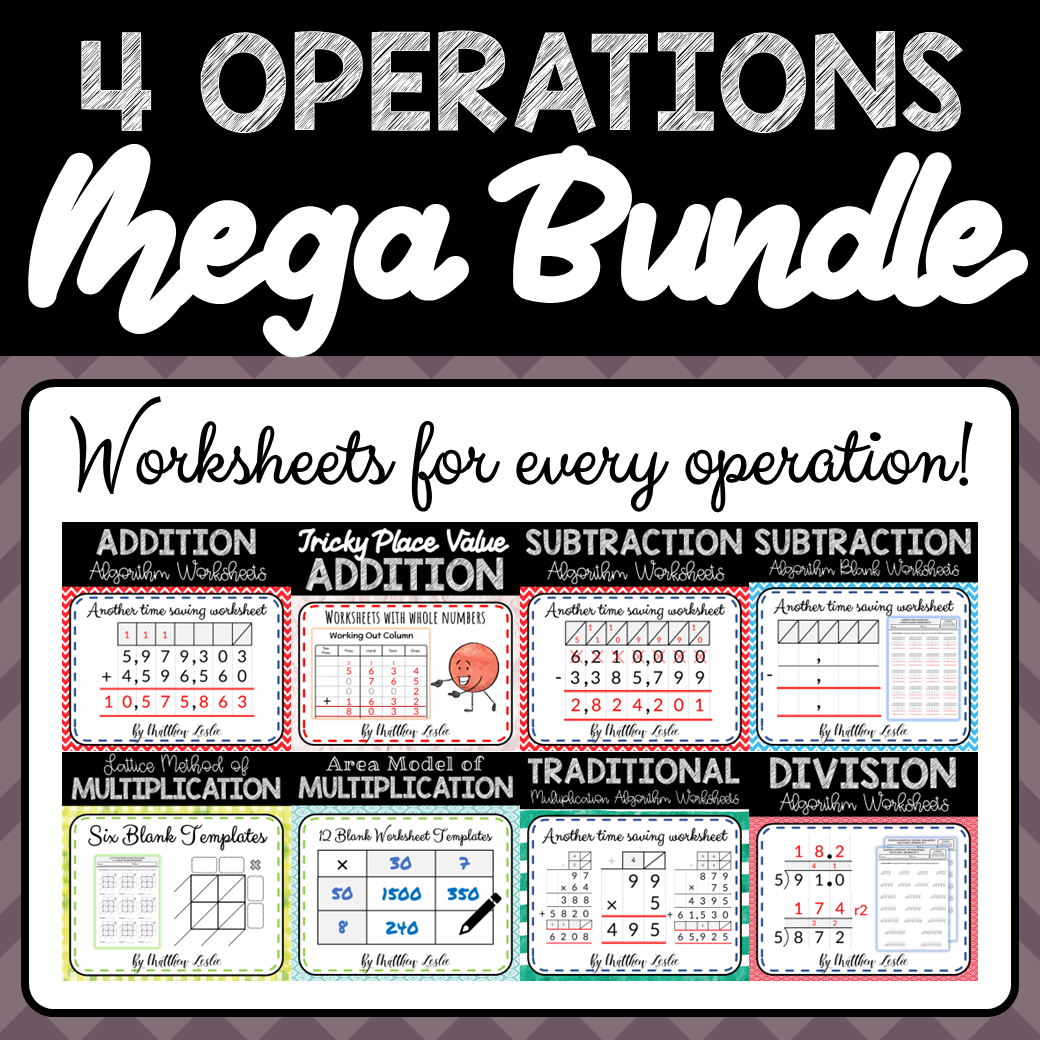
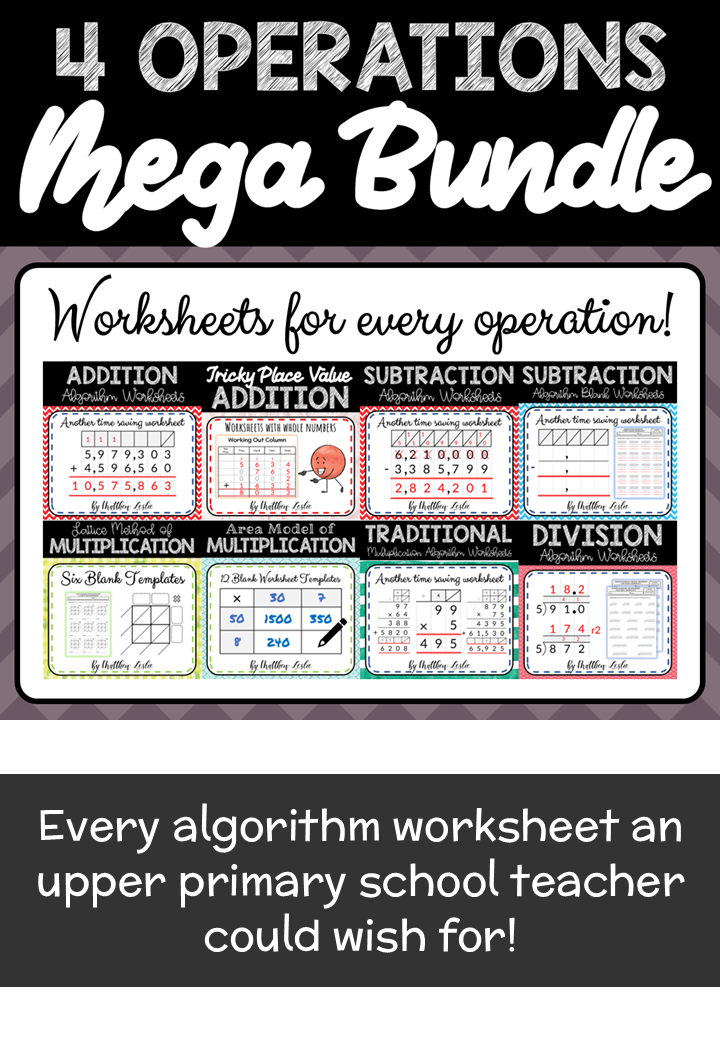
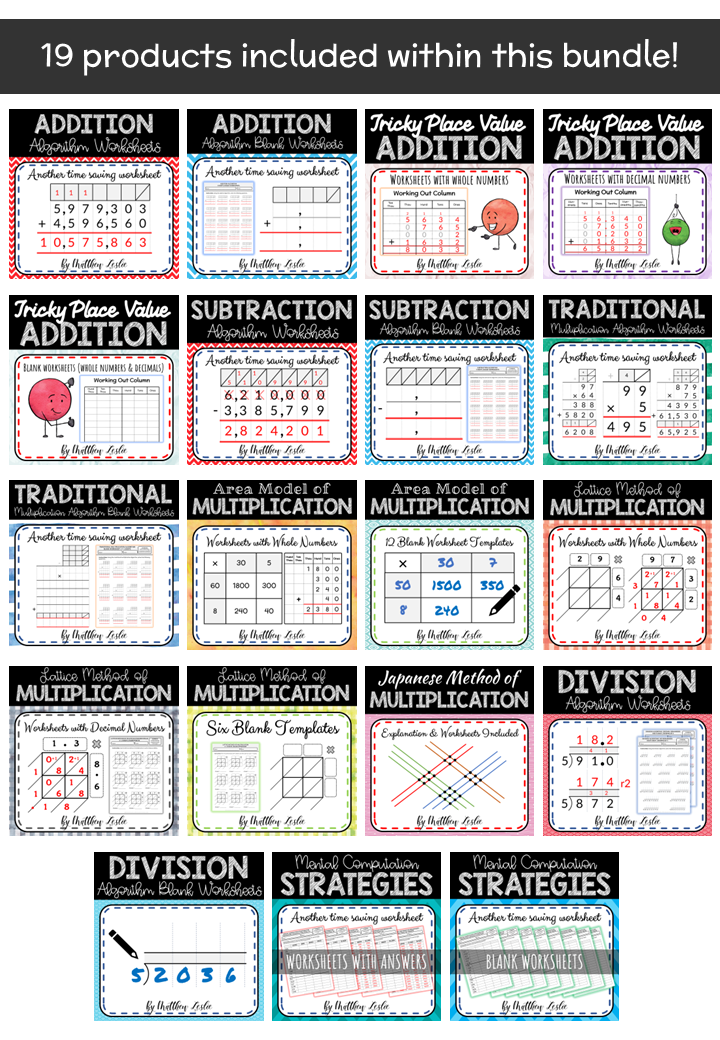
If you like this product, it comes as a bonus product free of charge with our ‘4 Operations Mega Bundle’. This product is most effective when it is used with our worksheets.
*************** Seller’s Note ***************
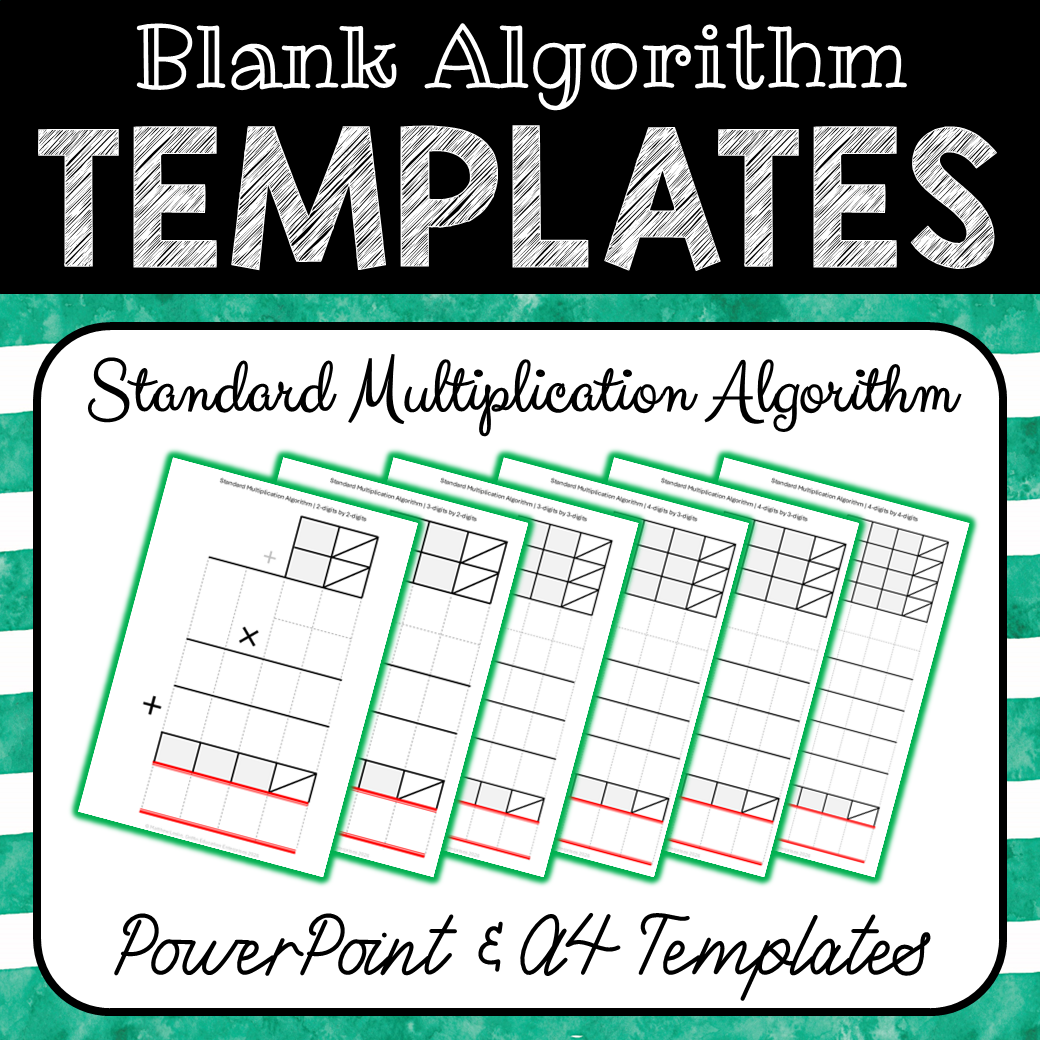
Blank Algorithm Templates – A4 Templates and PowerPoint – All Operations
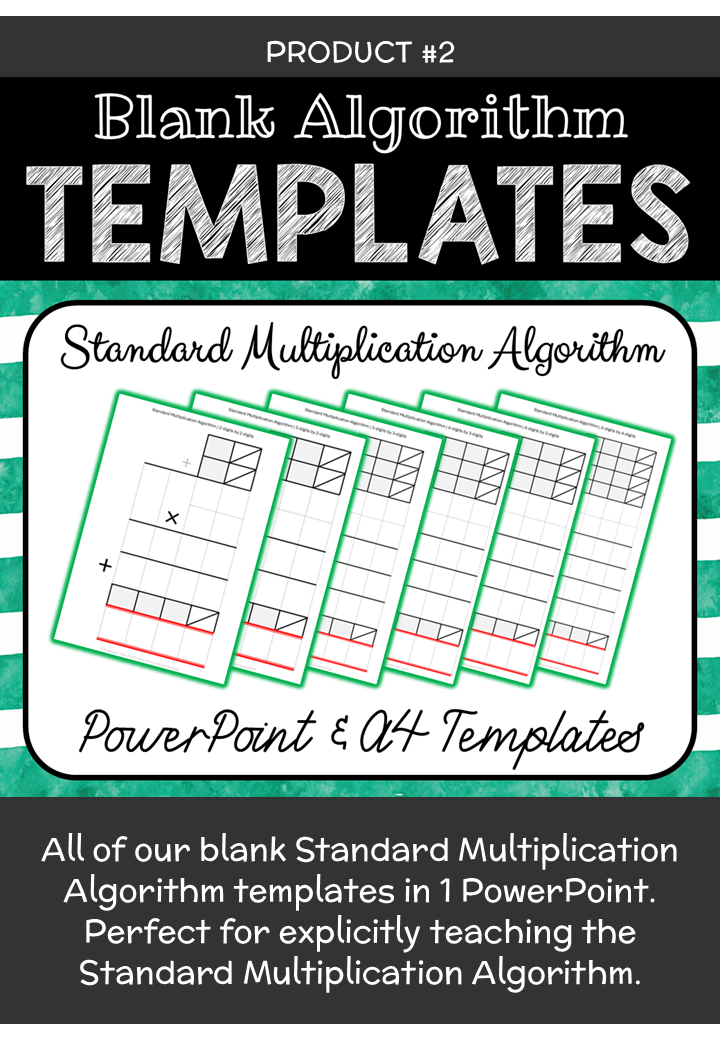
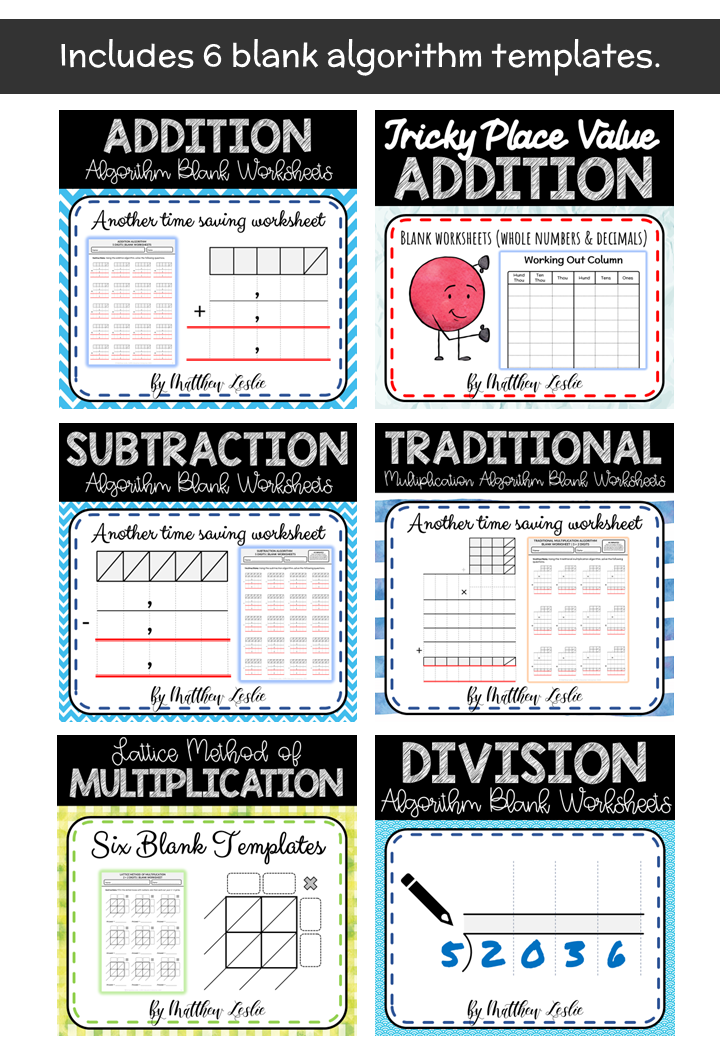
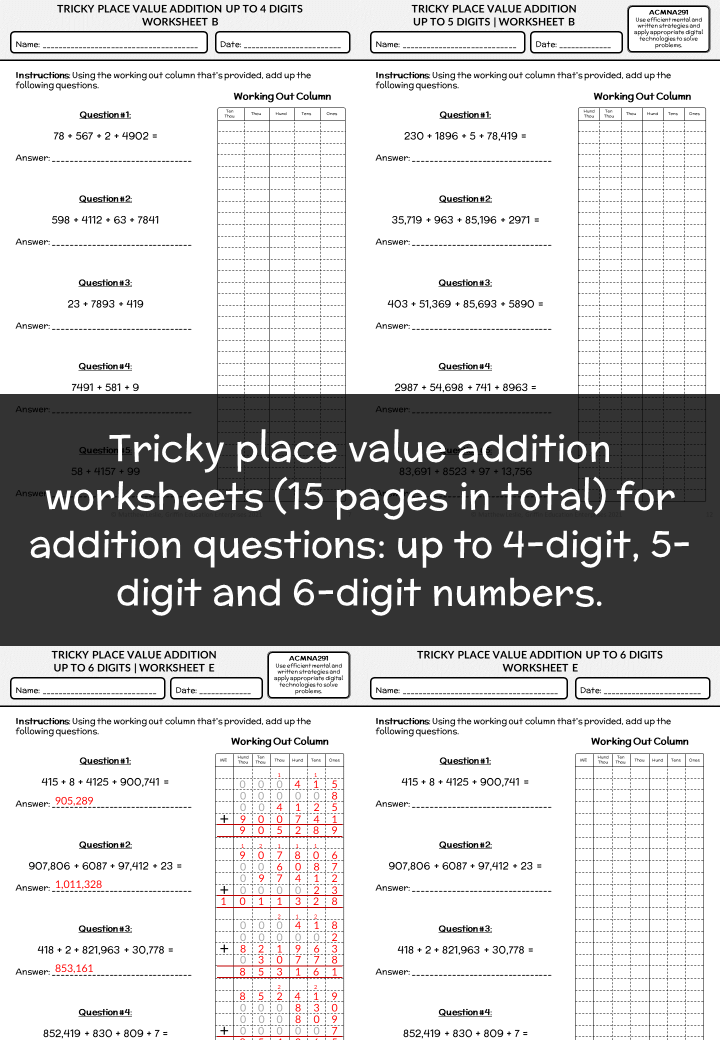
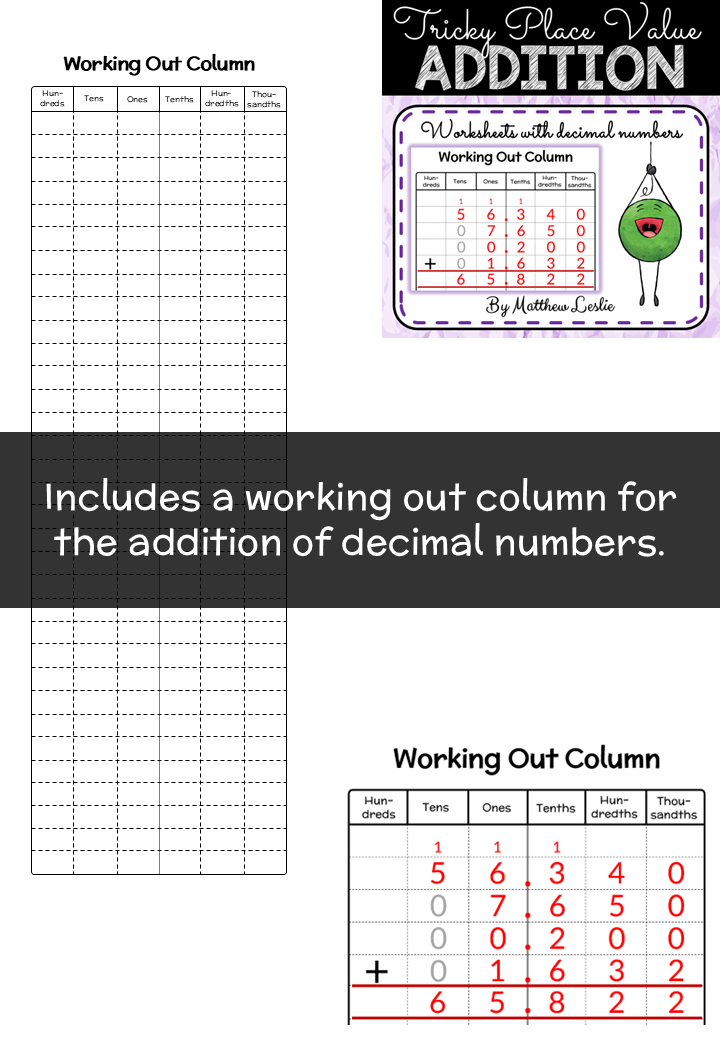
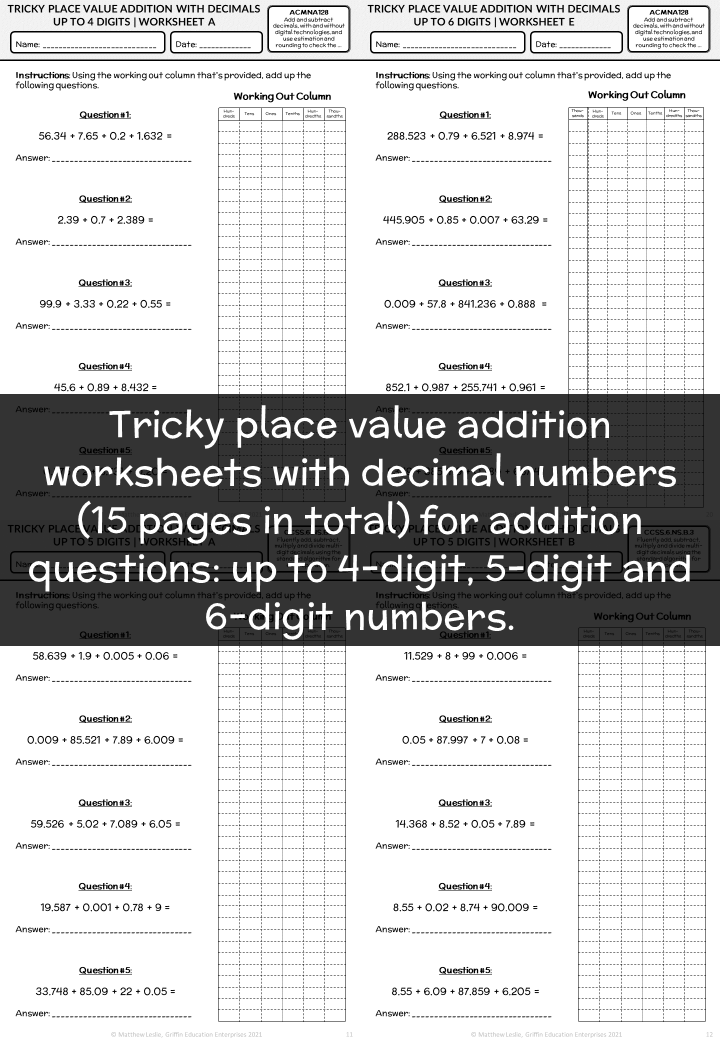
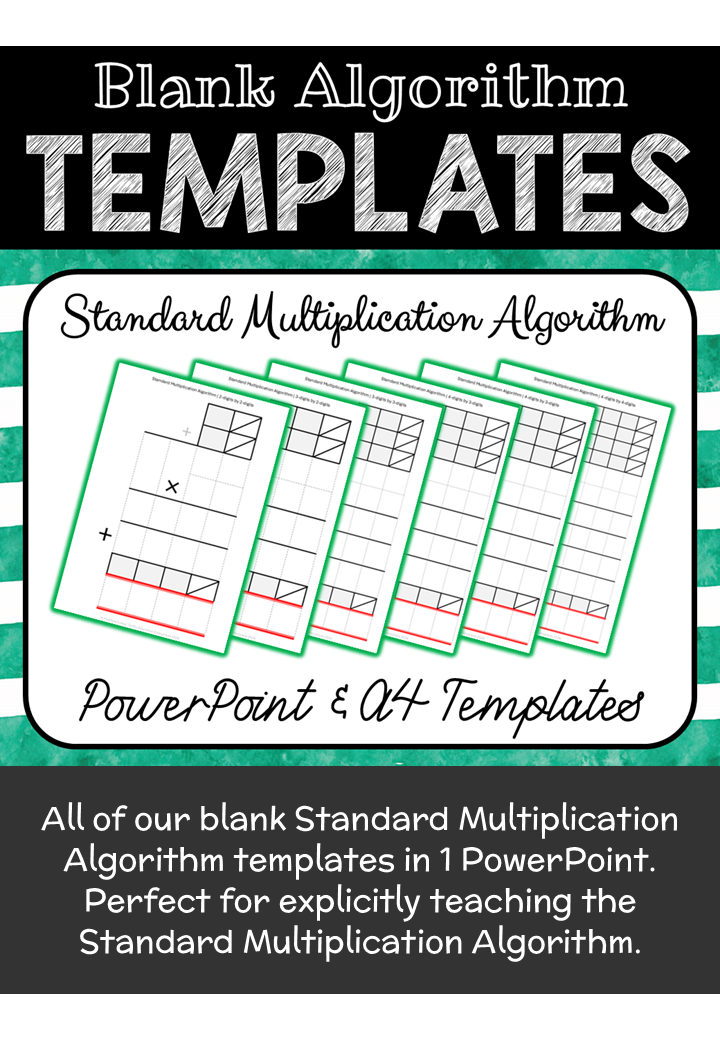
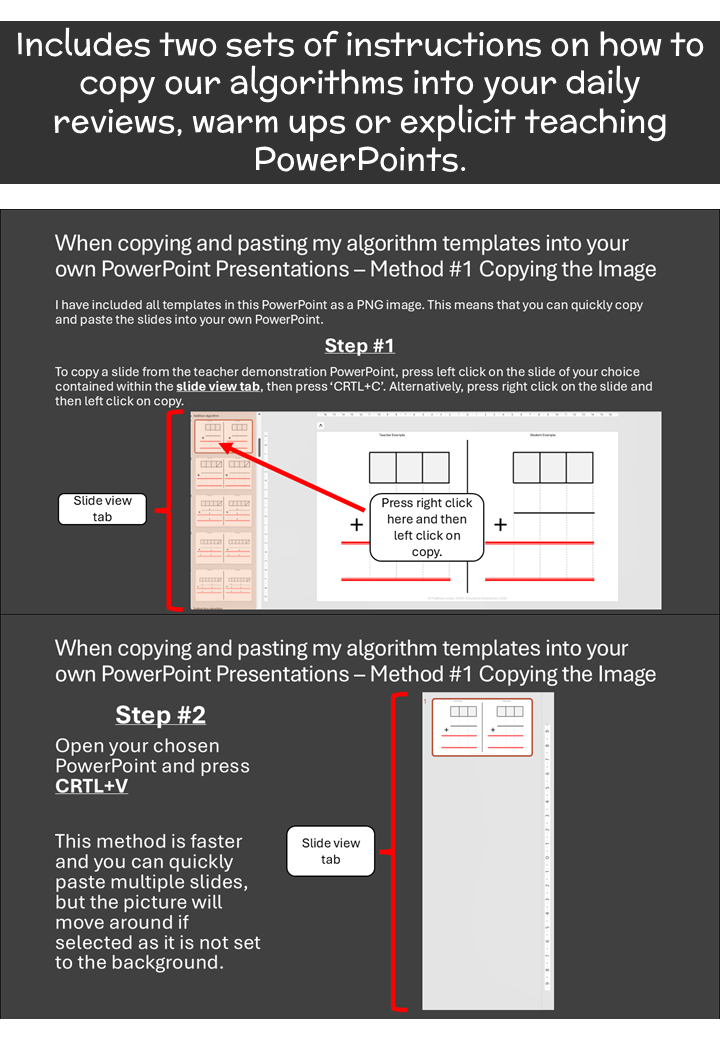
To make it easier for teachers to use our worksheets in their classrooms, we decided to put our blank algorithms for addition, subtraction, multiplication and division into A4 templates and a PowerPoint presentation.
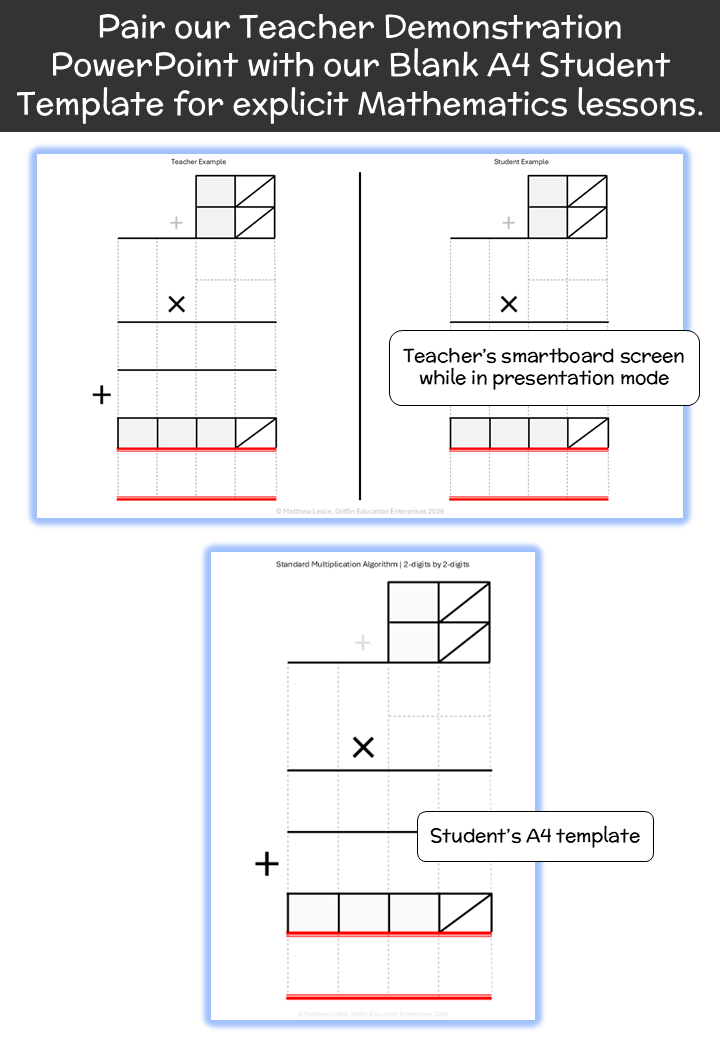
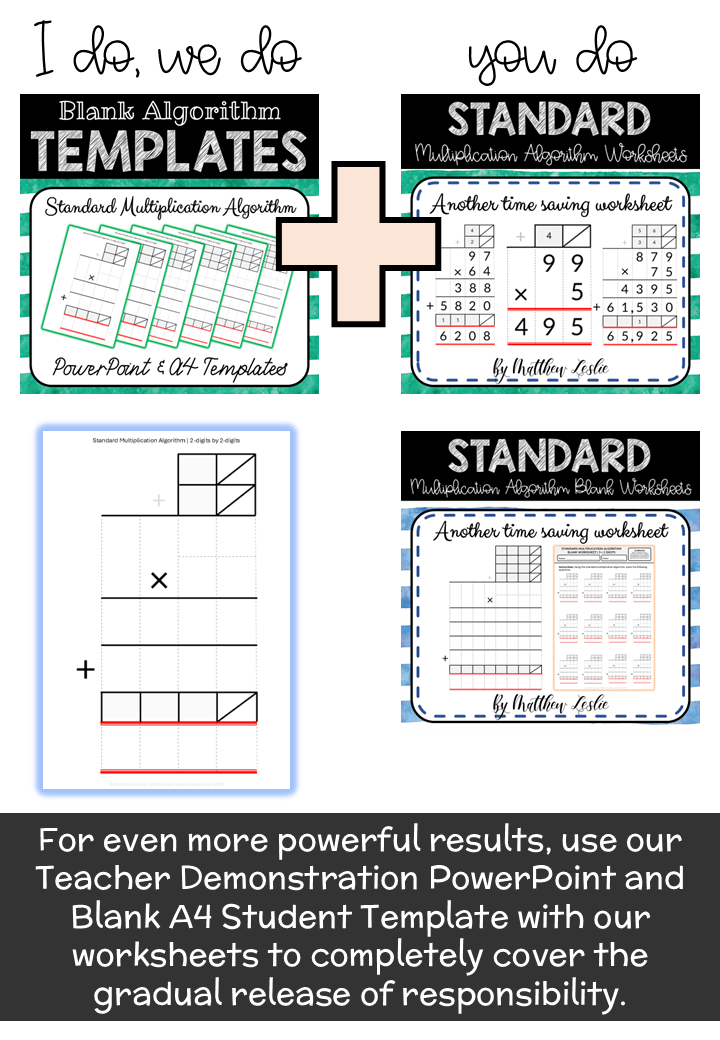
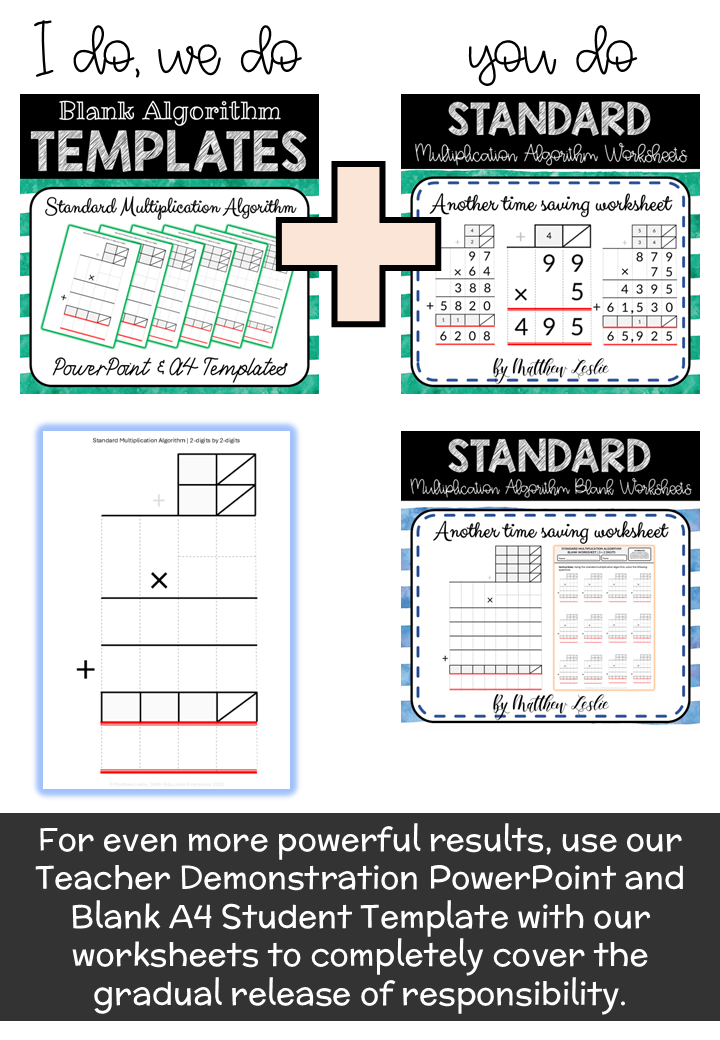
The combination of a PowerPoint presentation and our A4 templates gives you all the resources you need to explicitly teach the four operations to your students. Pair this resource with our worksheets, and you have everything you need to cover the gradual release of responsibility.
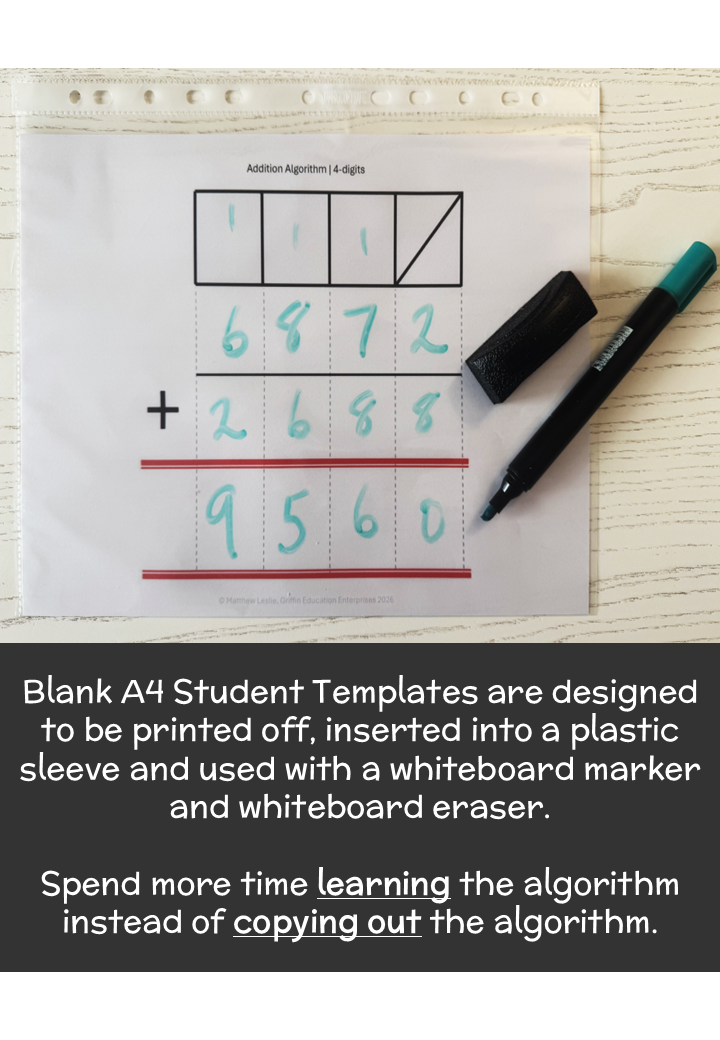
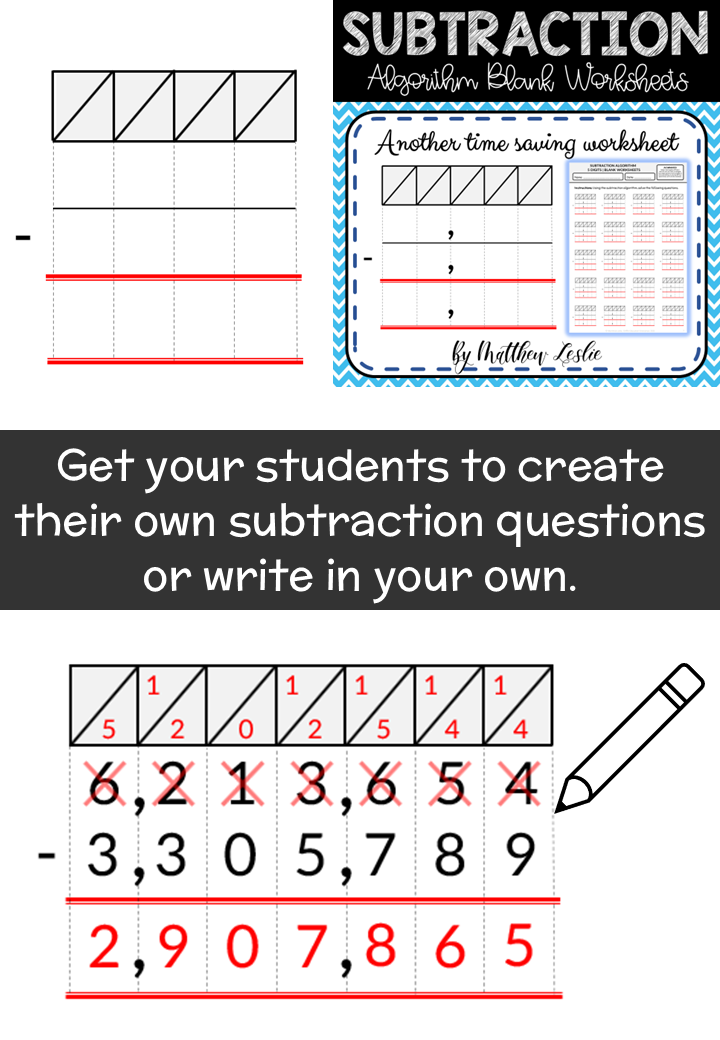
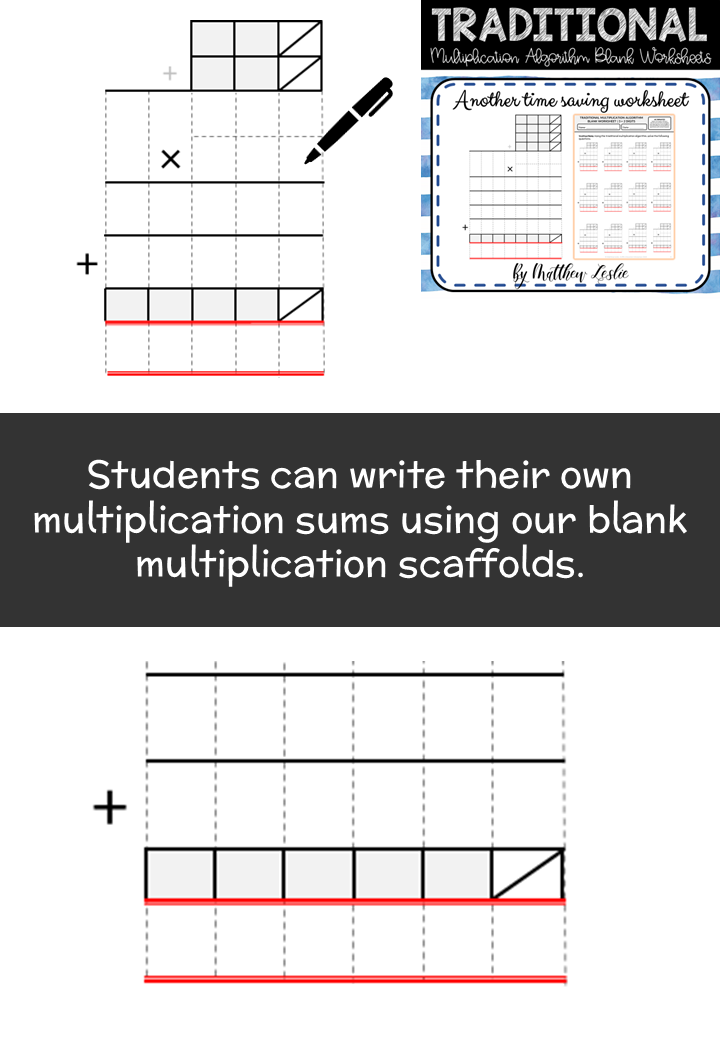
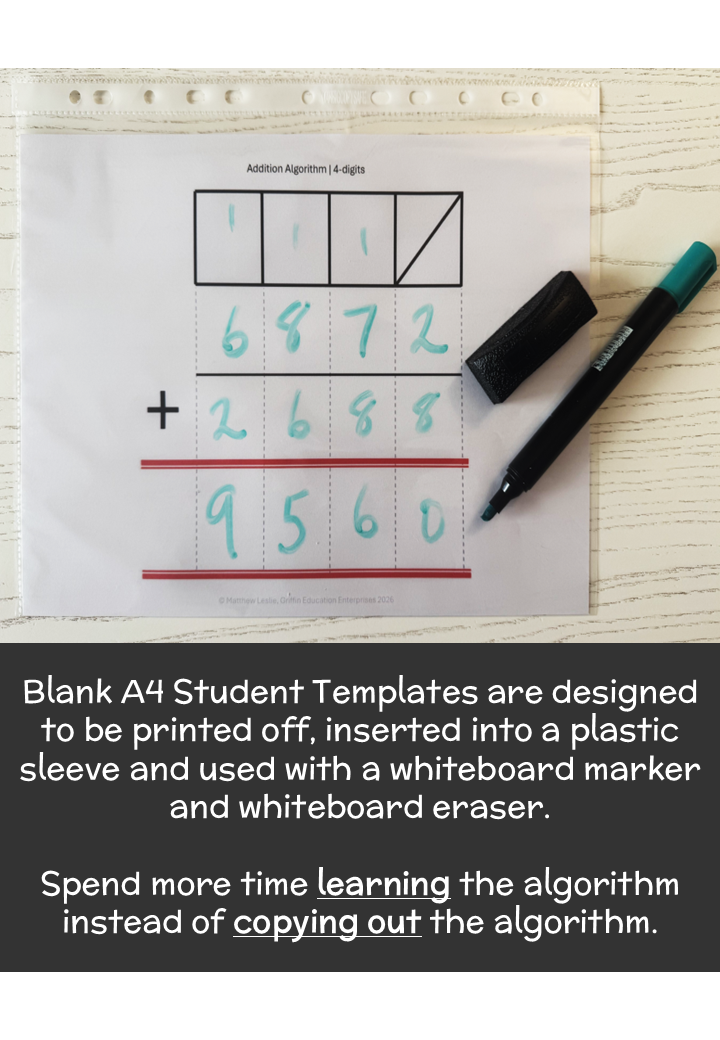
Put these templates into a plastic sleeve, then your students have a large blank algorithm that they can write over with a whiteboard marker. No longer do students have to repeatedly copy out the algorithm scaffold, a subtle yet simple change which will save you time.
Product Includes:
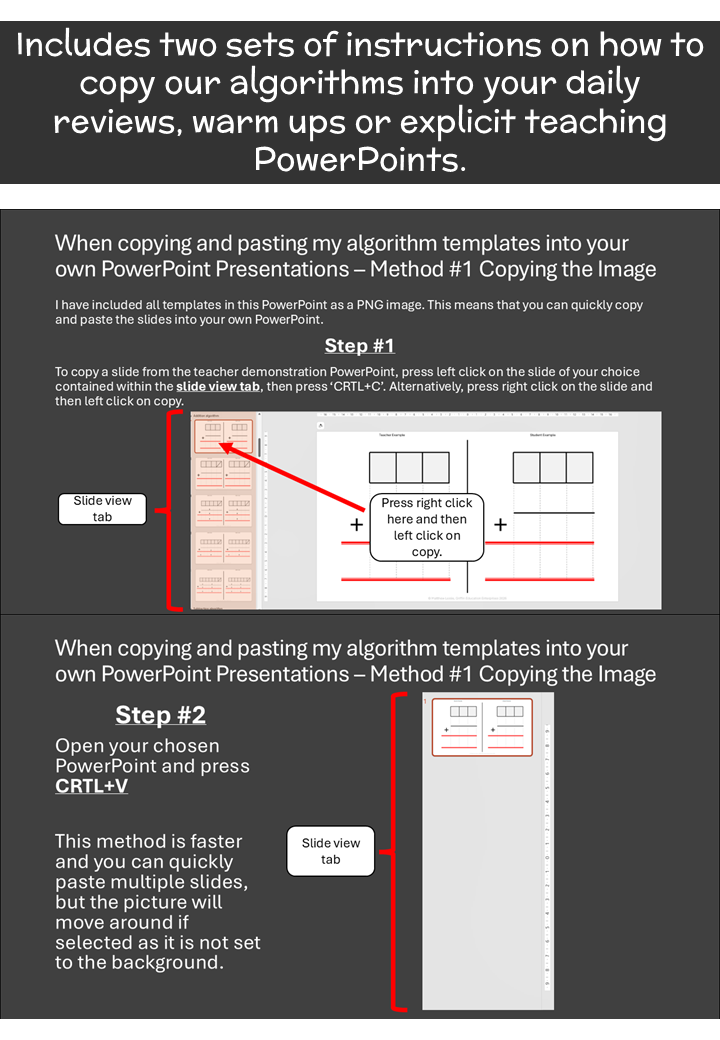
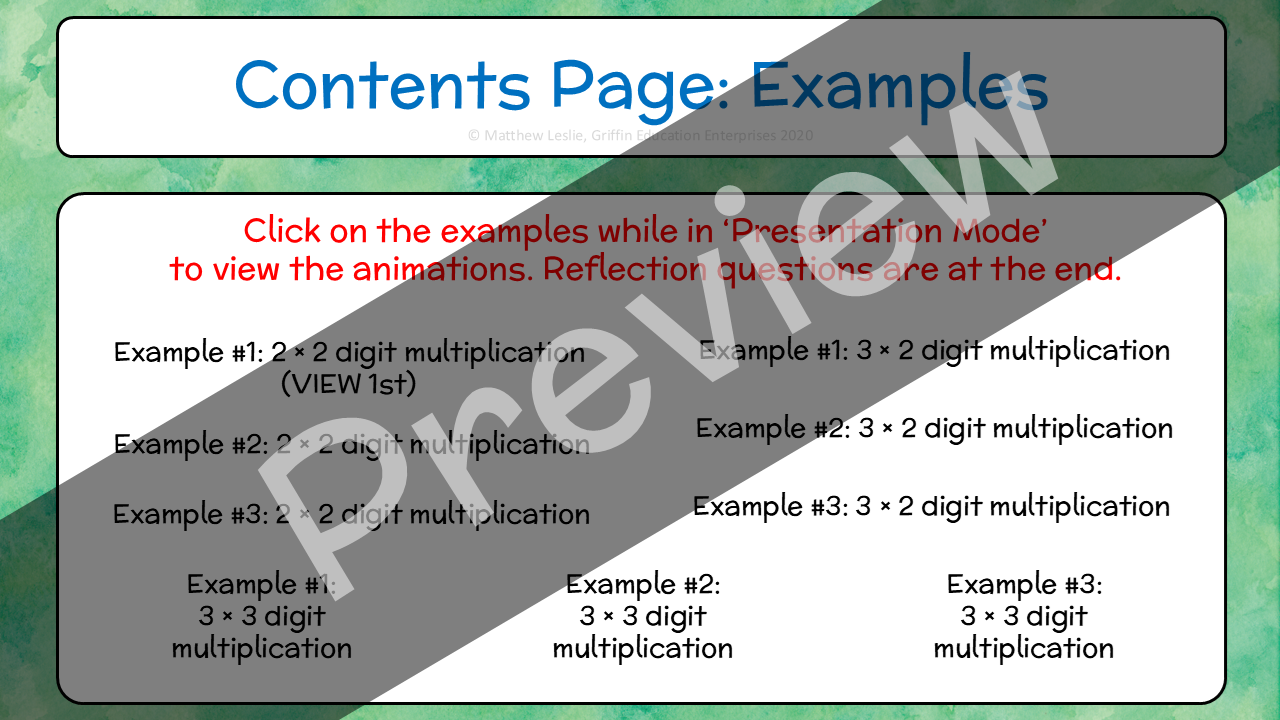
✔️ A PowerPoint Presentation with 92 slides for the addition, subtraction, multiplication and division algorithms.
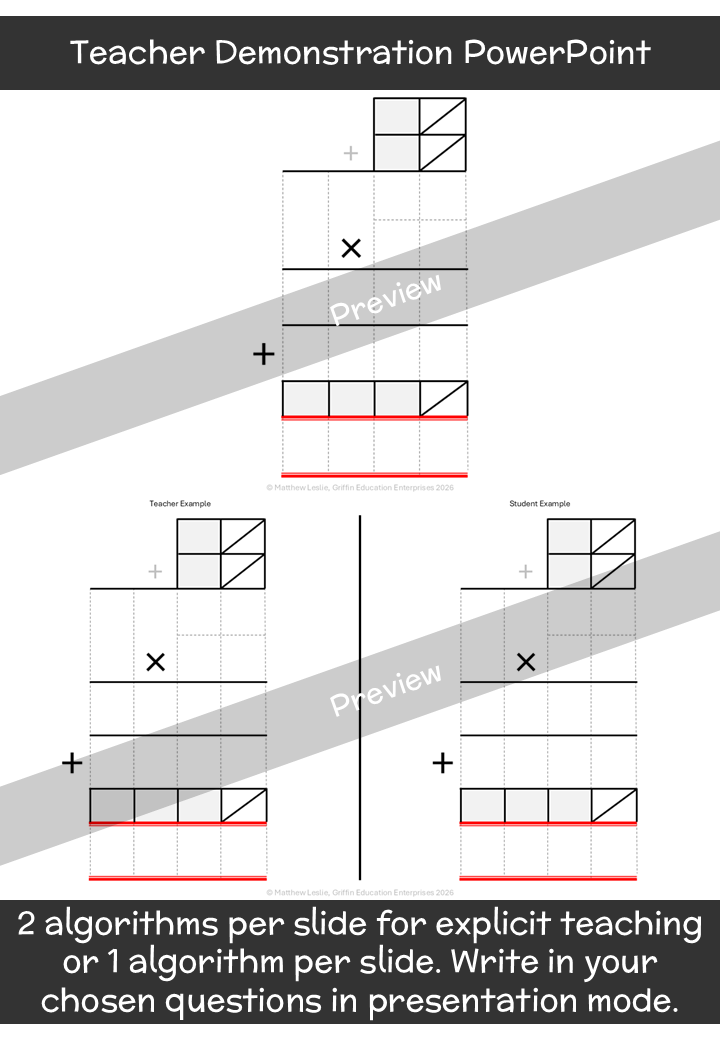
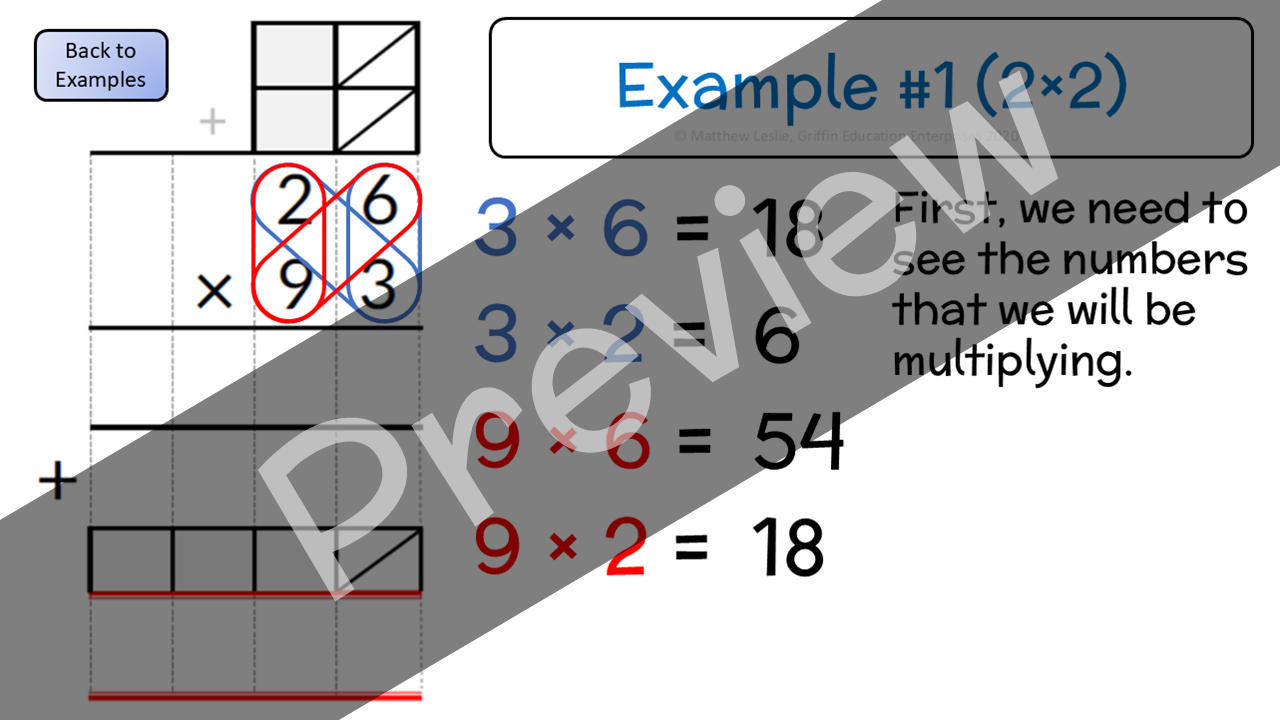
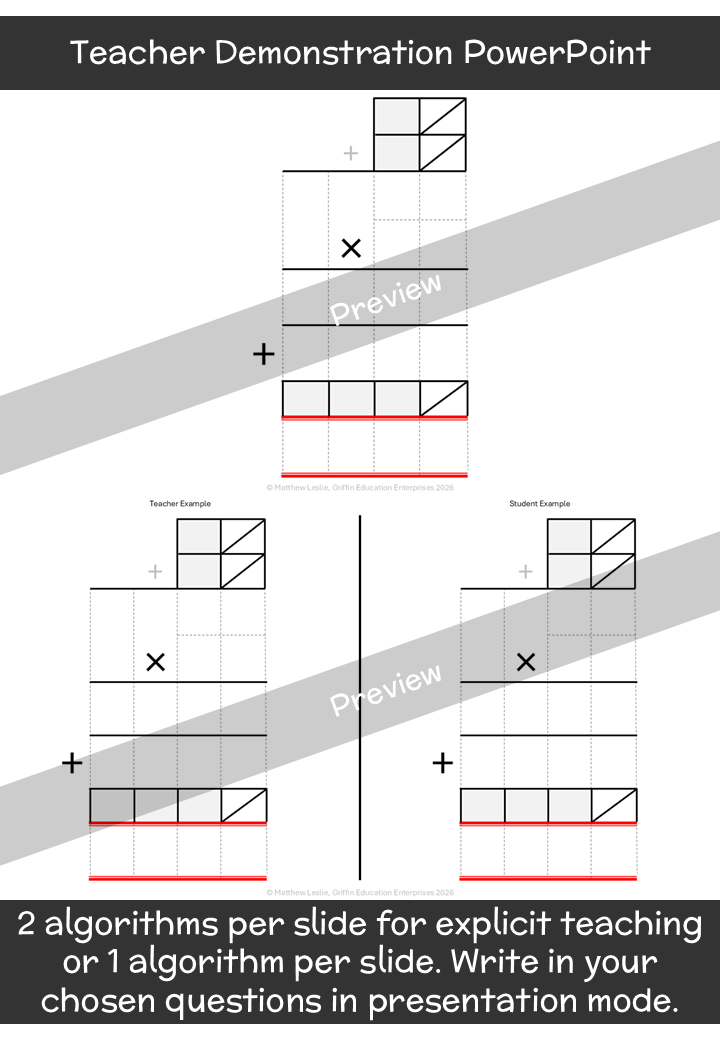
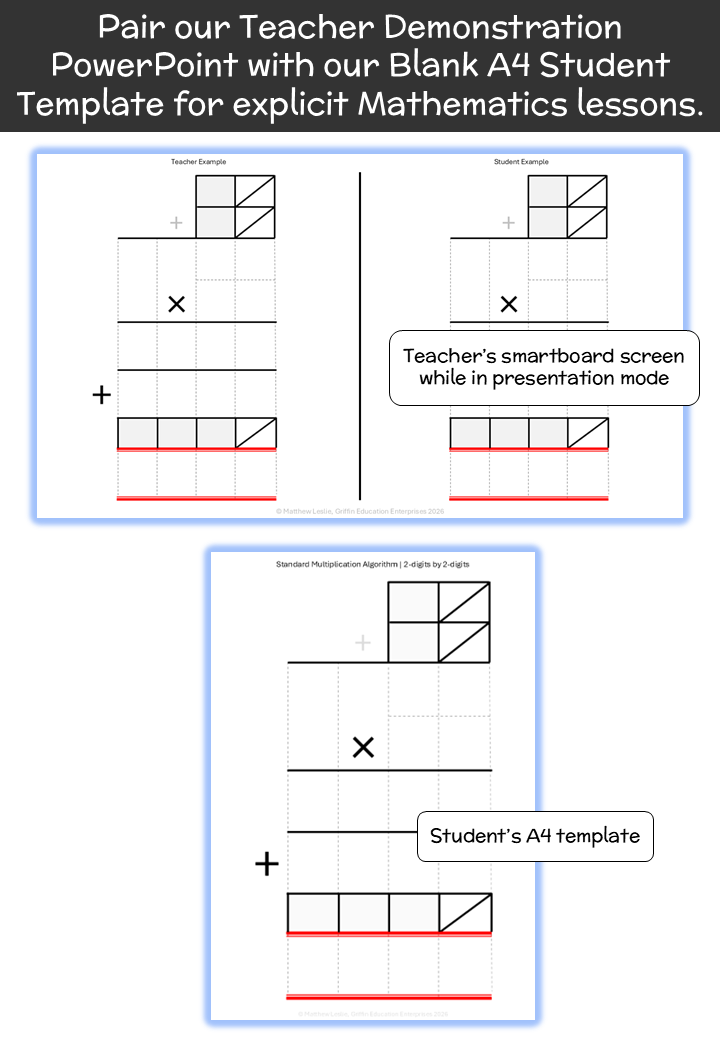
✔️Each slide of our PowerPoint presentation includes 2 blank algorithm templates (teacher example and student example) per slide, ideal for explicitly teaching any operation, or alternatively, there is the option of having 1 algorithm template per slide.
✔️ A4 Templates come in either portrait or landscape orientation (depending on the operation).
PowerPoint Presentation and A4 Templates include blank algorithms for:
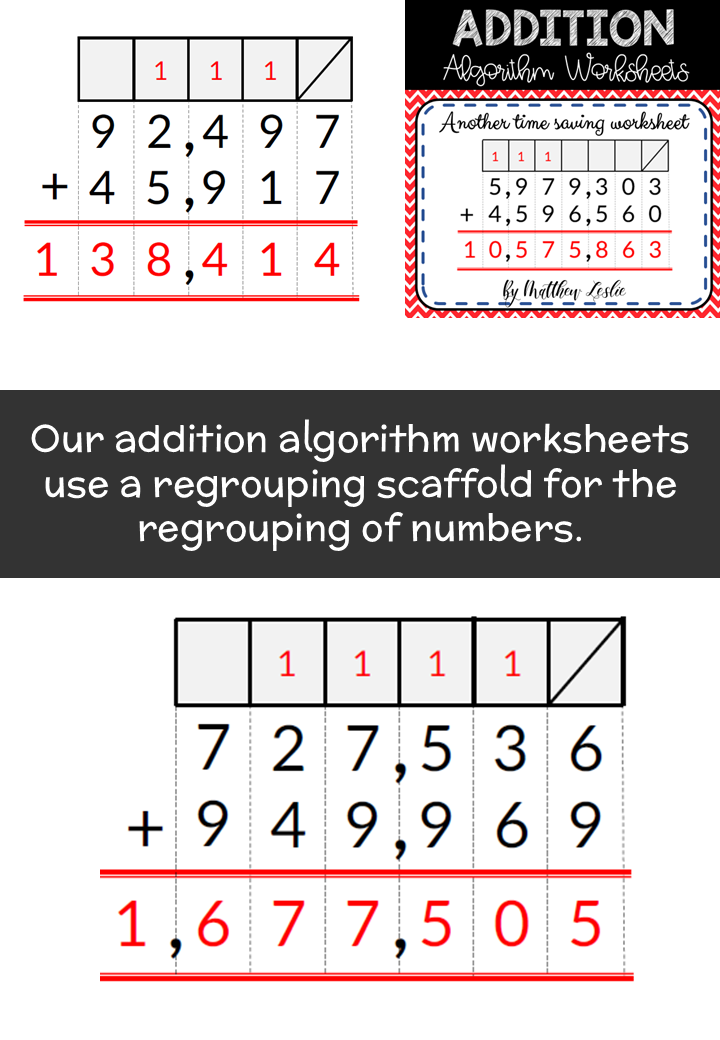
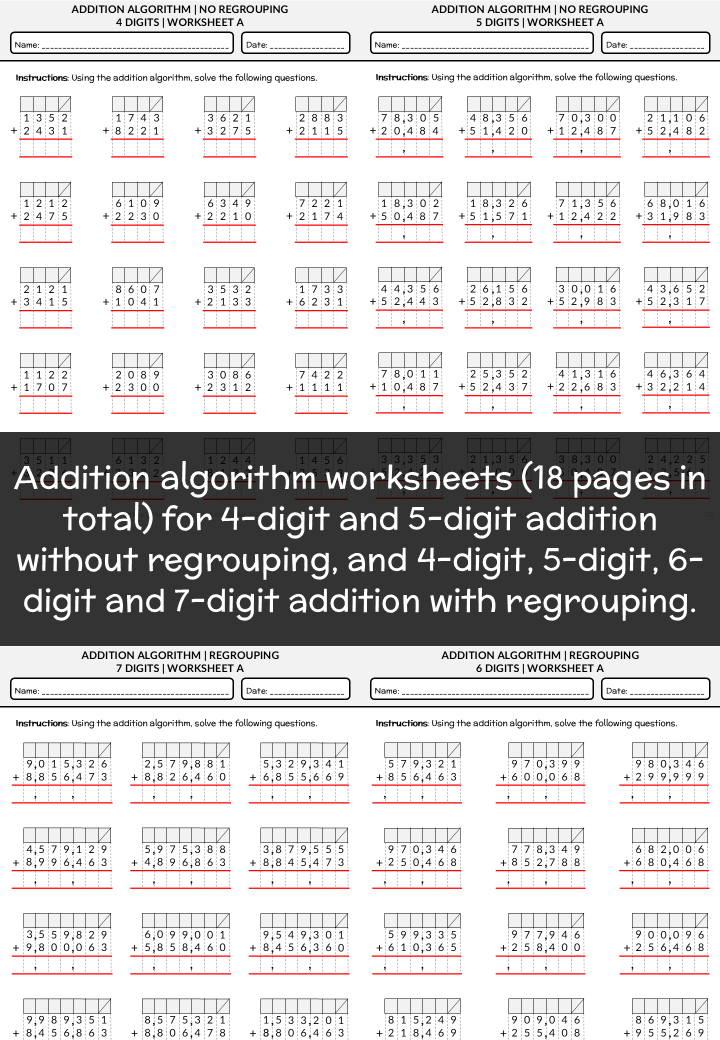
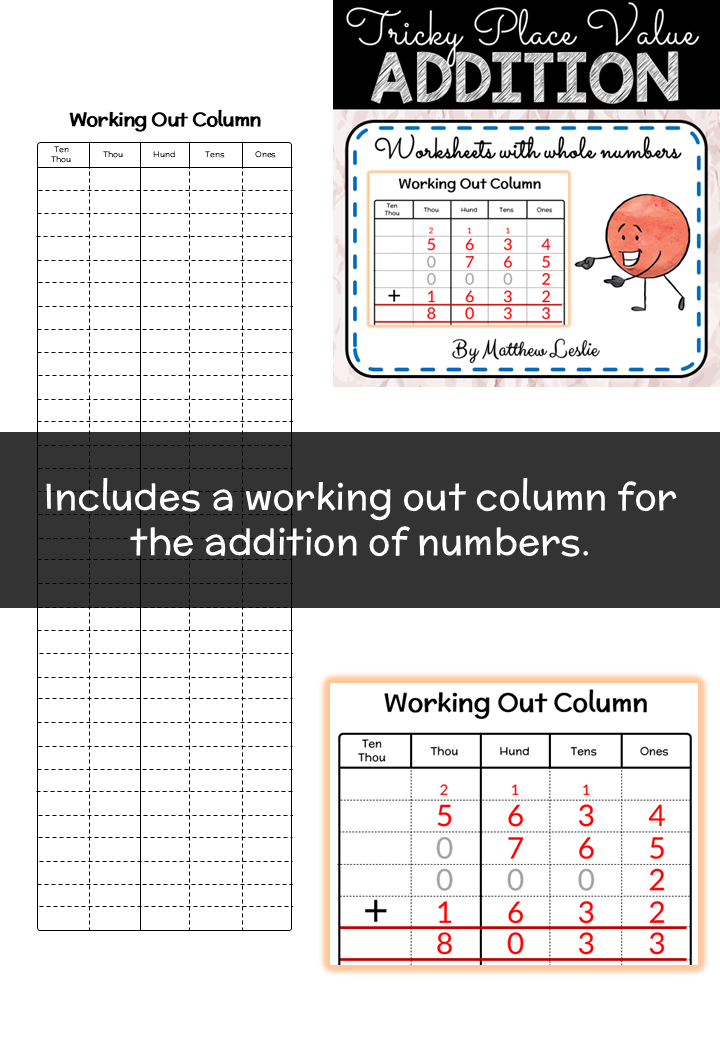
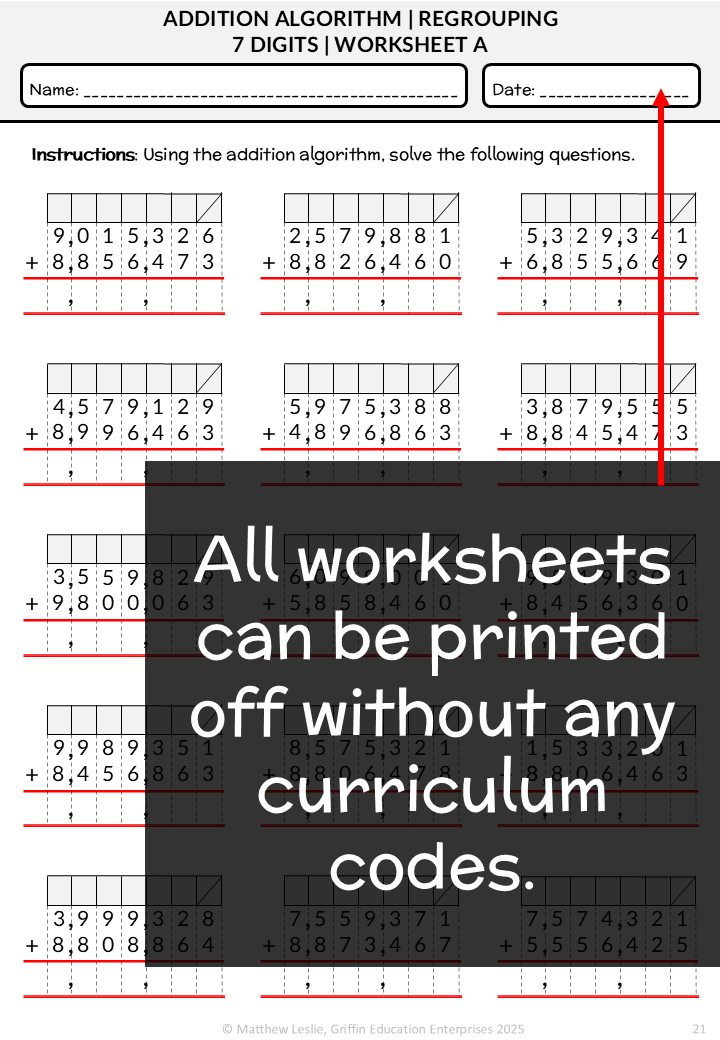
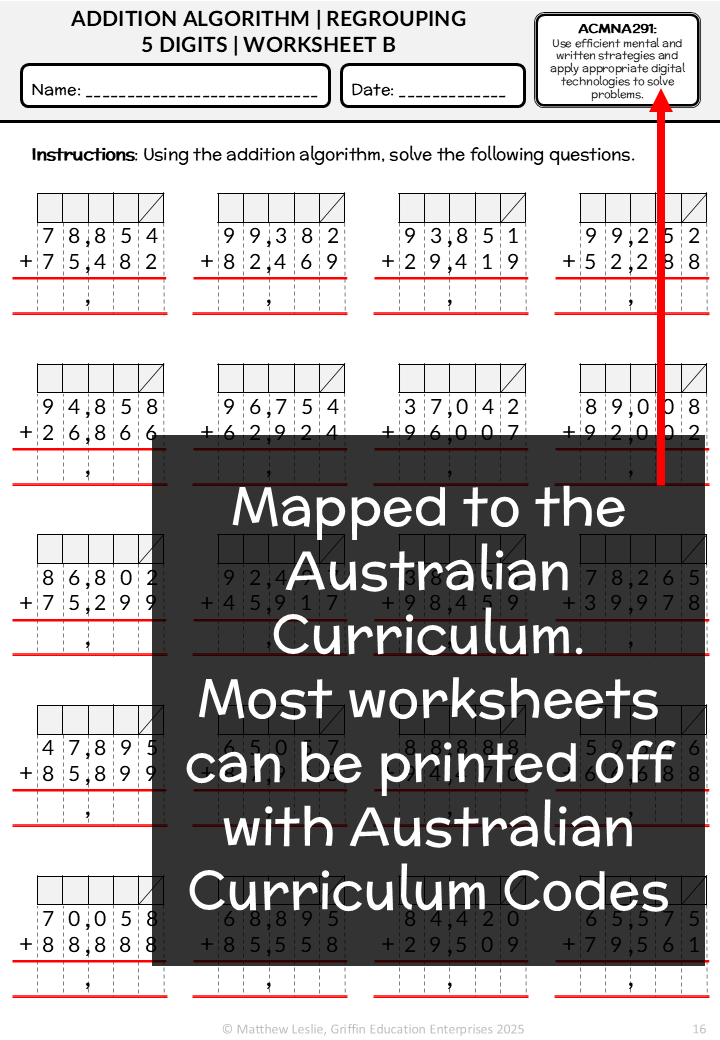
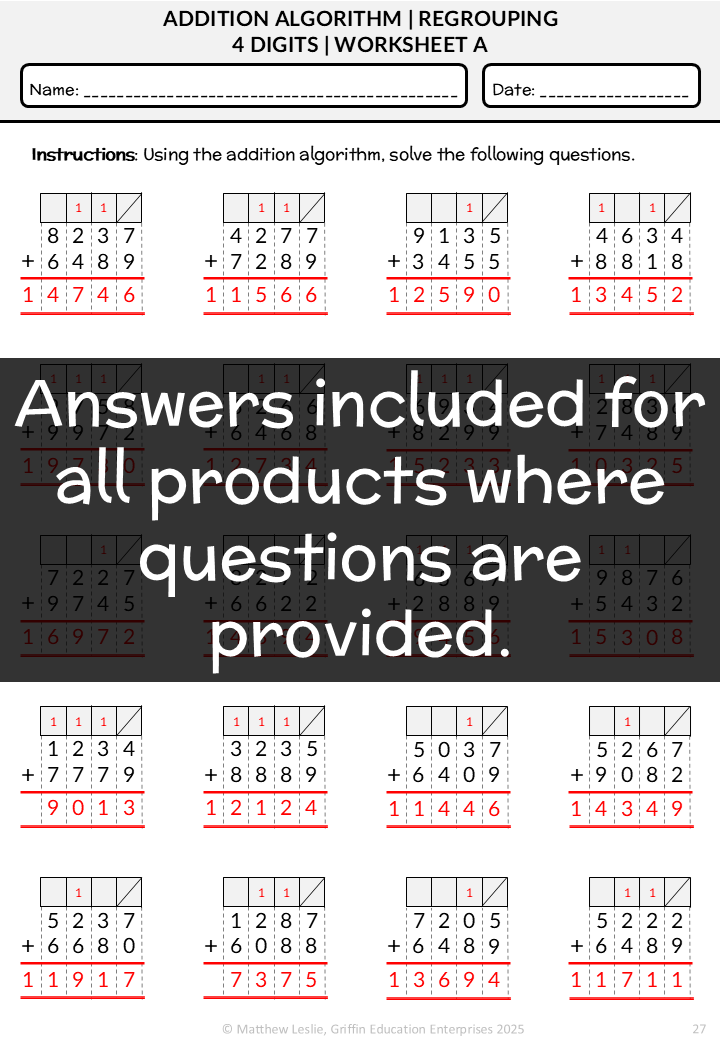
➕ Addition (3-digits to 7-digits),
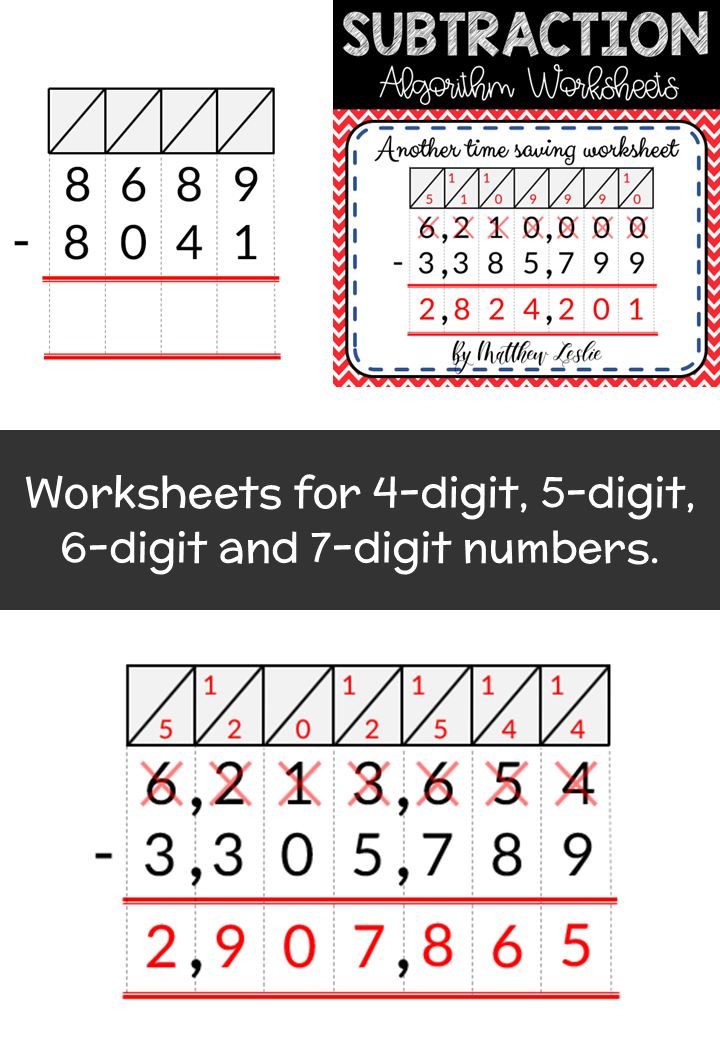
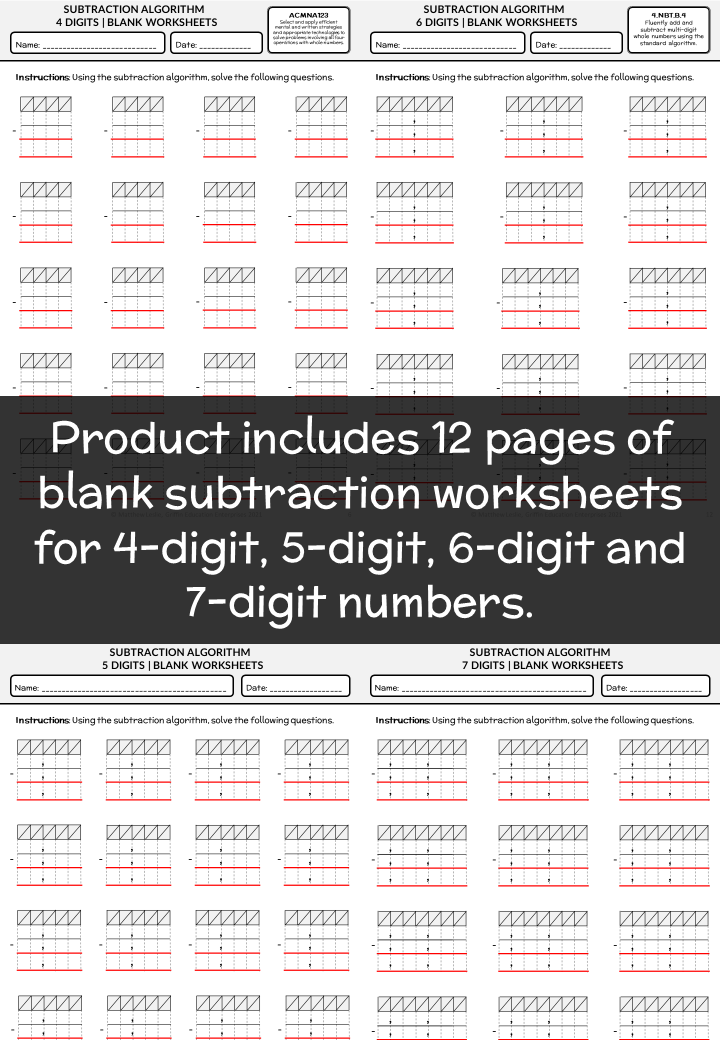
➖ Subtraction (3-digits to 7-digits),
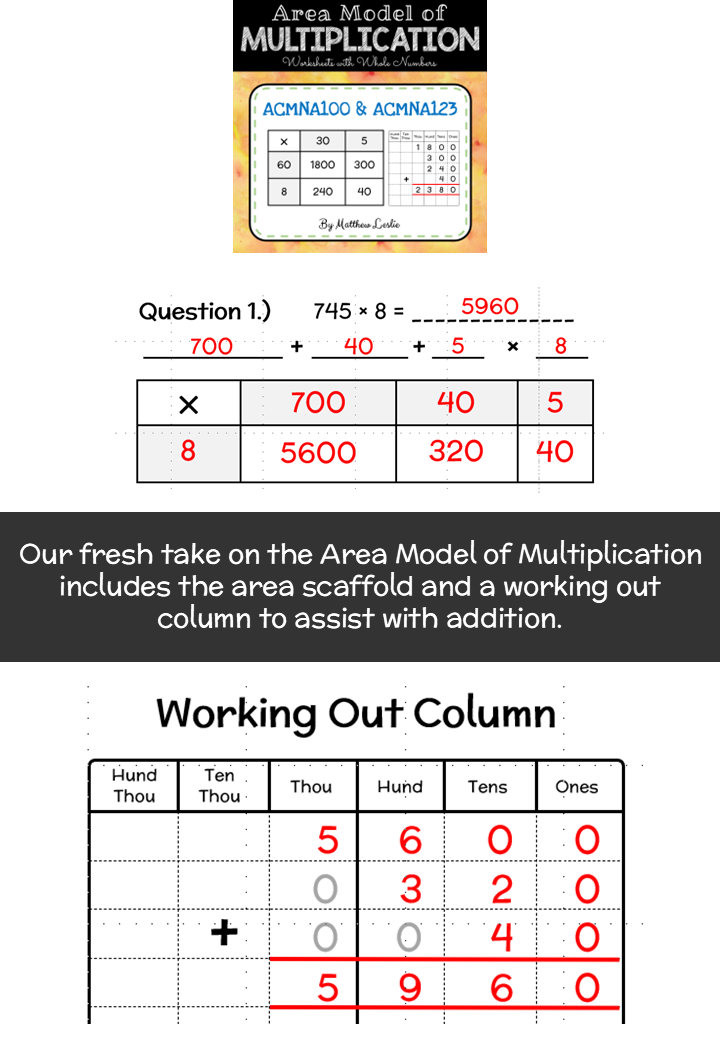
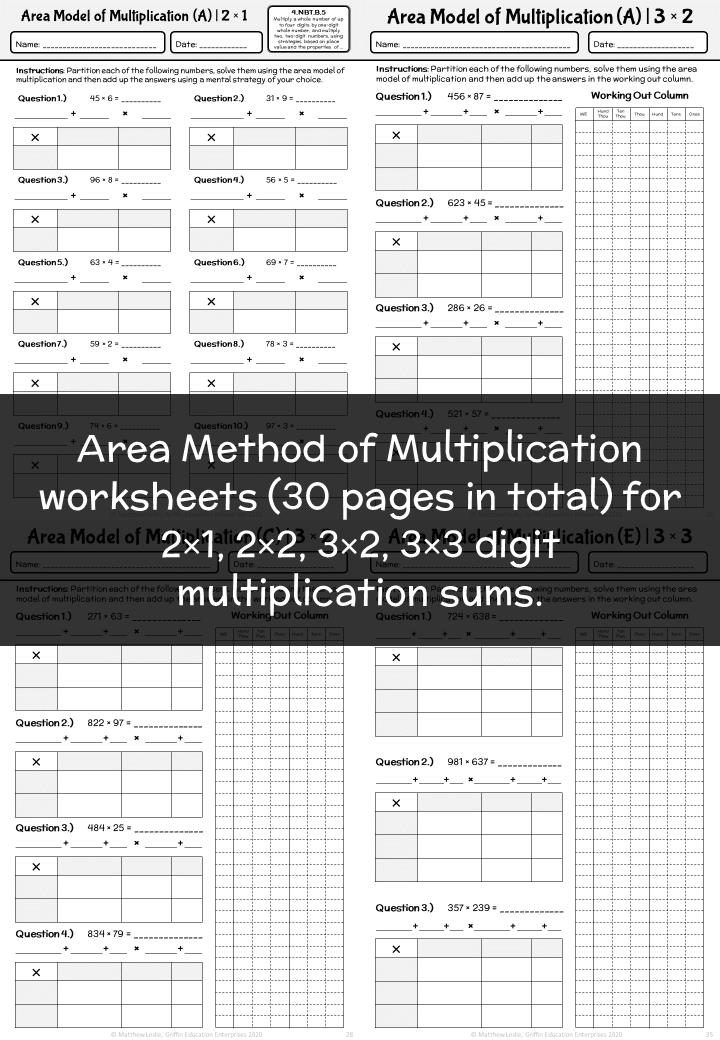
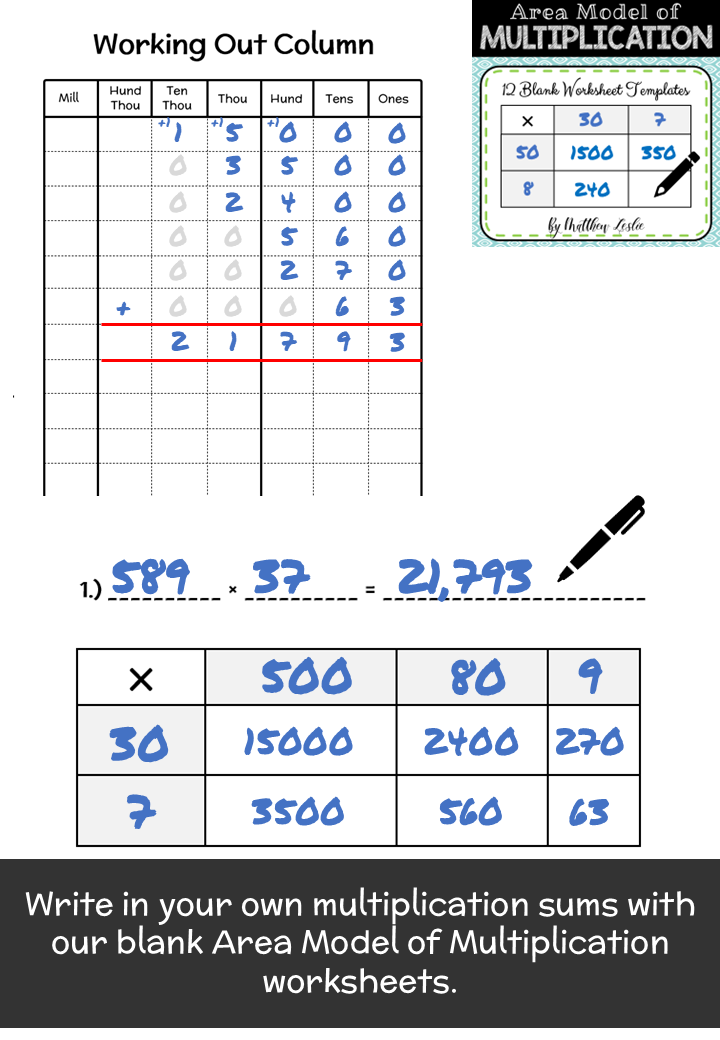
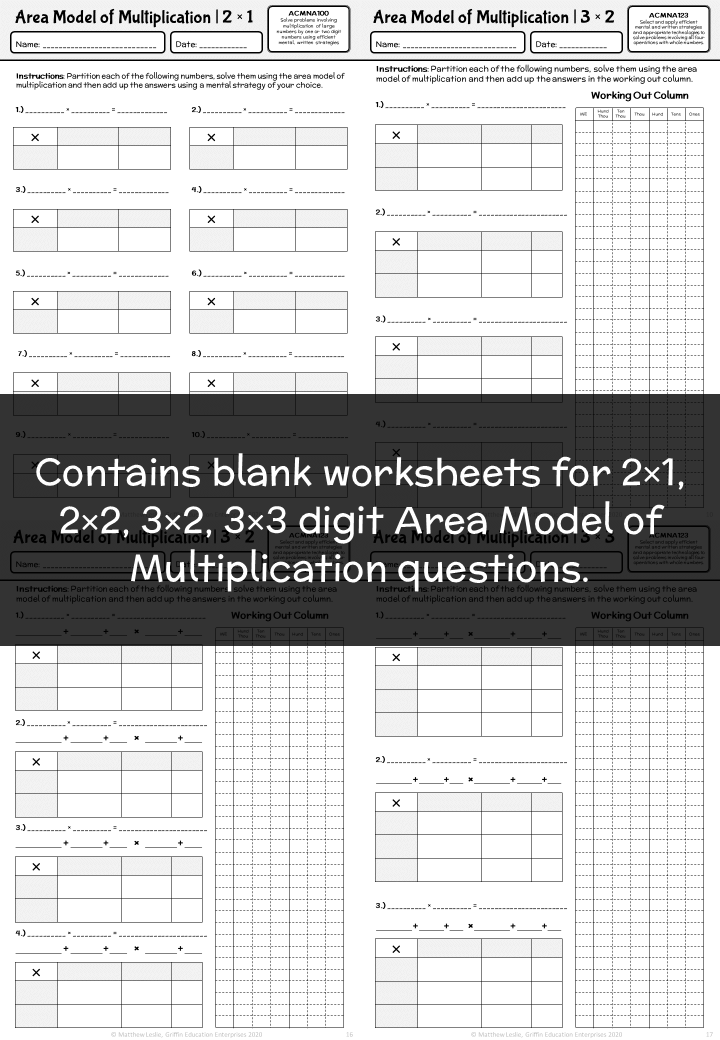
✖️ Area model of multiplication (3x1 digits, 2x2 digits, 3x1 digits, 3x2 digits, 3x3 digits),
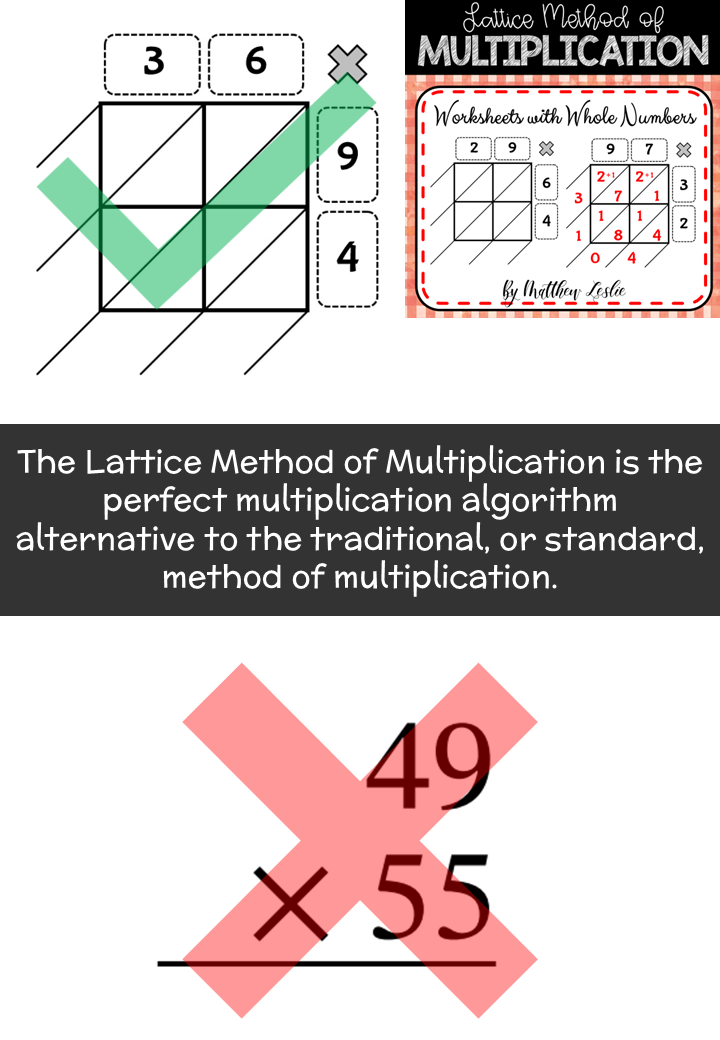
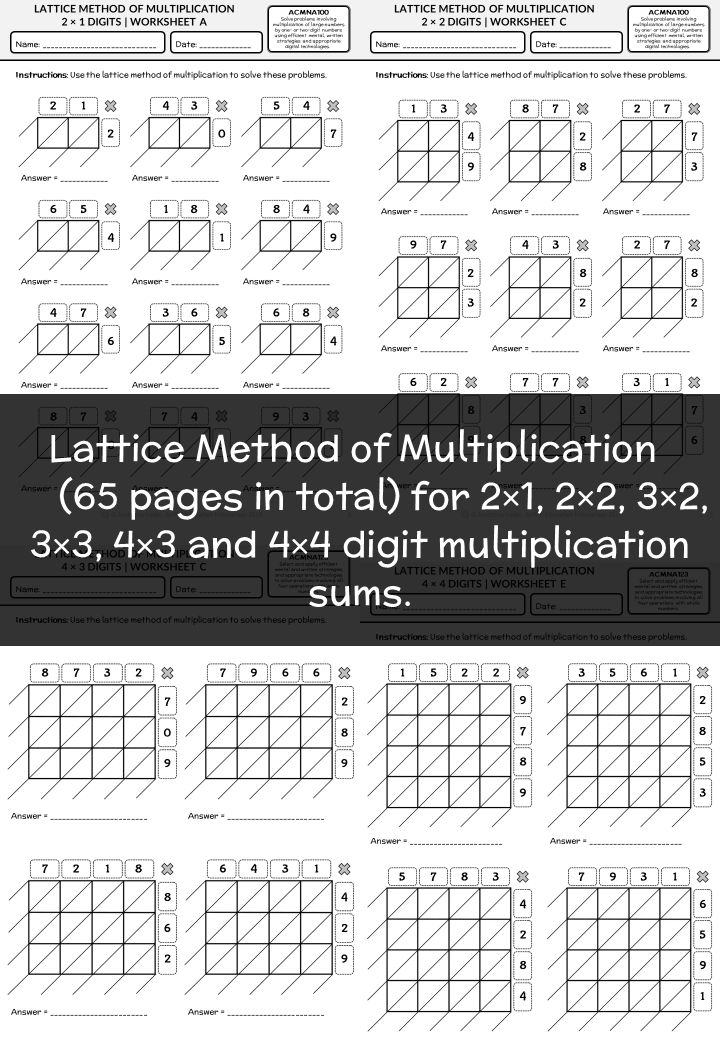
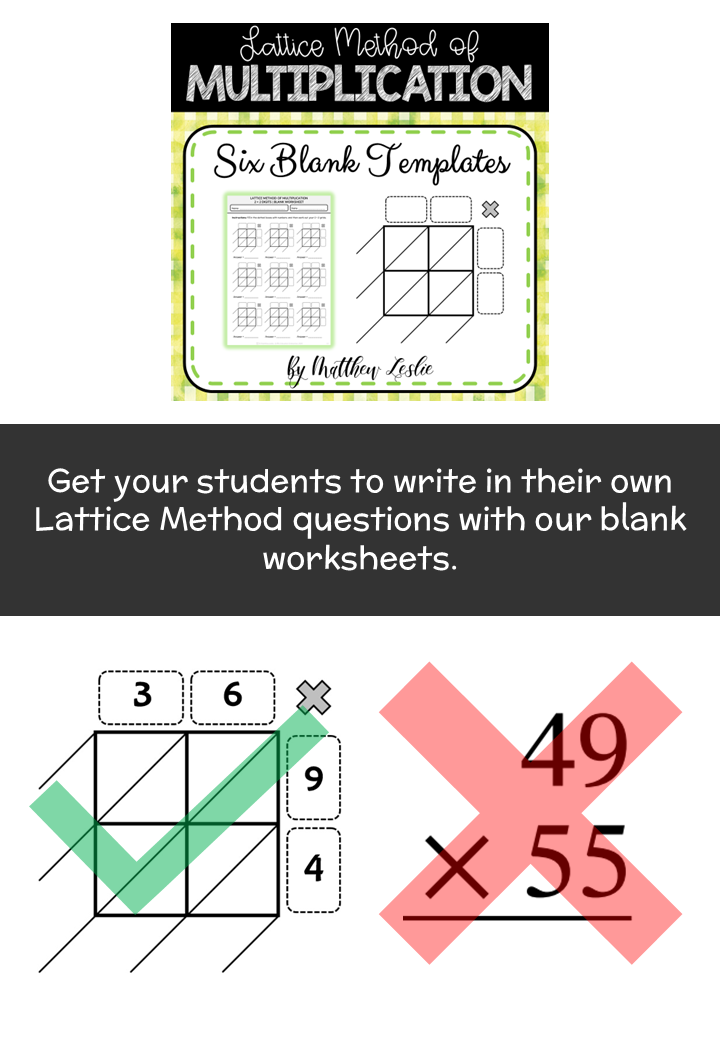
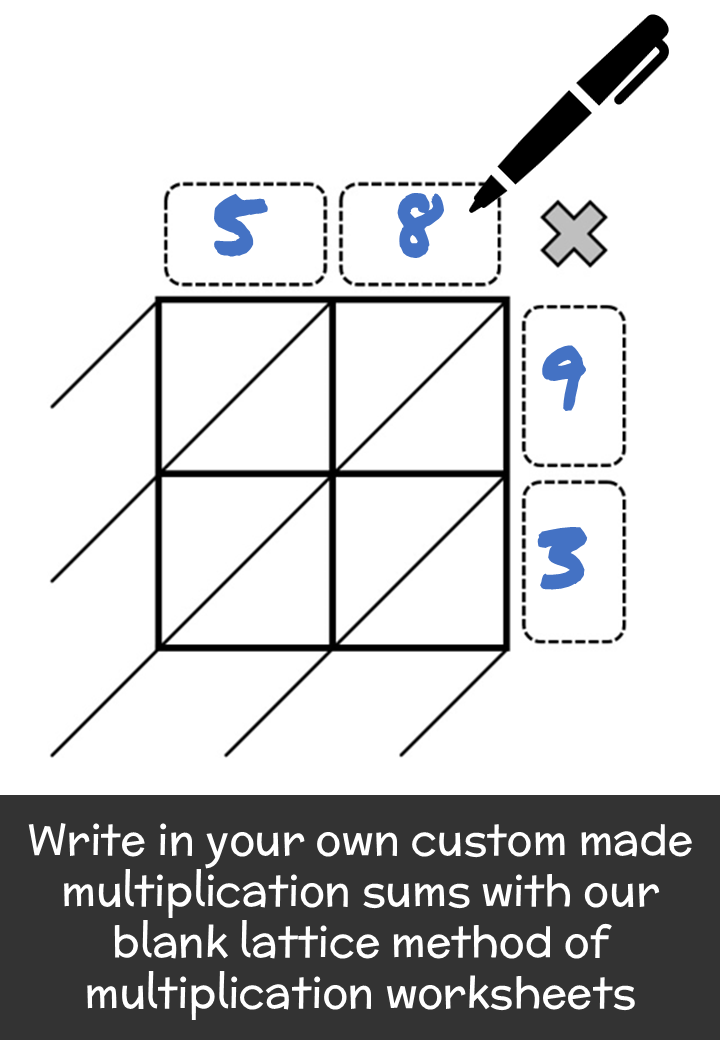
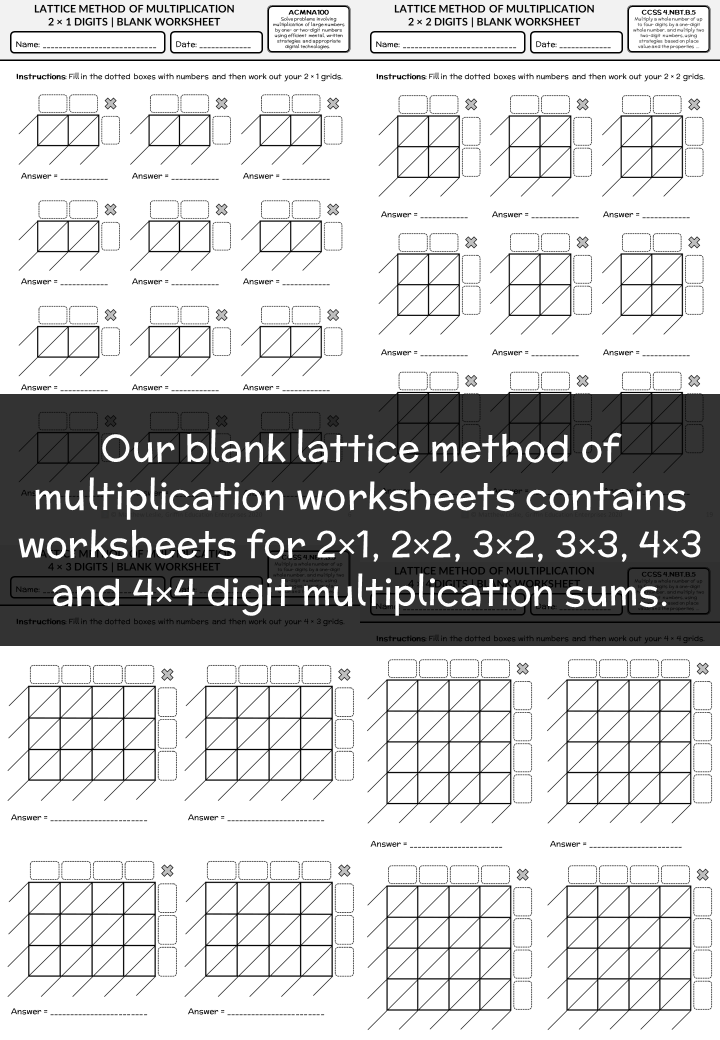
✖️ Lattice method of multiplication (2x1 digits, 2x2 digits, 3x2 digits, 3x3 digits, 4x3 digits, 4x4 digits),
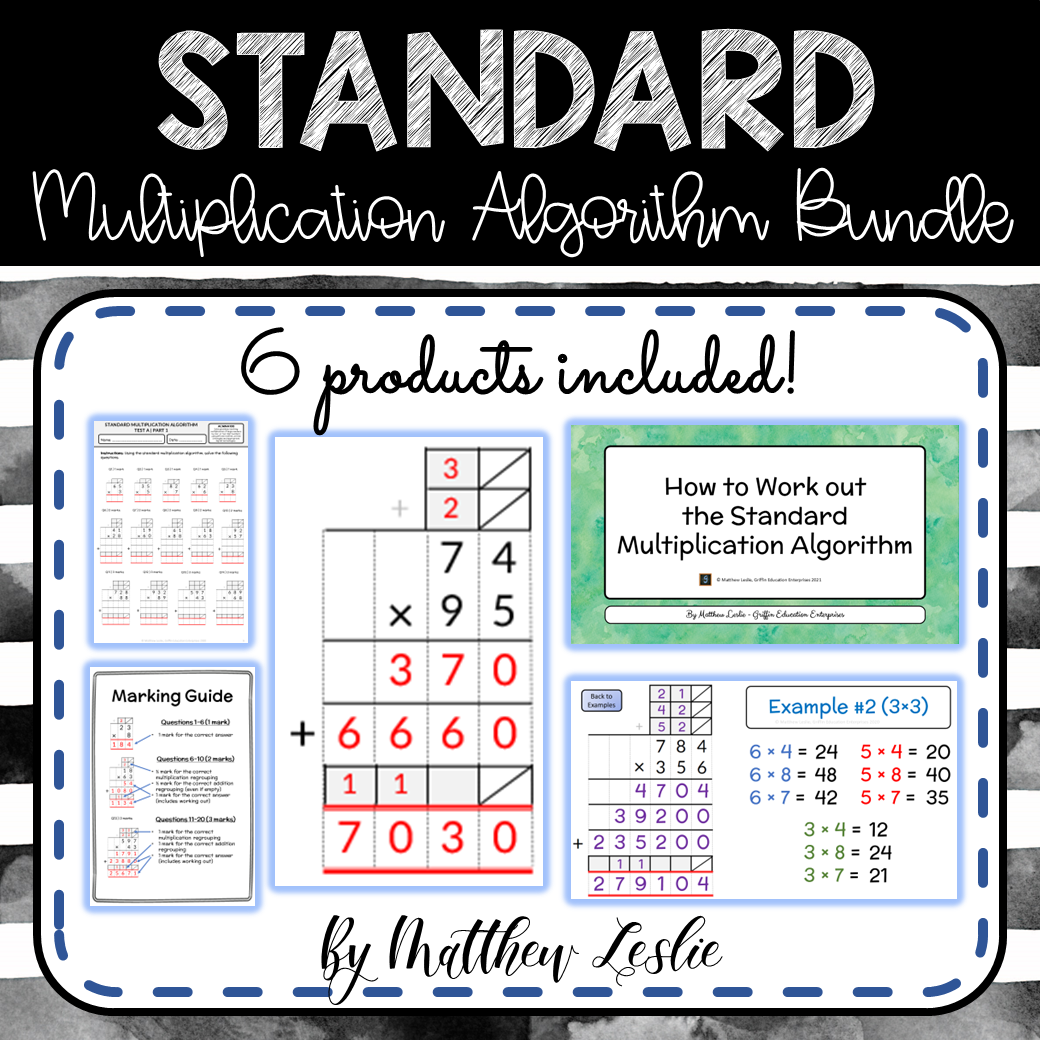
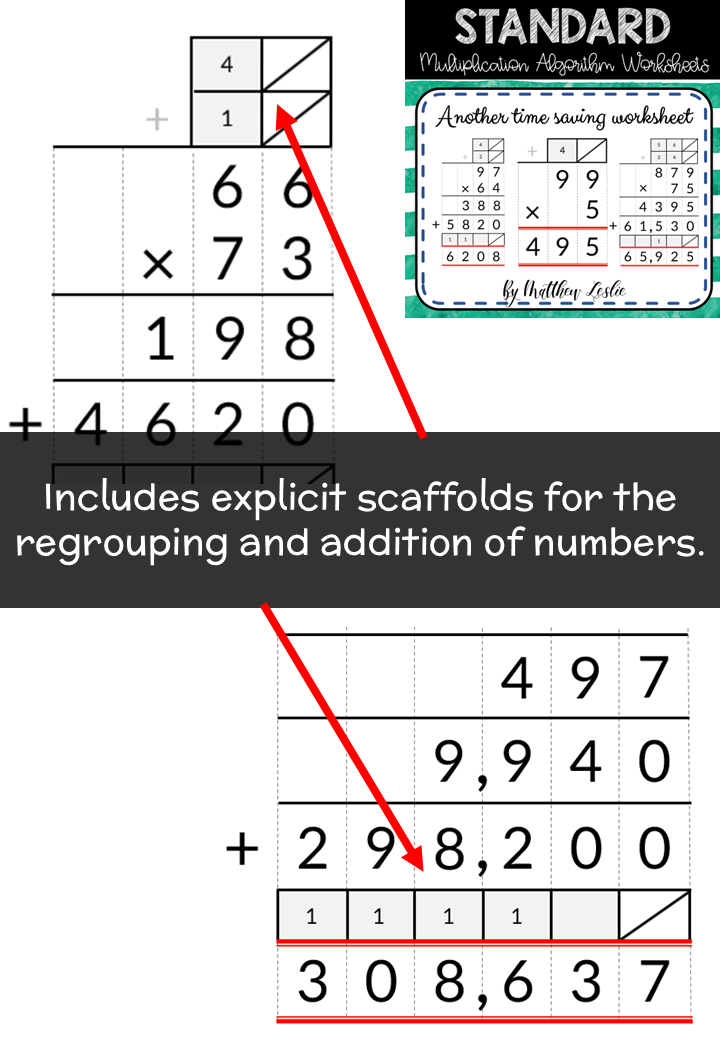
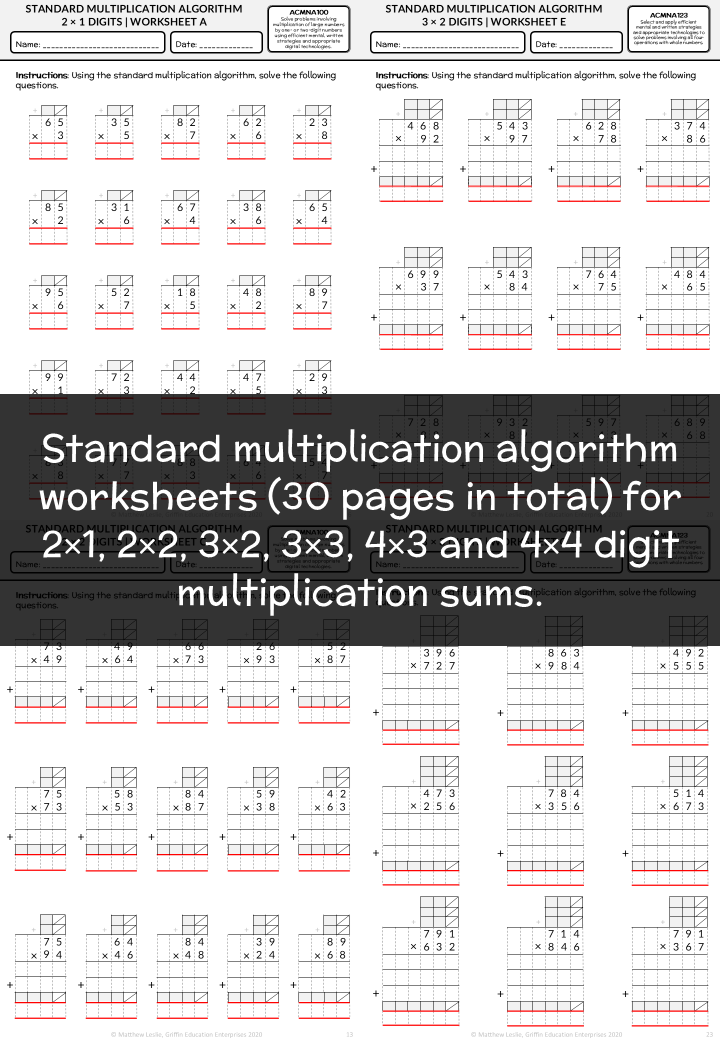
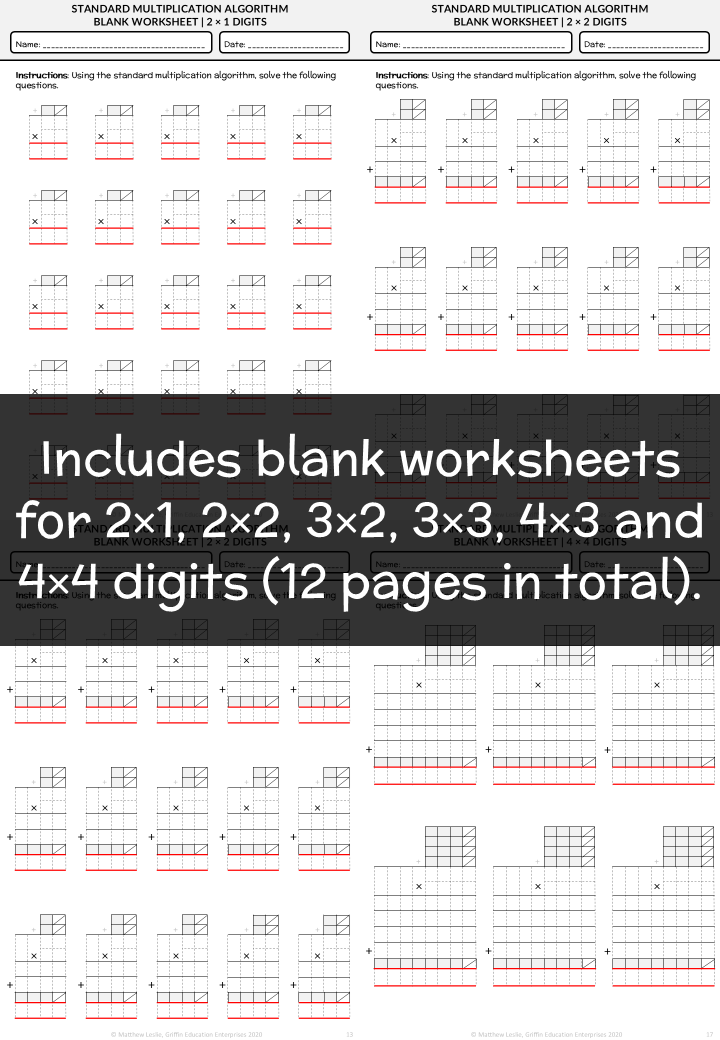
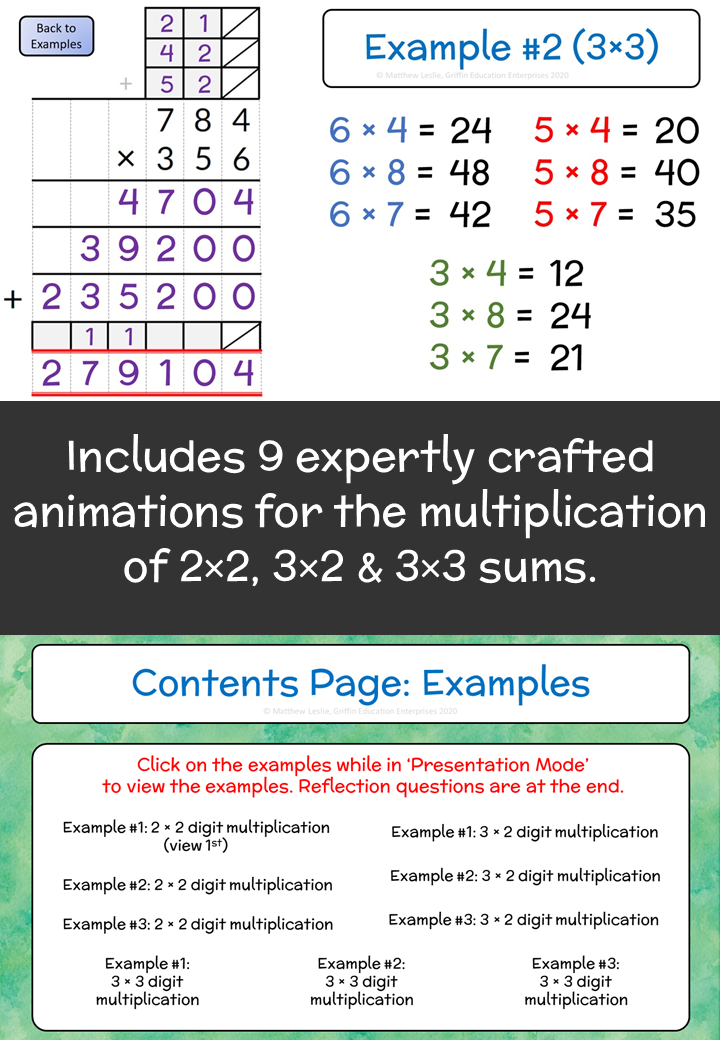
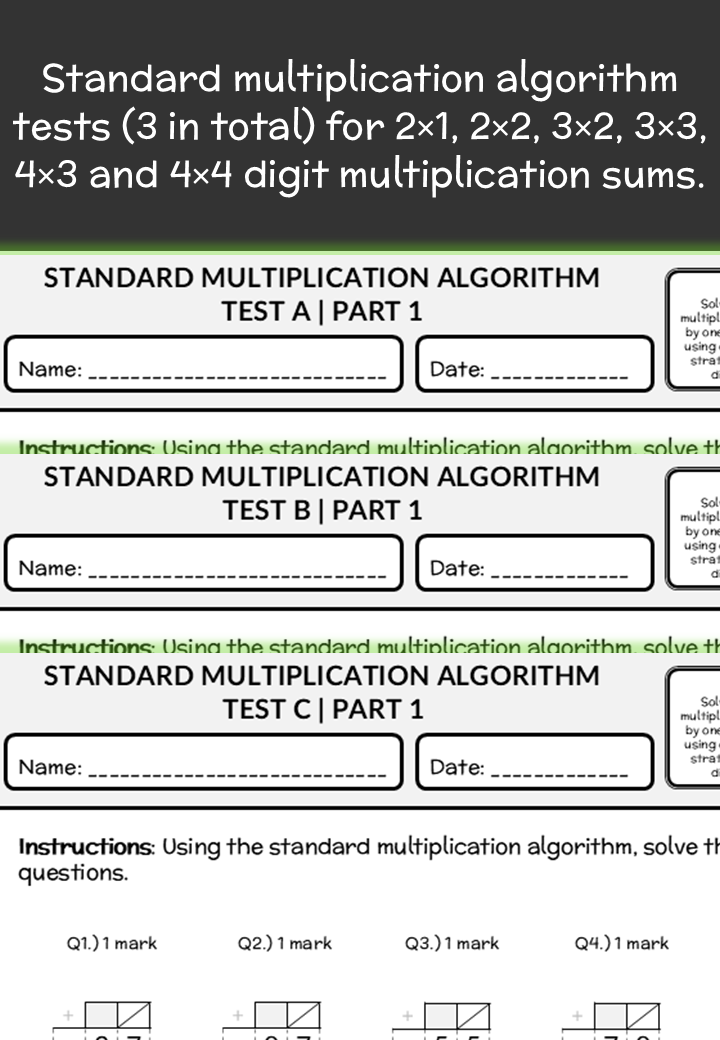
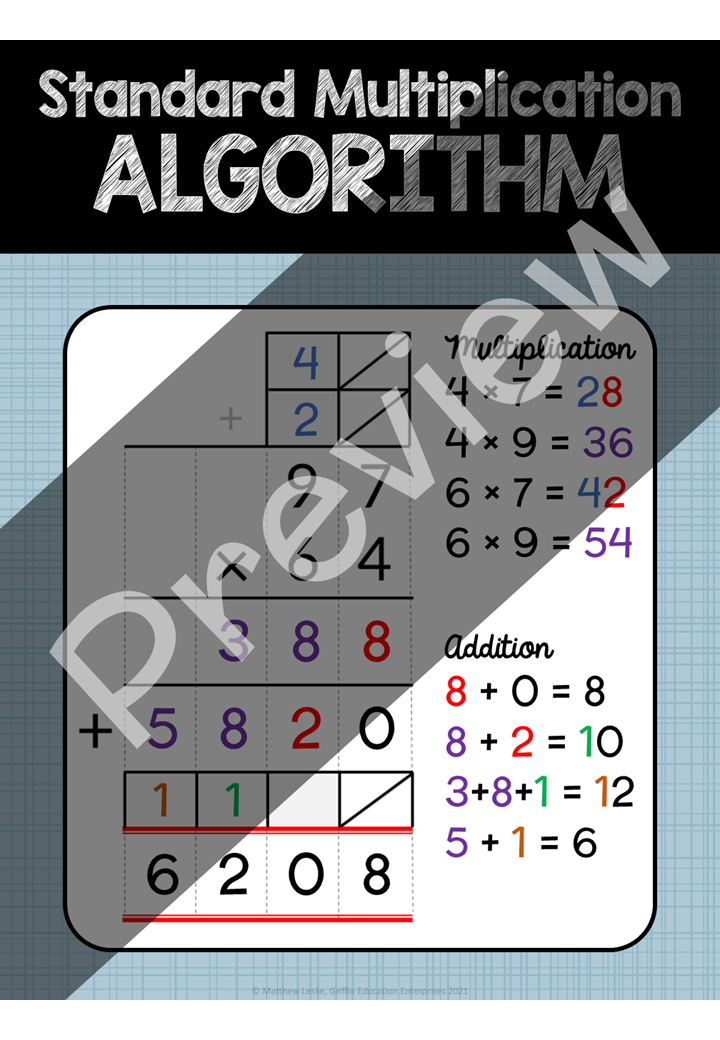
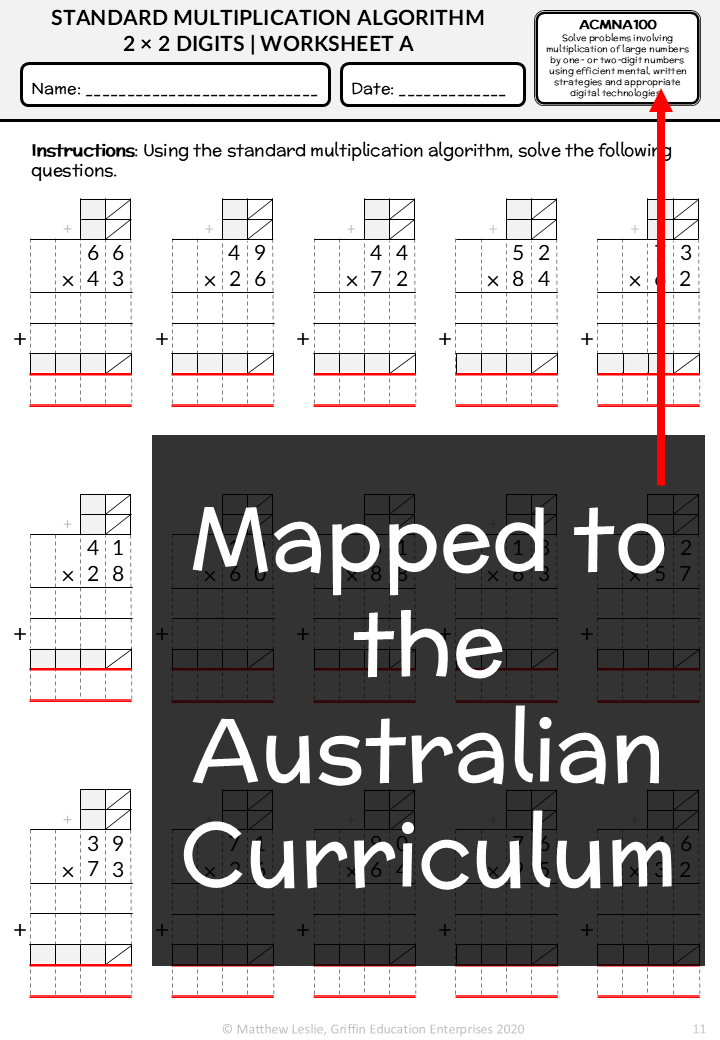
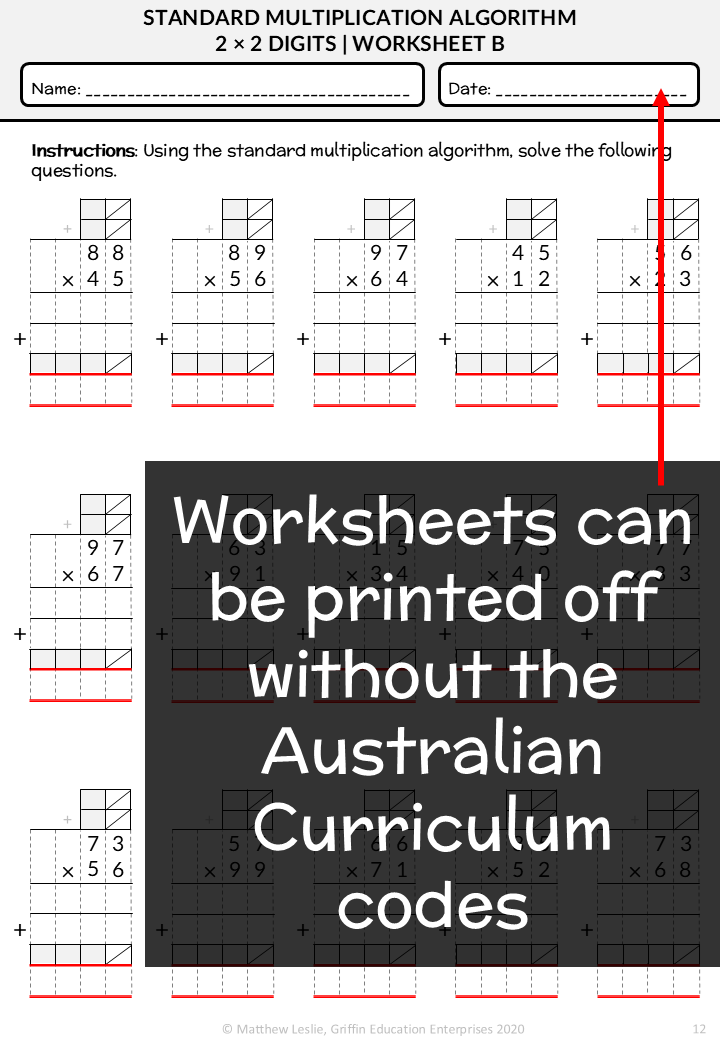
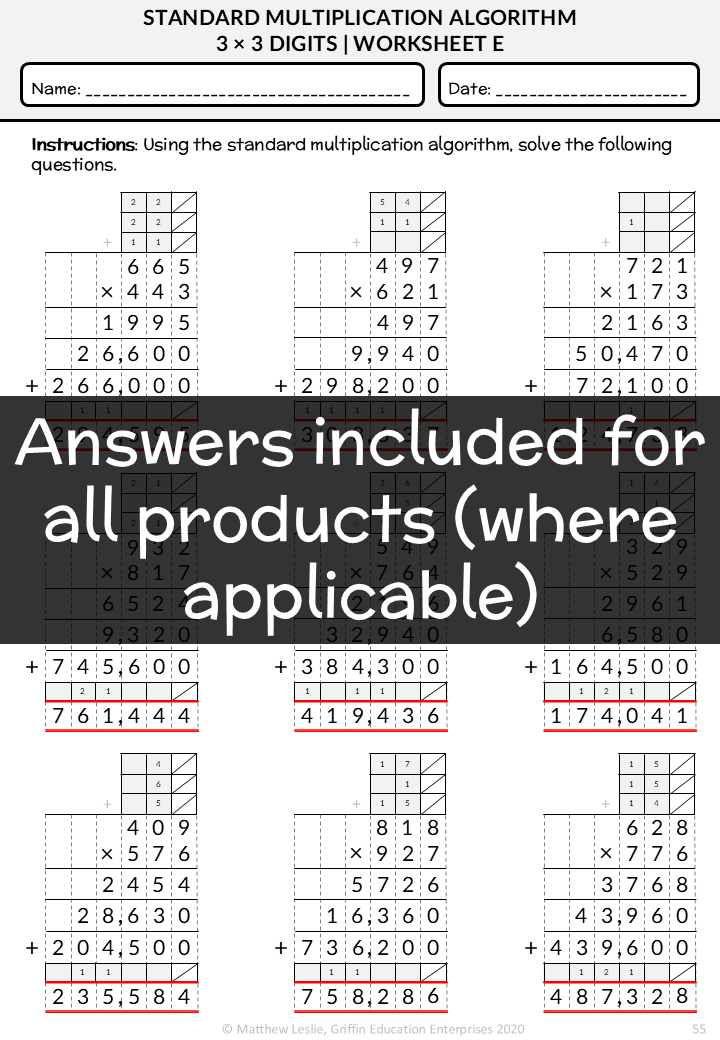
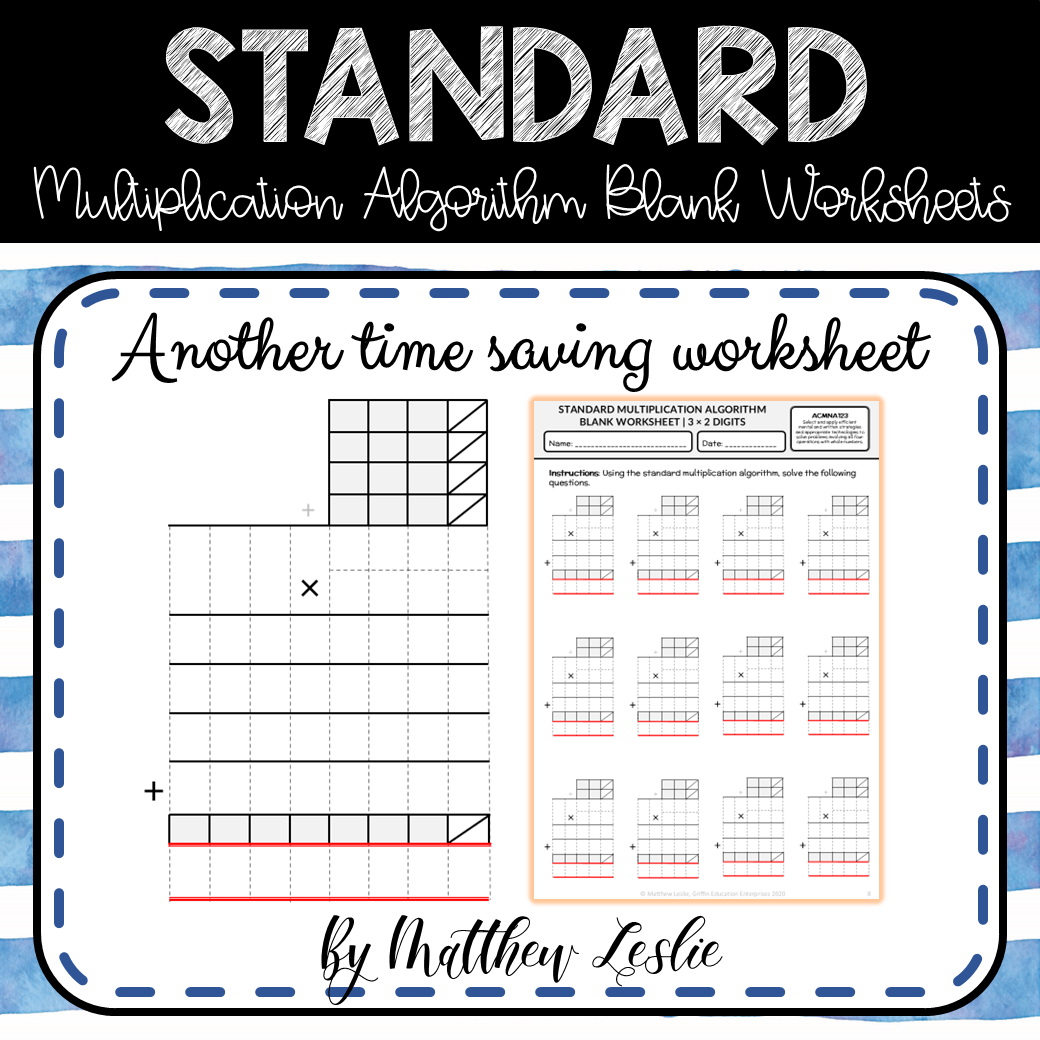
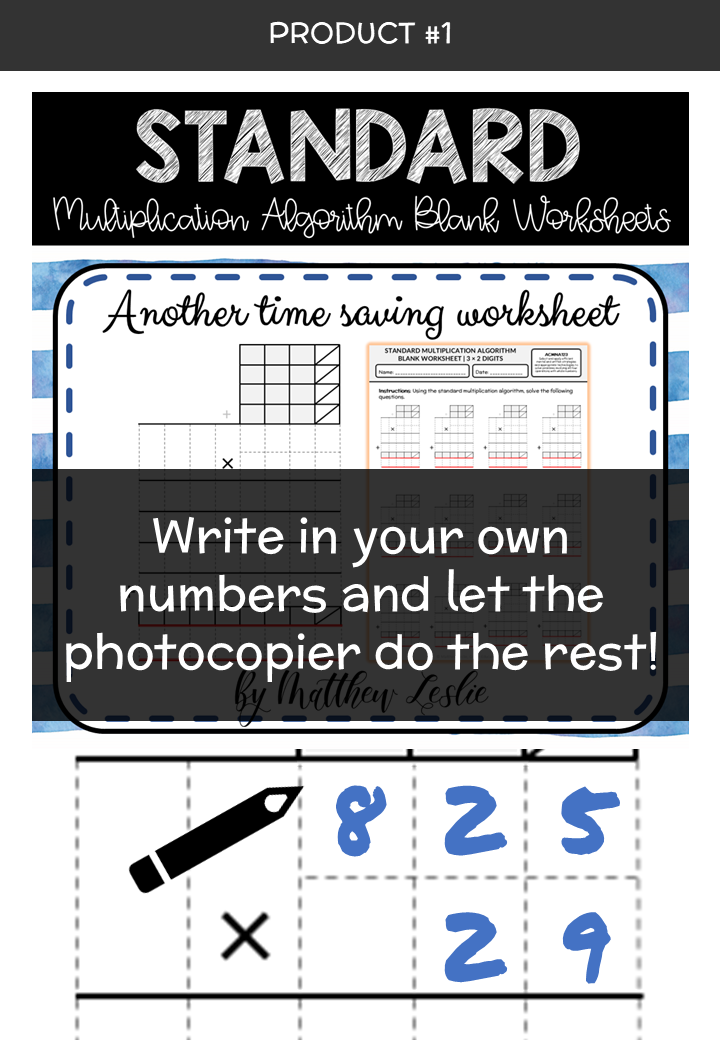
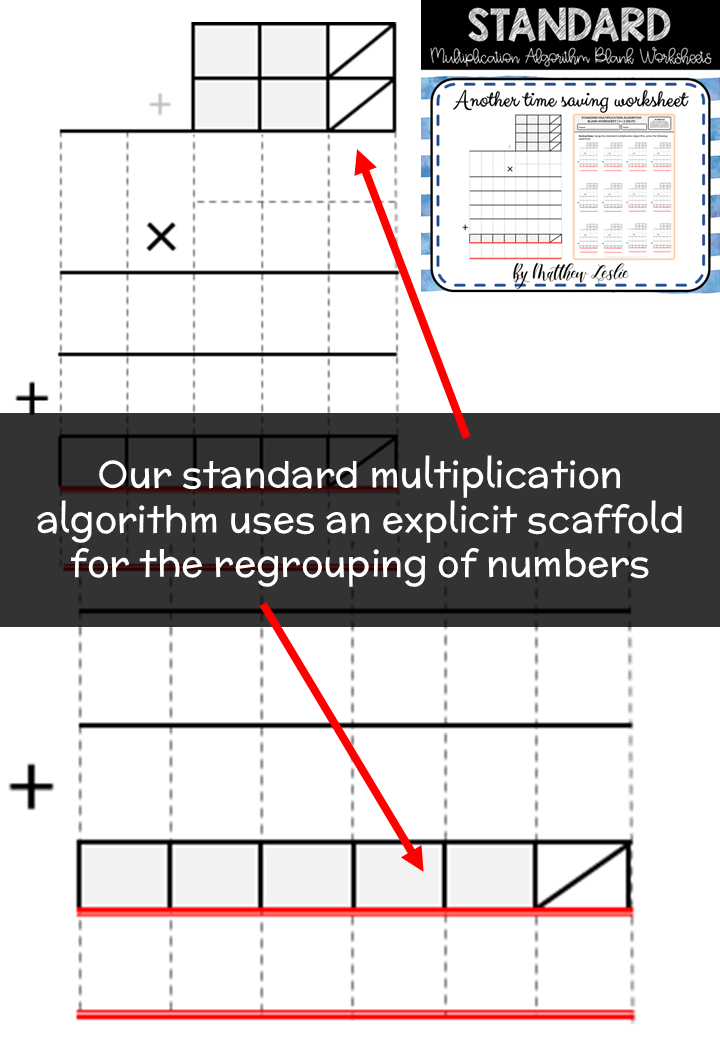
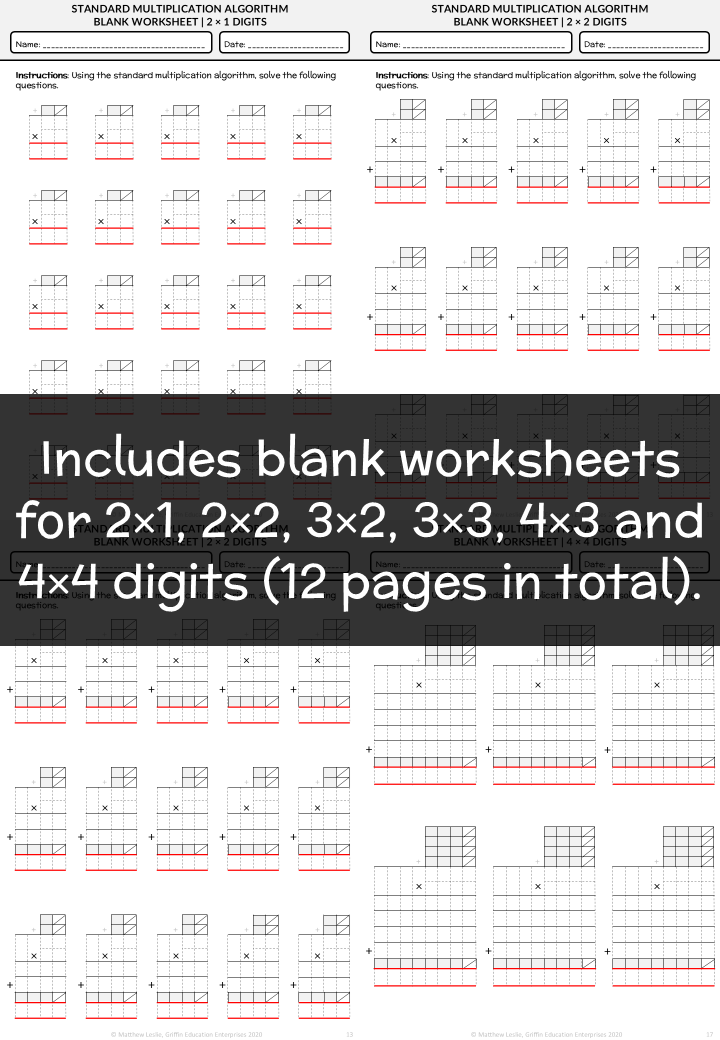
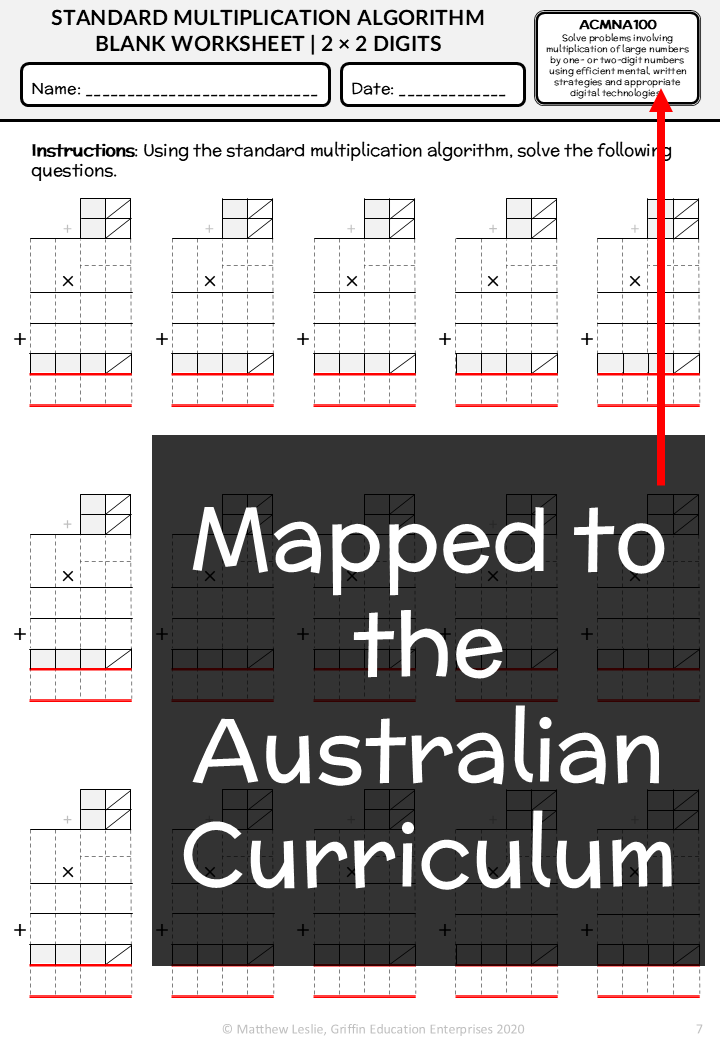
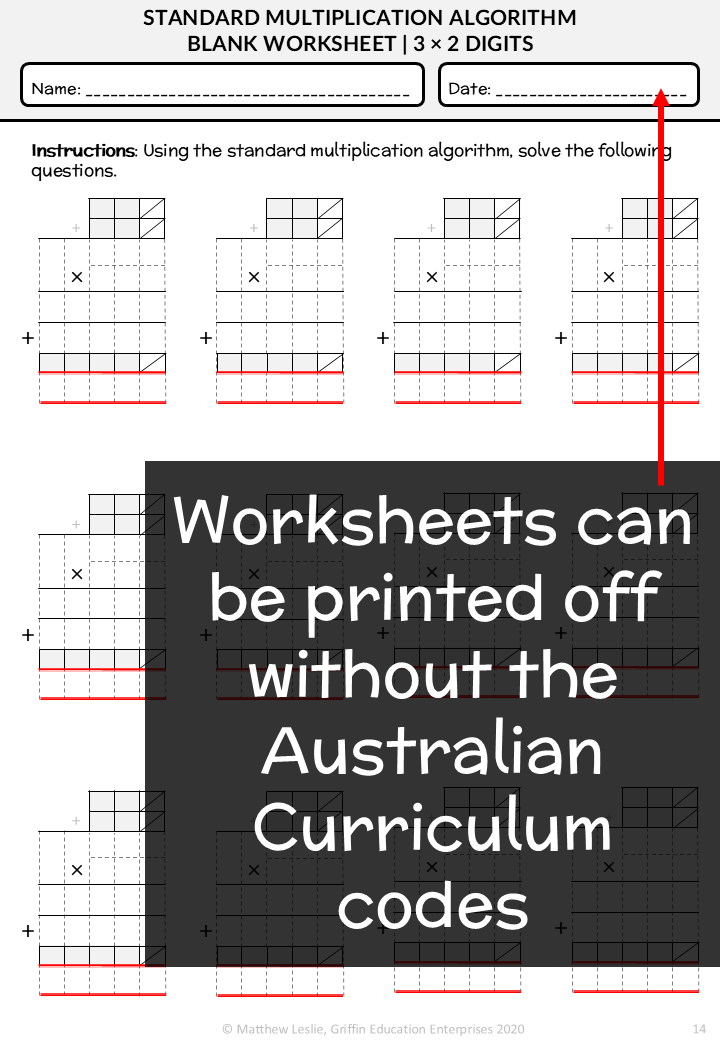
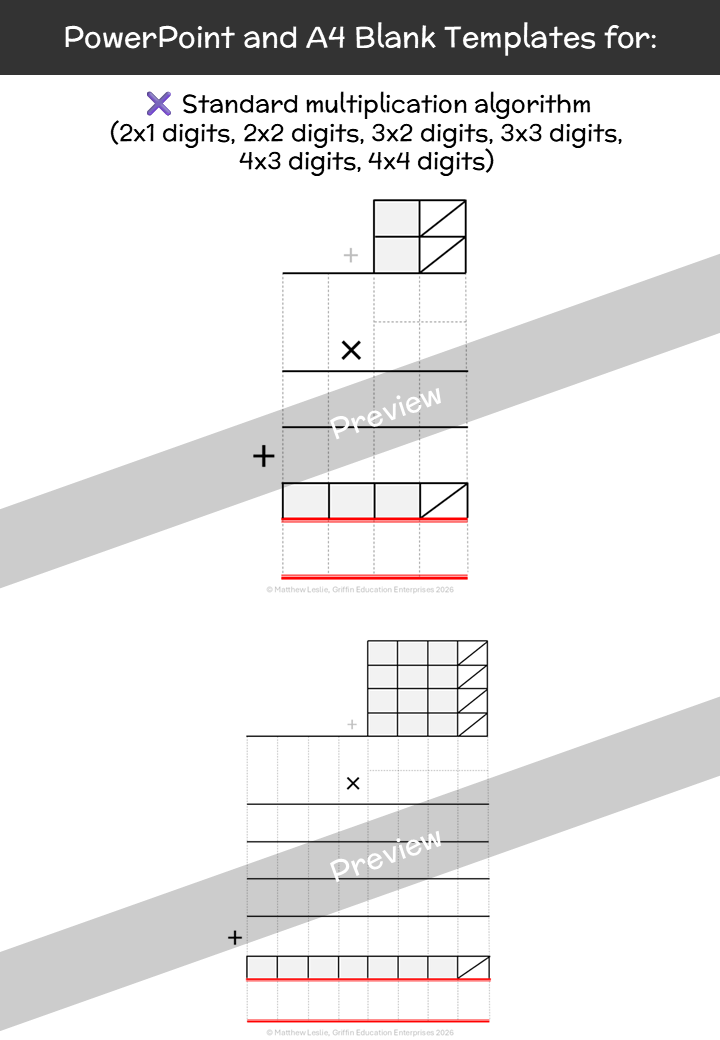
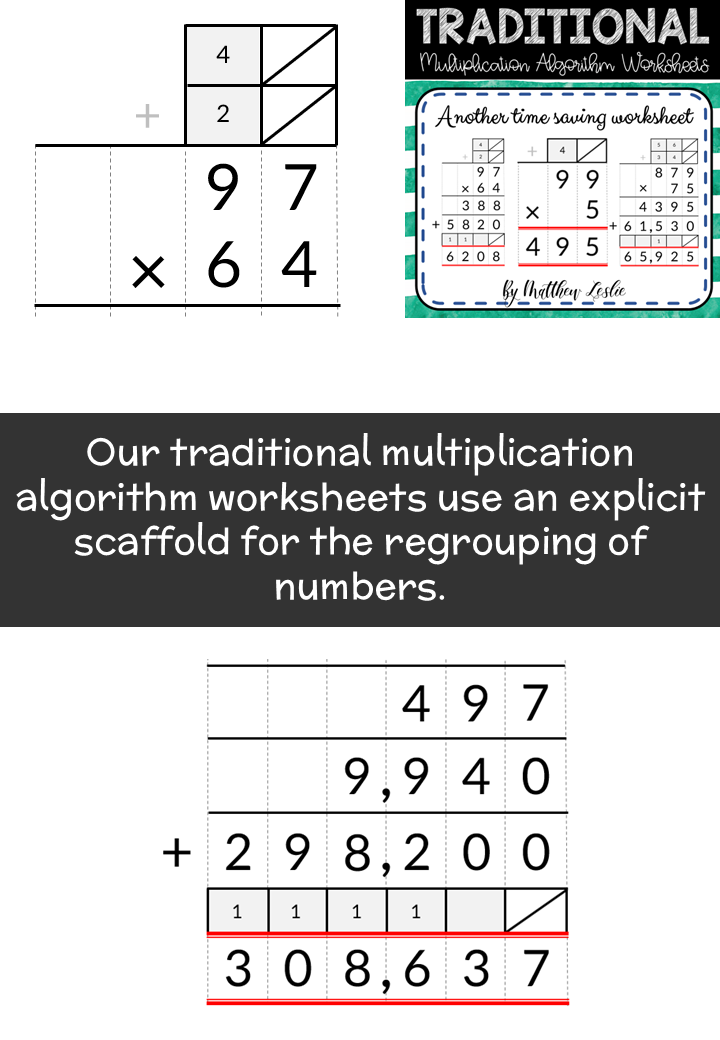
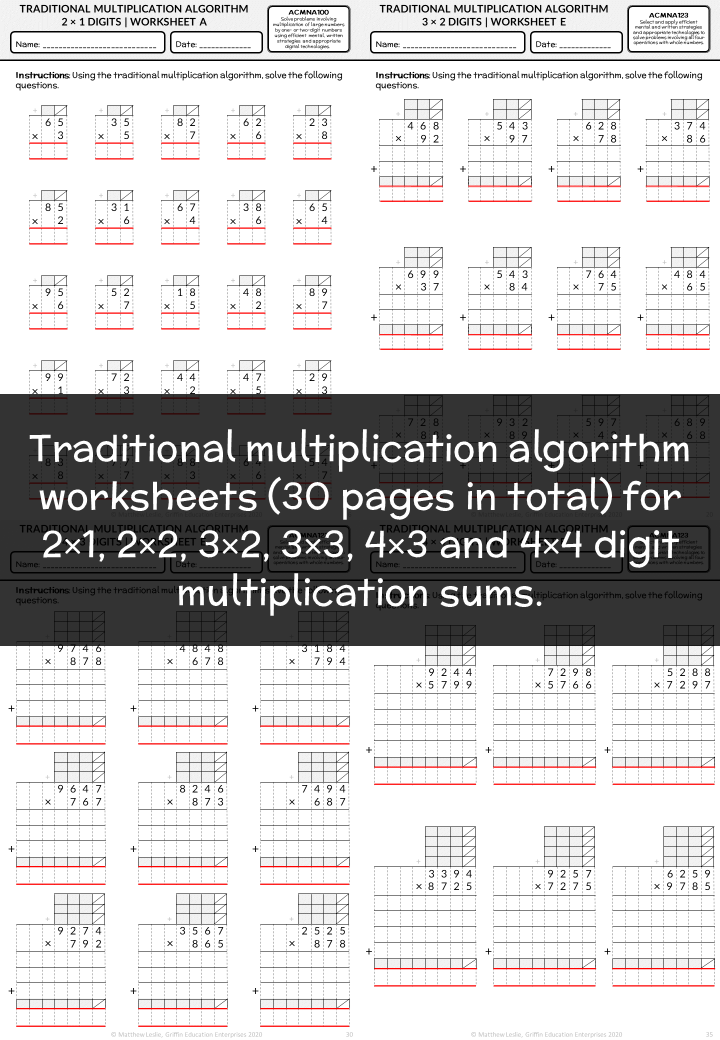
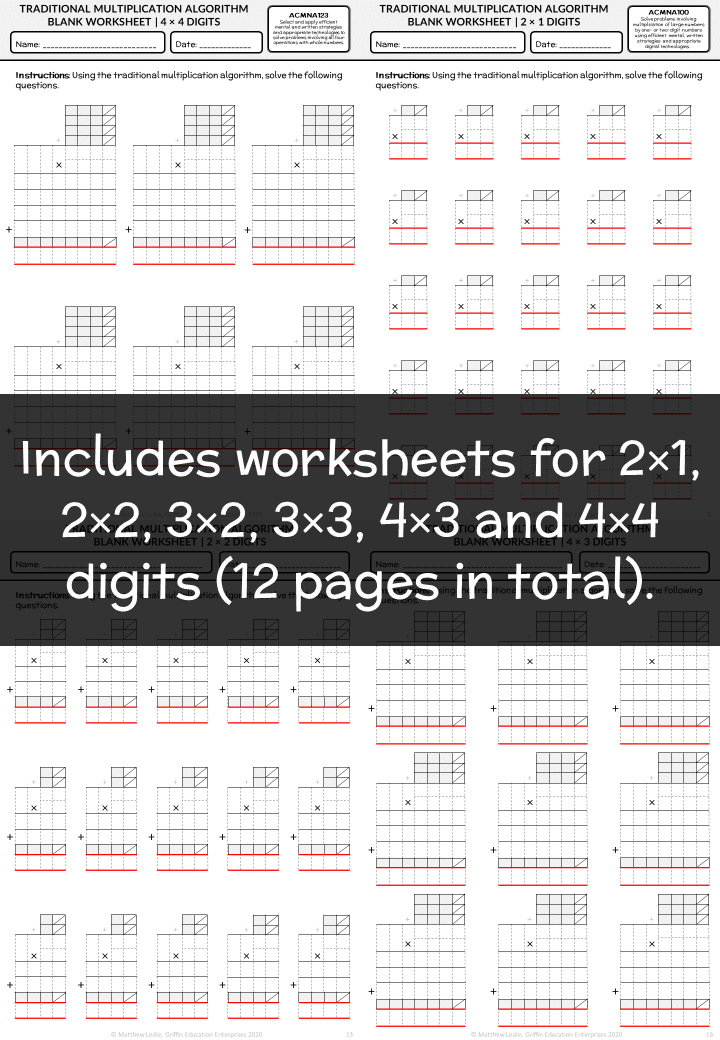
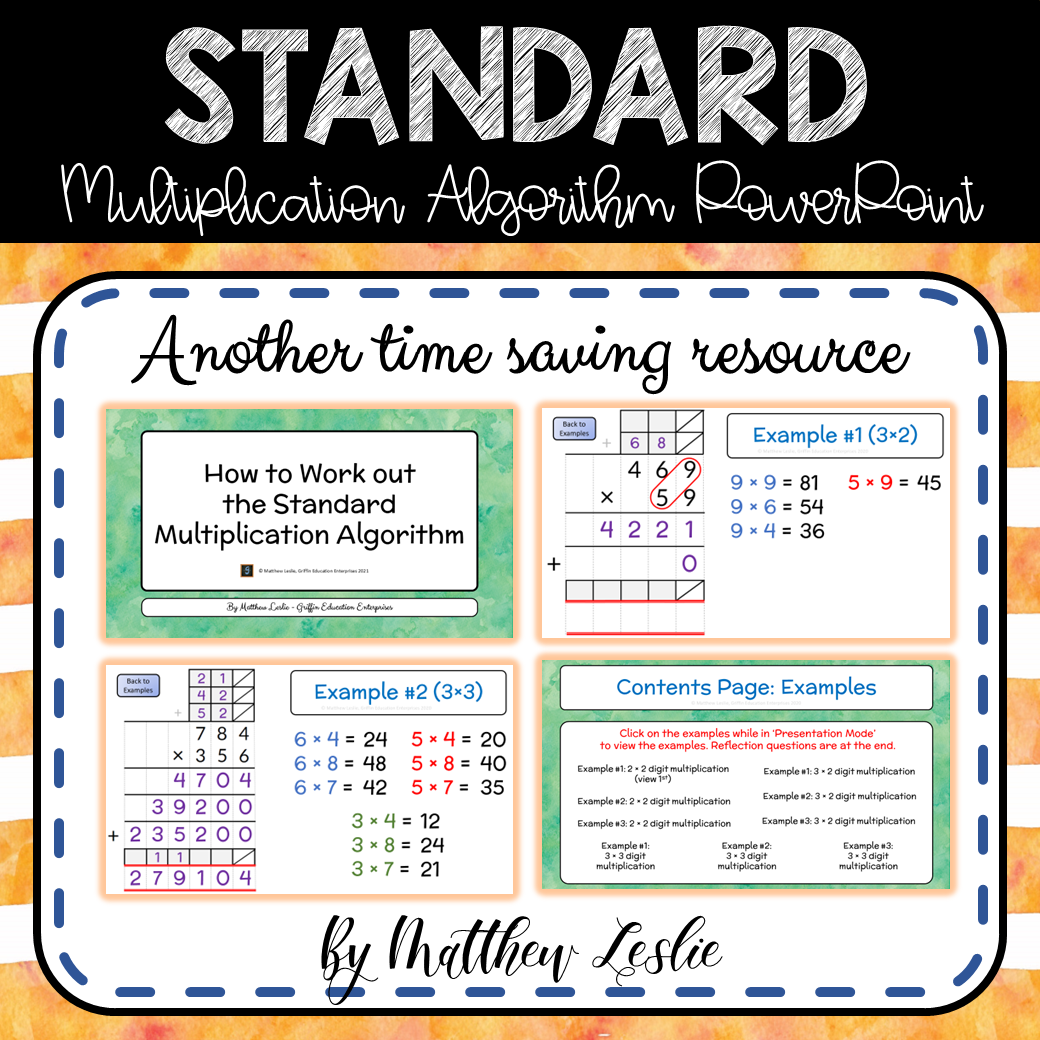
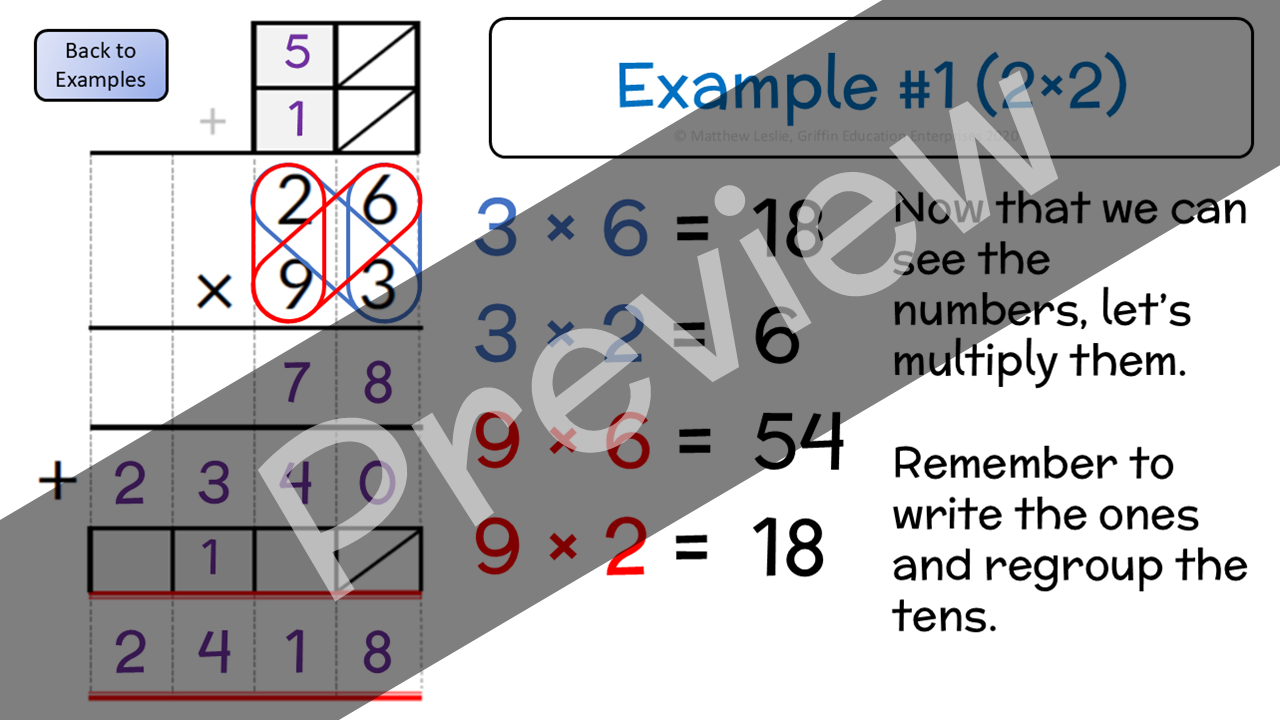
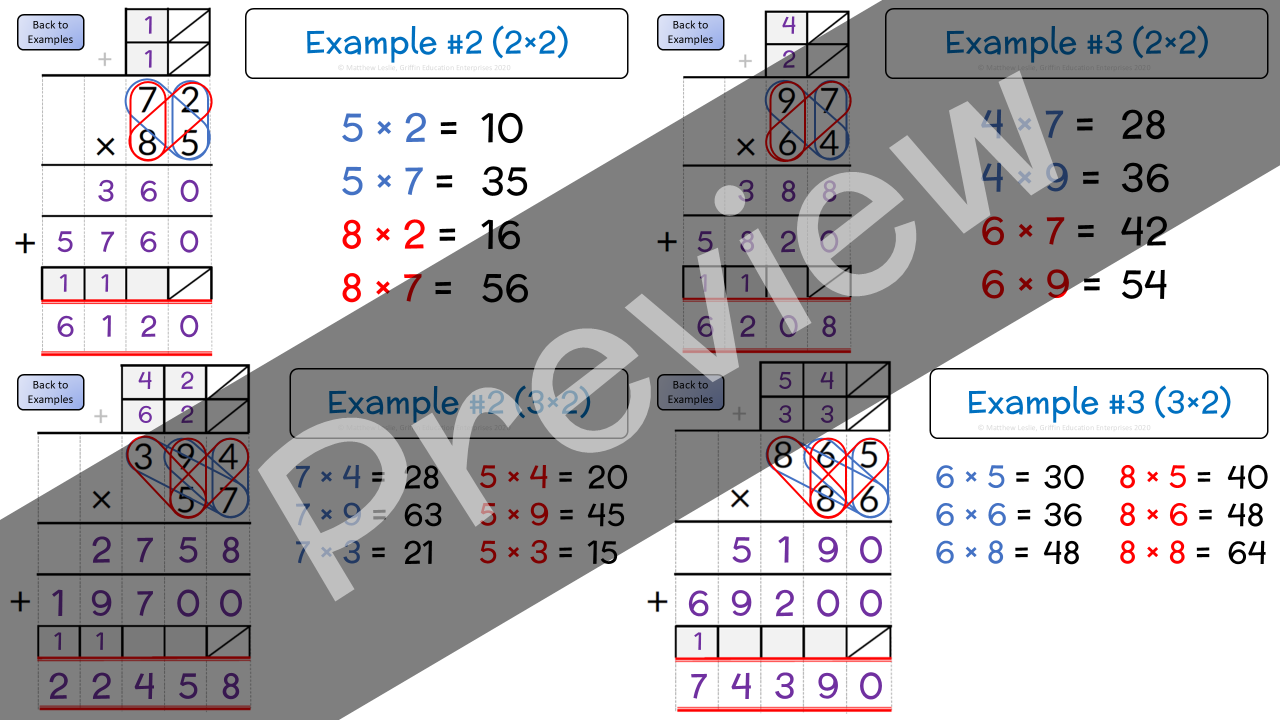
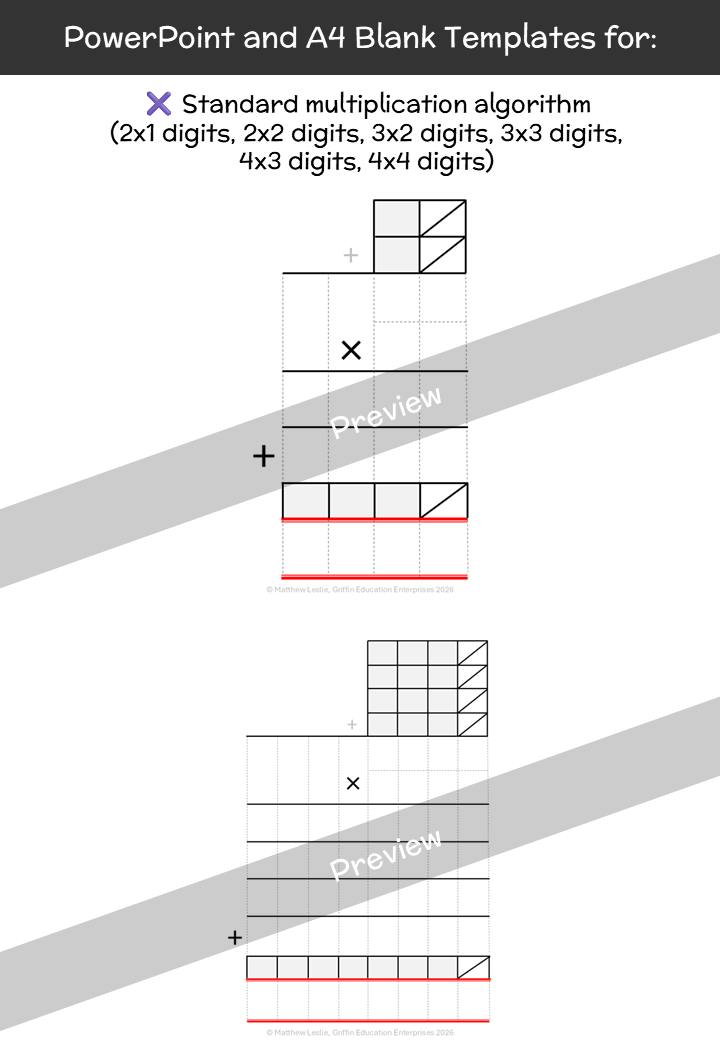
✖️ Standard multiplication algorithm (2x1 digits, 2x2 digits, 3x2 digits, 3x3 digits, 4x3 digits, 4x4 digits),
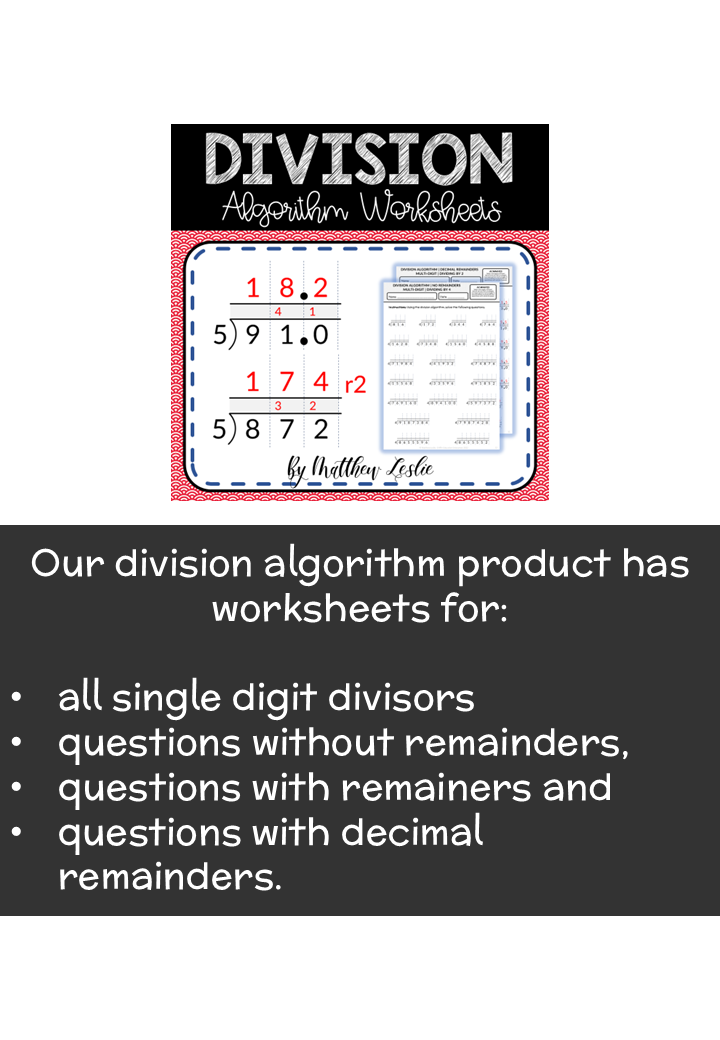
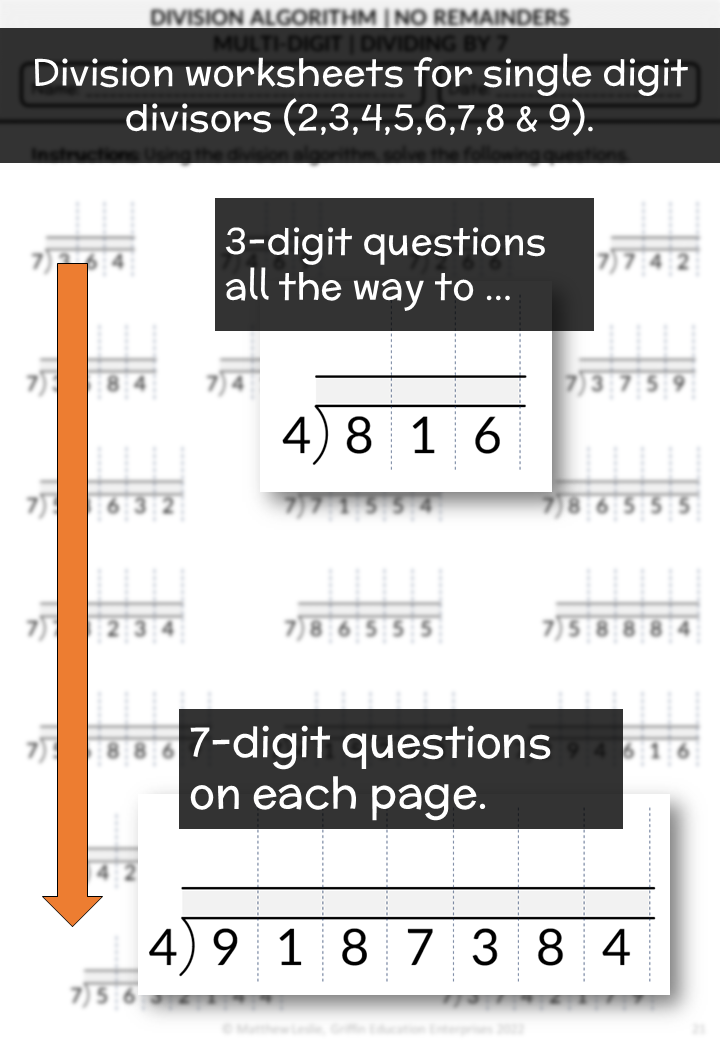
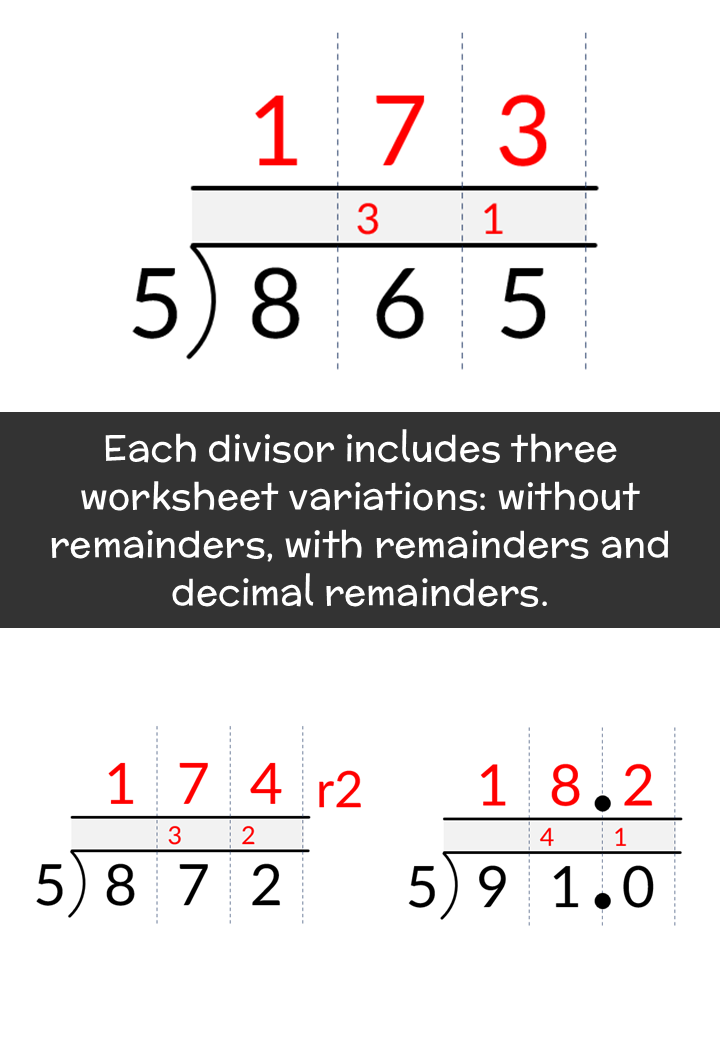
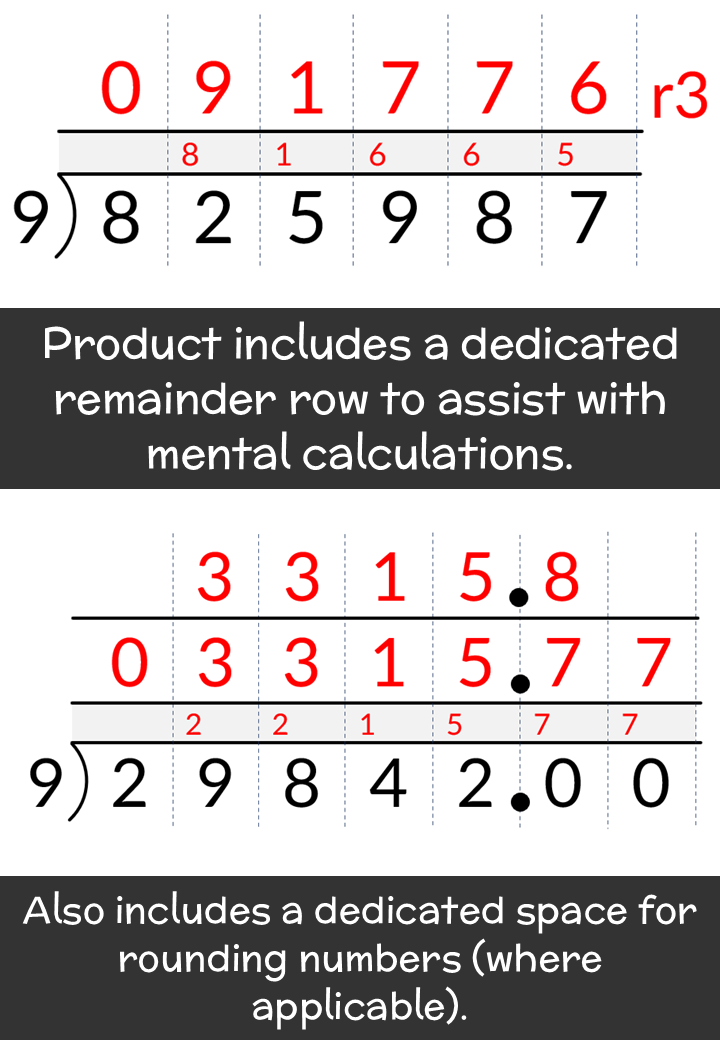
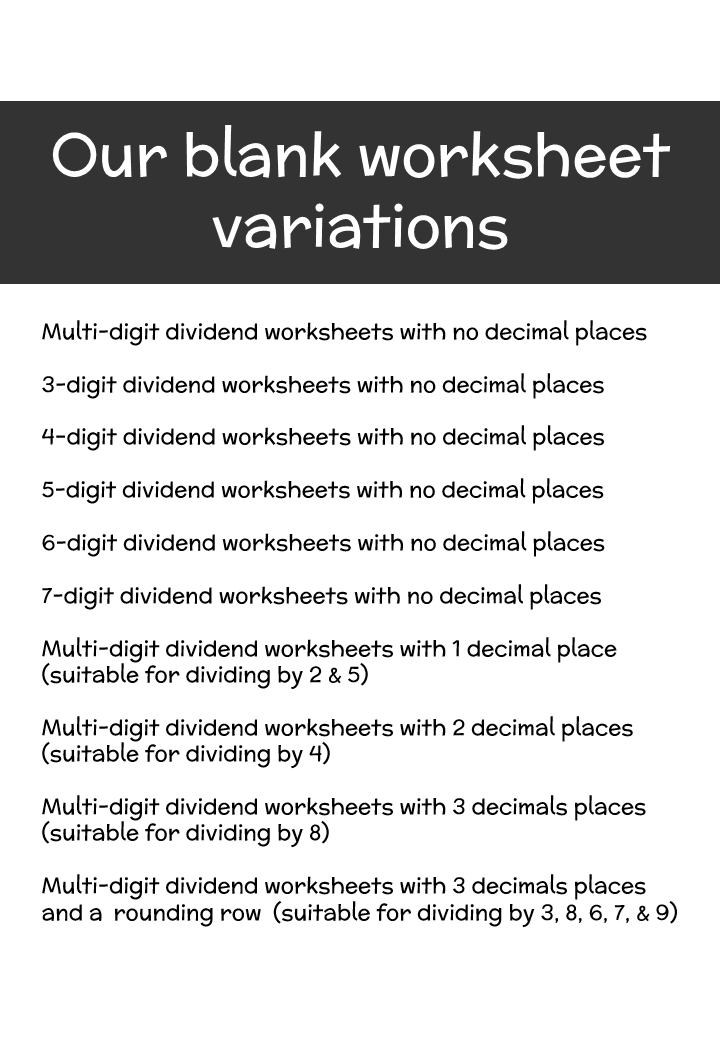
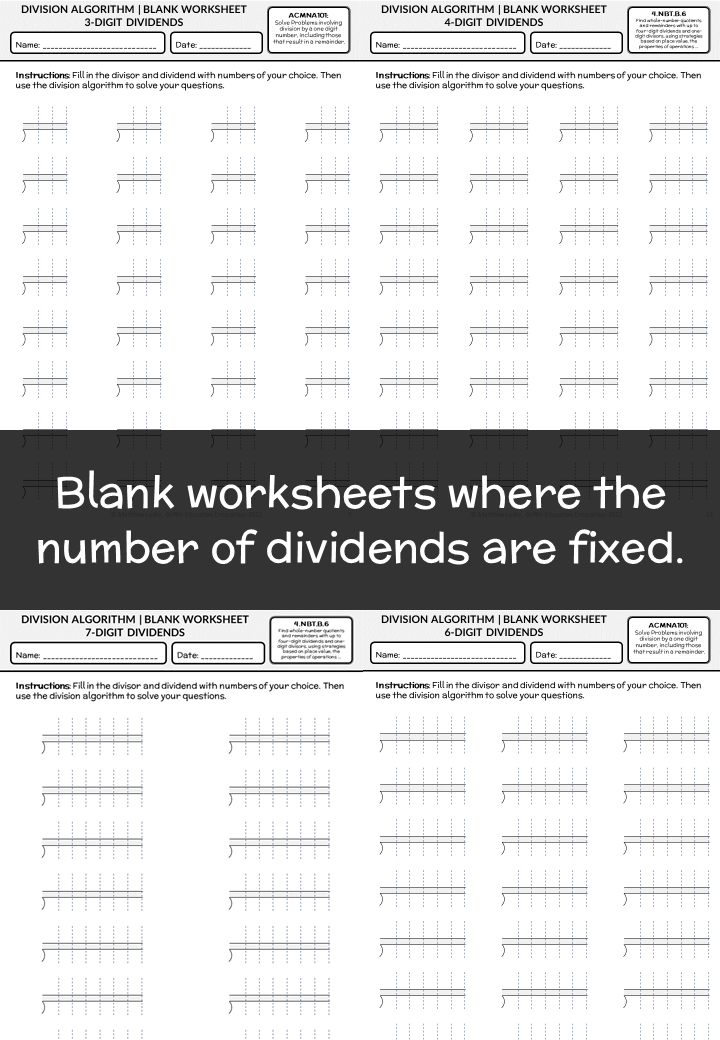
➗ Short division with remainder sign (3-digits to 7-digits),
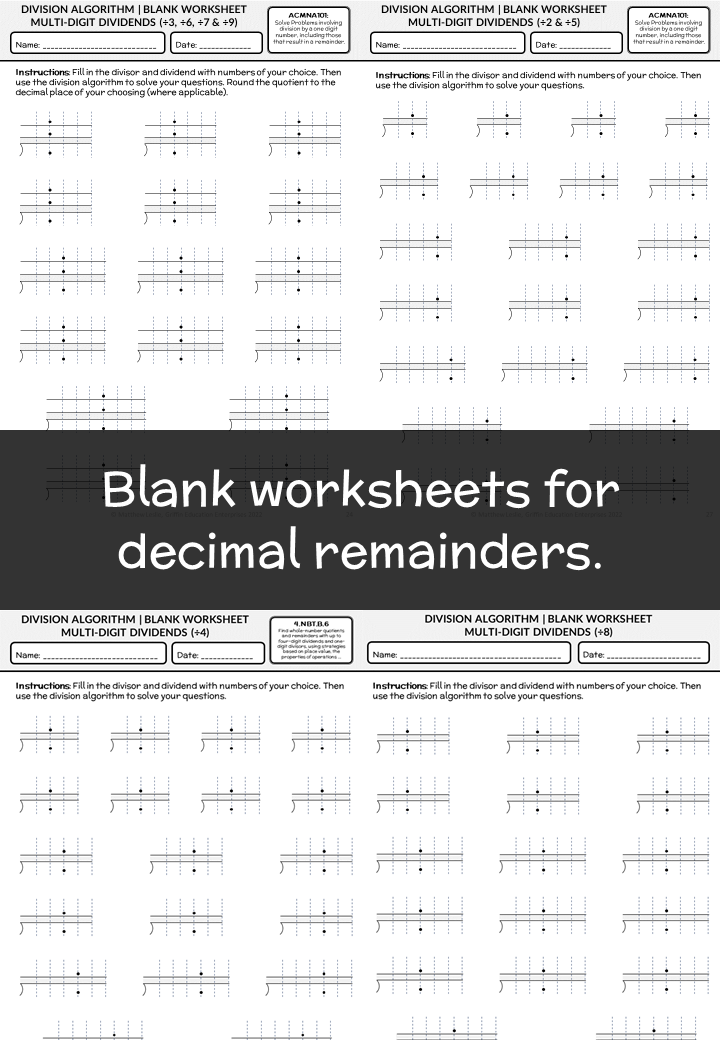
➗Short division with rounding row for irrational or recurring numbers,
➗Short division with 1 decimal place (perfect for dividing by 2 & 5)
➗Short division with 2 decimal places (perfect for dividing by 4)
➗Short division with 3 decimal places (perfect for dividing by 8)
Australian Curriculum Year 4/5
Mathematics Year 4: AC9M4N06 – develop efficient strategies and use appropriate digital tools for solving problems involving addition and subtraction, and multiplication and division where there is no remainder
Mathematics Year 5: AC9M5N06 – solve problems involving multiplication of larger numbers by one- or two-digit numbers, choosing efficient calculation strategies and using digital tools where appropriate; check the reasonableness of answers
Mathematics Year 5: AC9M5N07– solve problems involving division, choosing efficient strategies and using digital tools where appropriate; interpret any remainder according to the context and express results as a whole number, decimal or fraction
Resource Type: PDF and PowerPoint
*************** Seller’s Note ***************
If you like this product, it comes as a bonus product free of charge with our ‘4 Operations Mega Bundle’. This product is most effective when it is used with our worksheets.
*************** Seller’s Note ***************
Blank Algorithm Templates – A4 Templates and PowerPoint – All Operations
To make it easier for teachers to use our worksheets in their classrooms, we decided to put our blank algorithms for addition, subtraction, multiplication and division into A4 templates and a PowerPoint presentation.
The combination of a PowerPoint presentation and our A4 templates gives you all the resources you need to explicitly teach the four operations to your students. Pair this resource with our worksheets, and you have everything you need to cover the gradual release of responsibility.
Put these templates into a plastic sleeve, then your students have a large blank algorithm that they can write over with a whiteboard marker. No longer do students have to repeatedly copy out the algorithm scaffold, a subtle yet simple change which will save you time.
Product Includes:
✔️ A PowerPoint Presentation with 92 slides for the addition, subtraction, multiplication and division algorithms.
✔️Each slide of our PowerPoint presentation includes 2 blank algorithm templates (teacher example and student example) per slide, ideal for explicitly teaching any operation, or alternatively, there is the option of having 1 algorithm template per slide.
✔️ A4 Templates come in either portrait or landscape orientation (depending on the operation).
PowerPoint Presentation and A4 Templates include blank algorithms for:
➕ Addition (3-digits to 7-digits),
➖ Subtraction (3-digits to 7-digits),
✖️ Area model of multiplication (3x1 digits, 2x2 digits, 3x1 digits, 3x2 digits, 3x3 digits),
✖️ Lattice method of multiplication (2x1 digits, 2x2 digits, 3x2 digits, 3x3 digits, 4x3 digits, 4x4 digits),
✖️ Standard multiplication algorithm (2x1 digits, 2x2 digits, 3x2 digits, 3x3 digits, 4x3 digits, 4x4 digits),
➗ Short division with remainder sign (3-digits to 7-digits),
➗Short division with rounding row for irrational or recurring numbers,
➗Short division with 1 decimal place (perfect for dividing by 2 & 5)
➗Short division with 2 decimal places (perfect for dividing by 4)
➗Short division with 3 decimal places (perfect for dividing by 8)
Australian Curriculum Year 4/5
Mathematics Year 4: AC9M4N06 – develop efficient strategies and use appropriate digital tools for solving problems involving addition and subtraction, and multiplication and division where there is no remainder
Mathematics Year 5: AC9M5N06 – solve problems involving multiplication of larger numbers by one- or two-digit numbers, choosing efficient calculation strategies and using digital tools where appropriate; check the reasonableness of answers
Mathematics Year 5: AC9M5N07– solve problems involving division, choosing efficient strategies and using digital tools where appropriate; interpret any remainder according to the context and express results as a whole number, decimal or fraction
Resource Type: PDF and PowerPoint

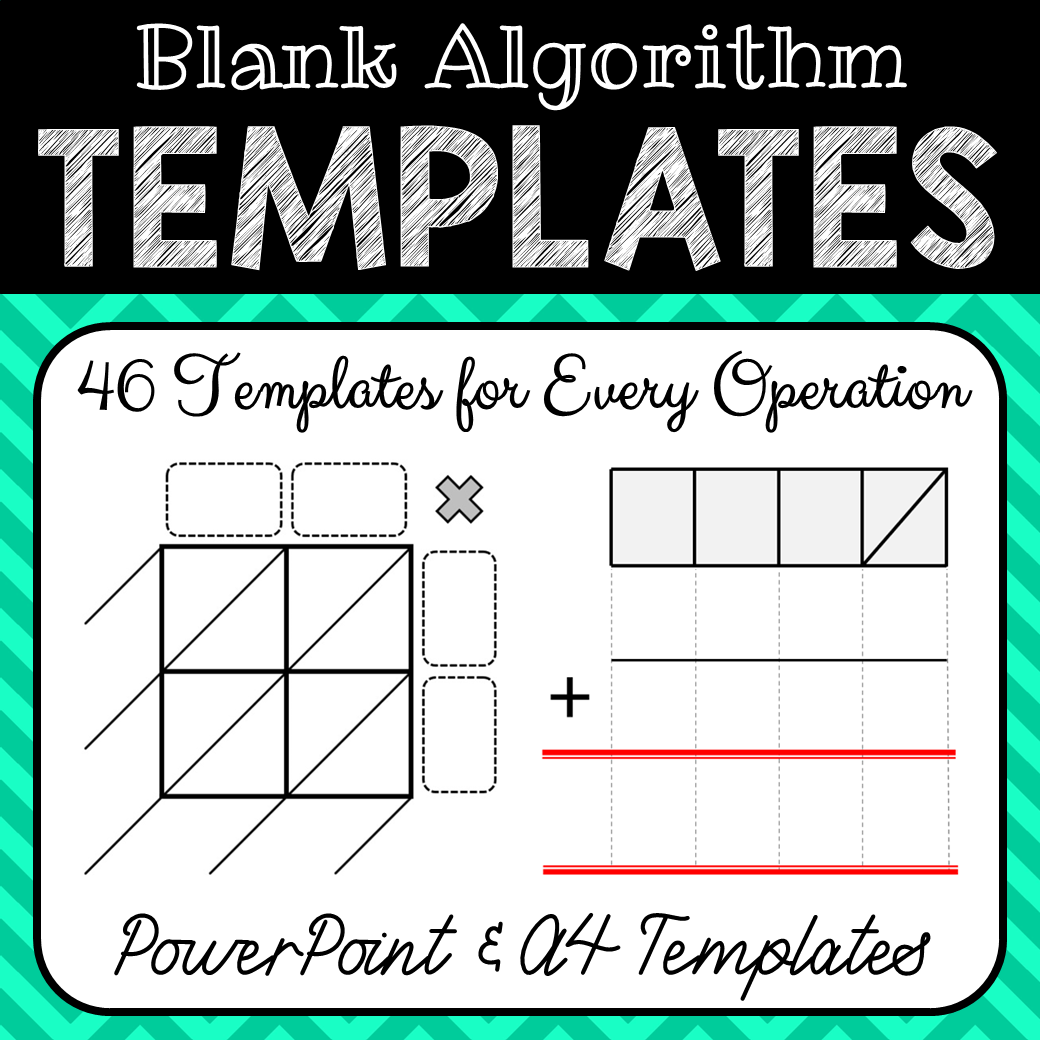 Image 1 of 17
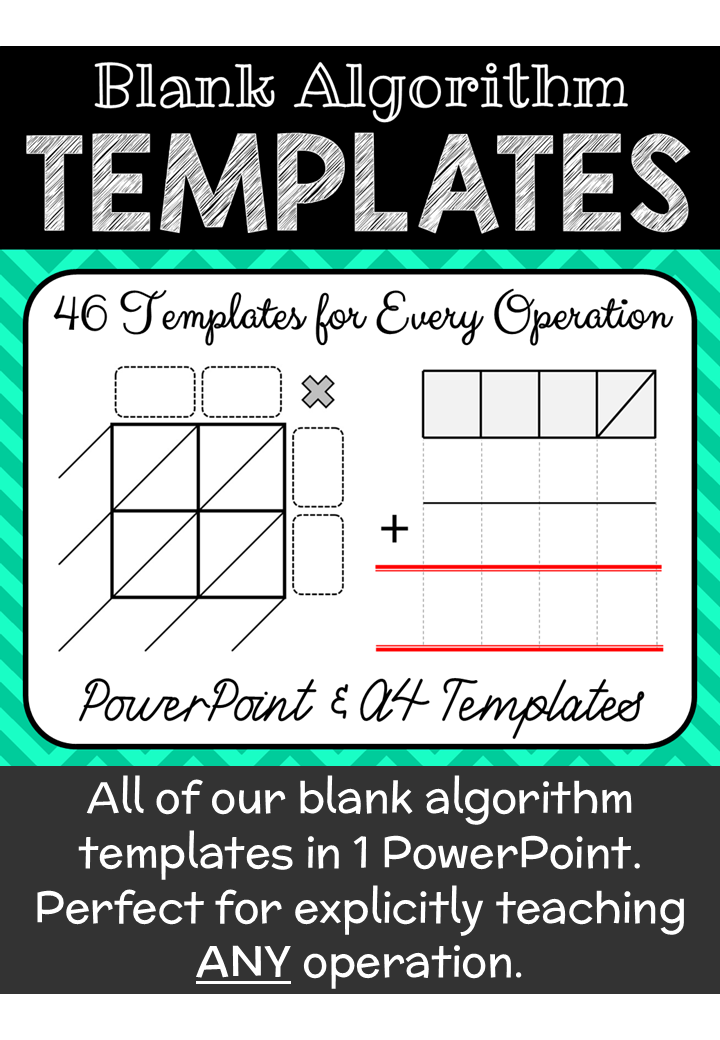 Image 2 of 17
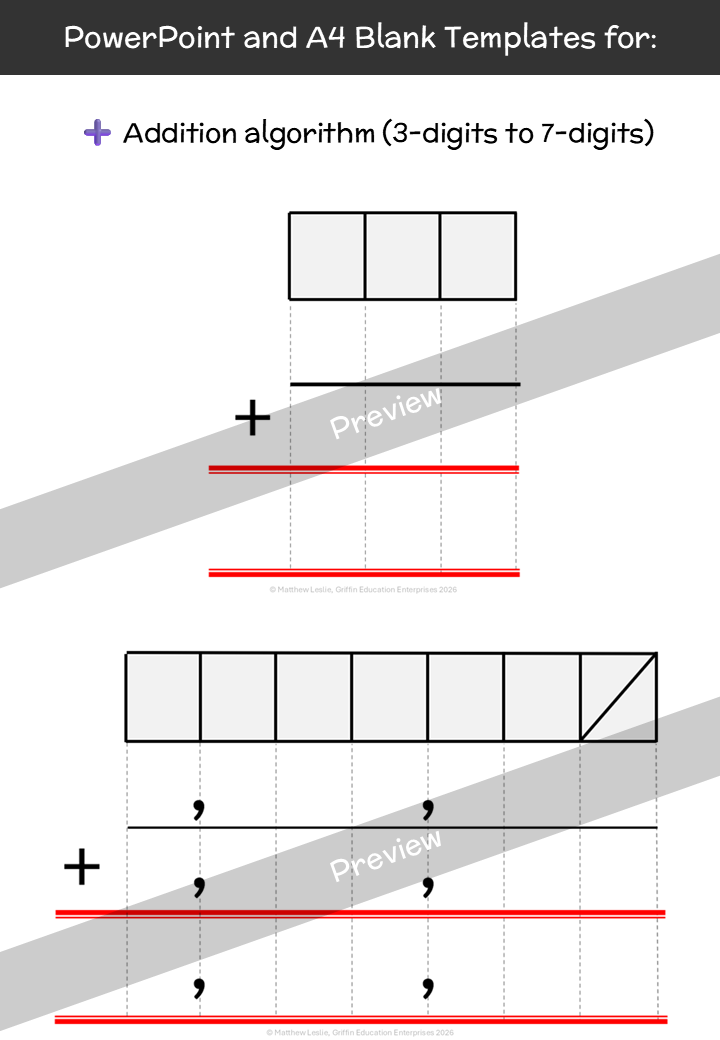 Image 3 of 17
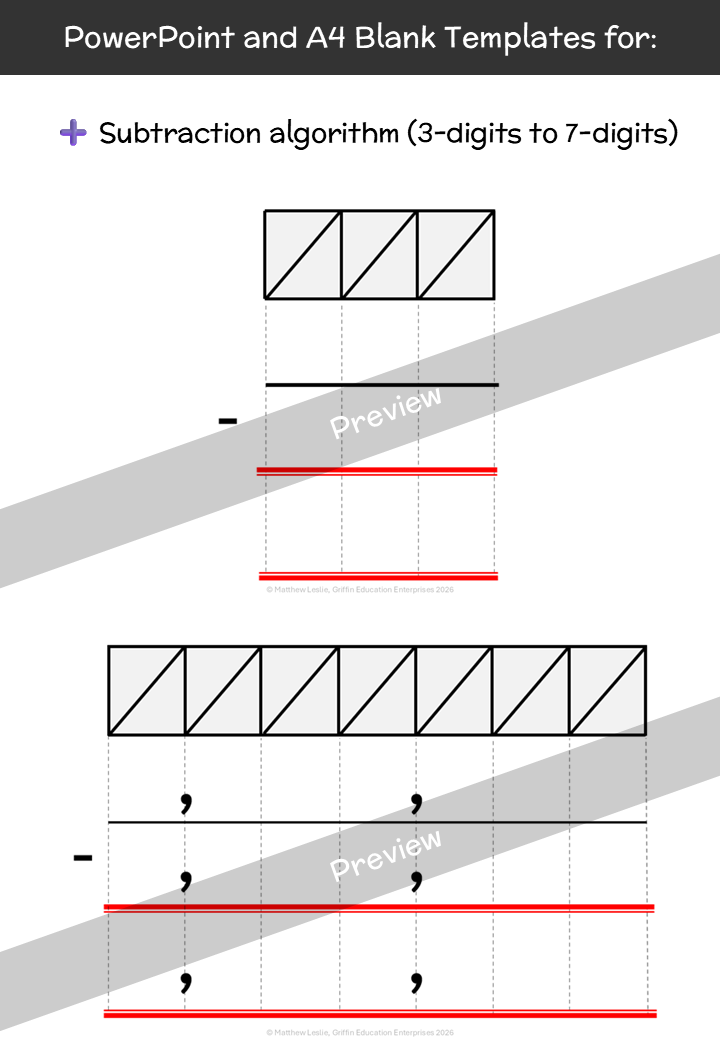 Image 4 of 17
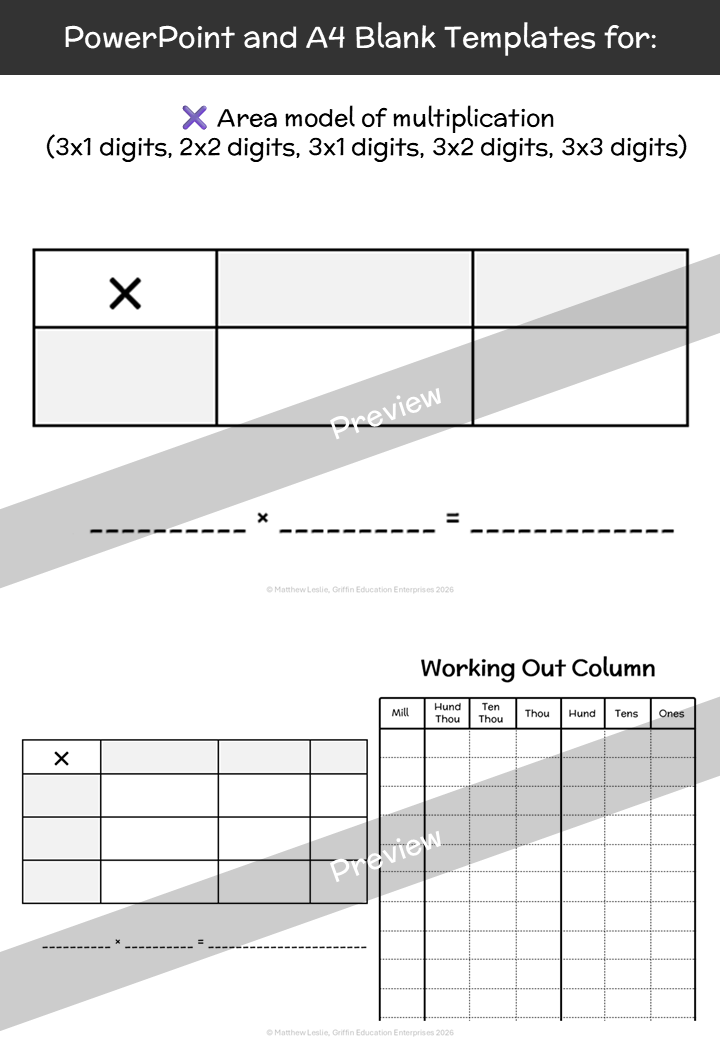 Image 5 of 17
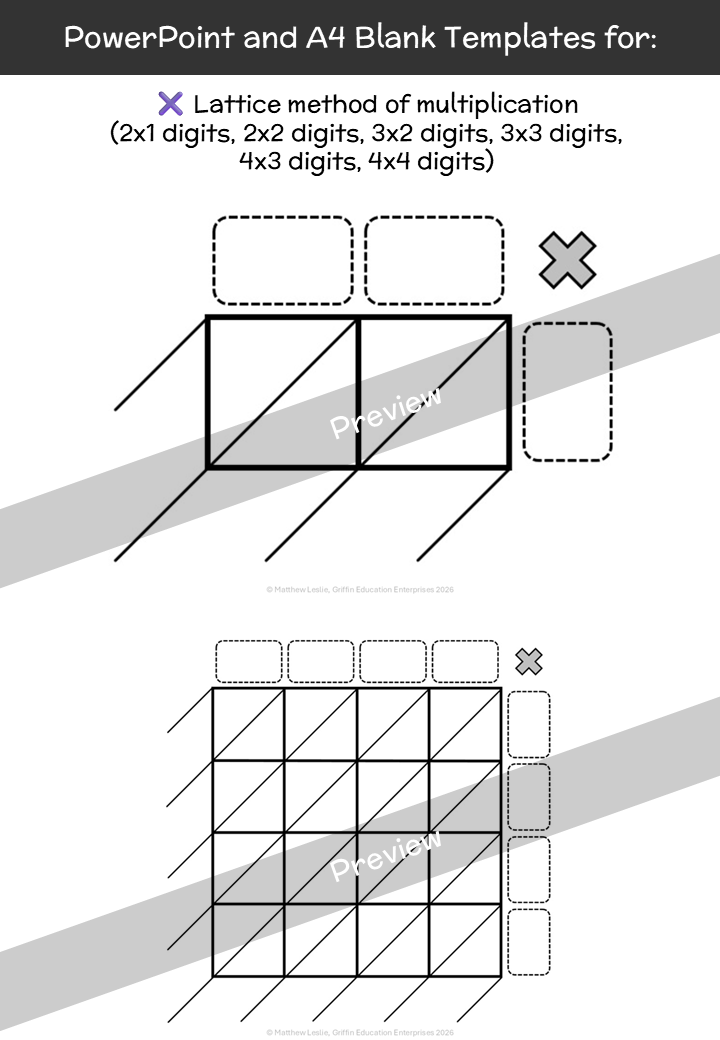 Image 6 of 17
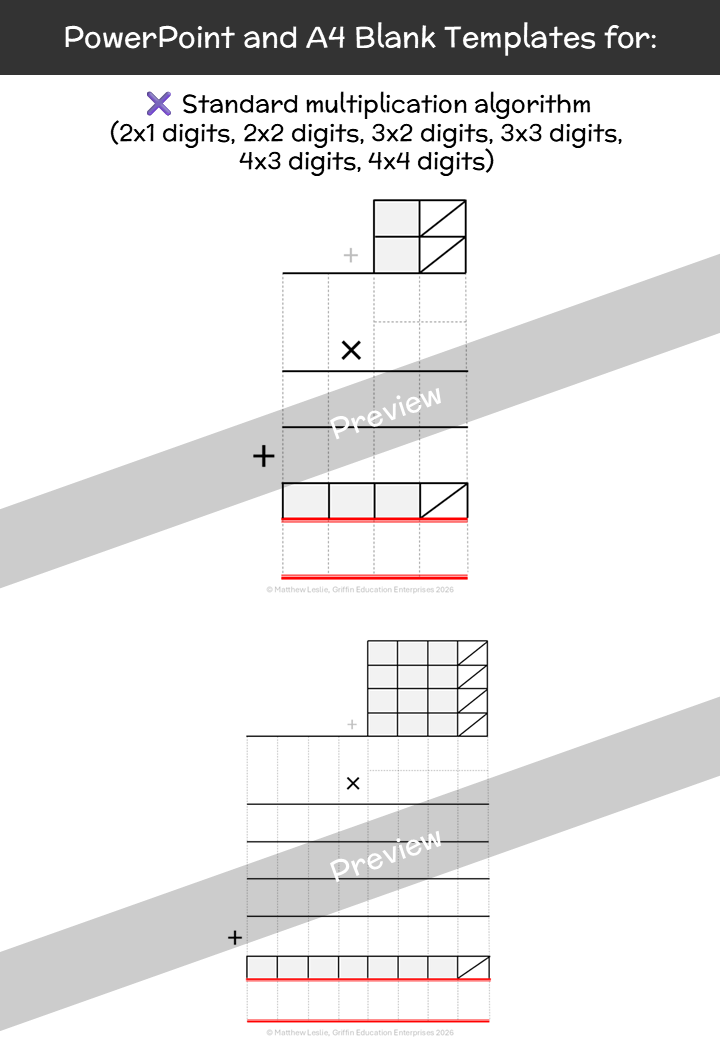 Image 7 of 17
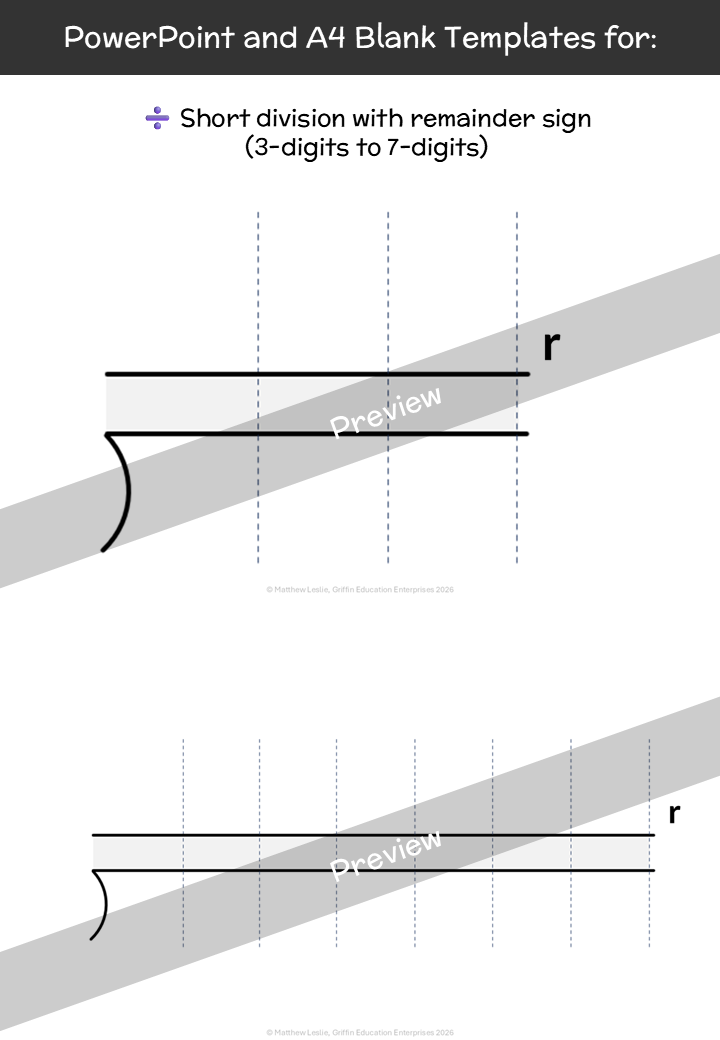 Image 8 of 17
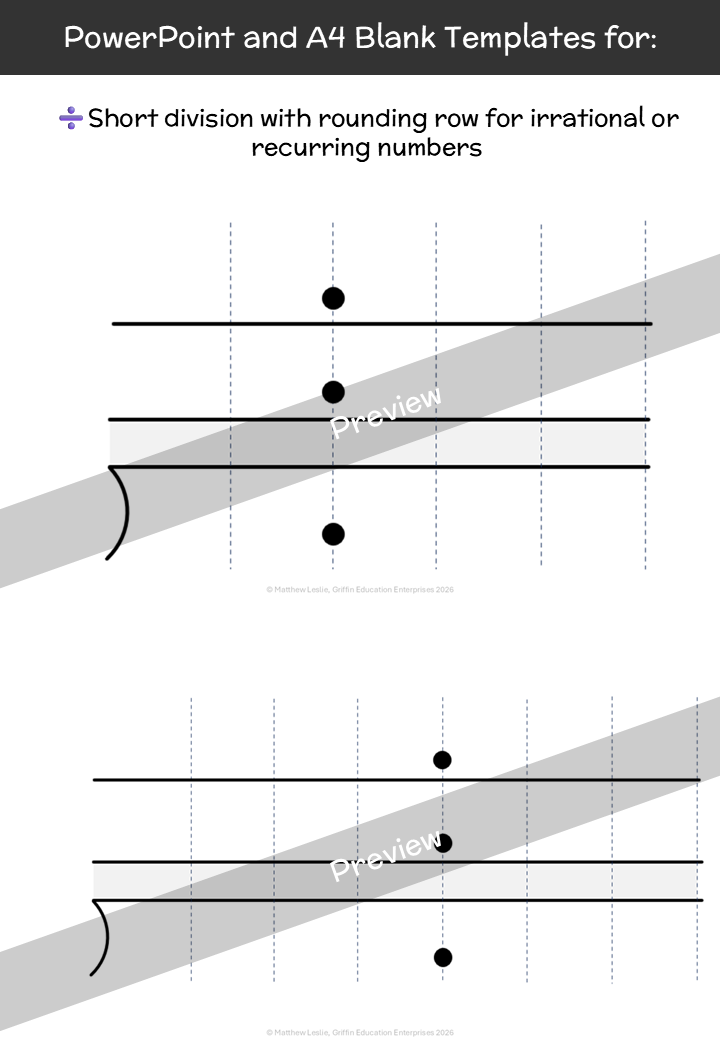 Image 9 of 17
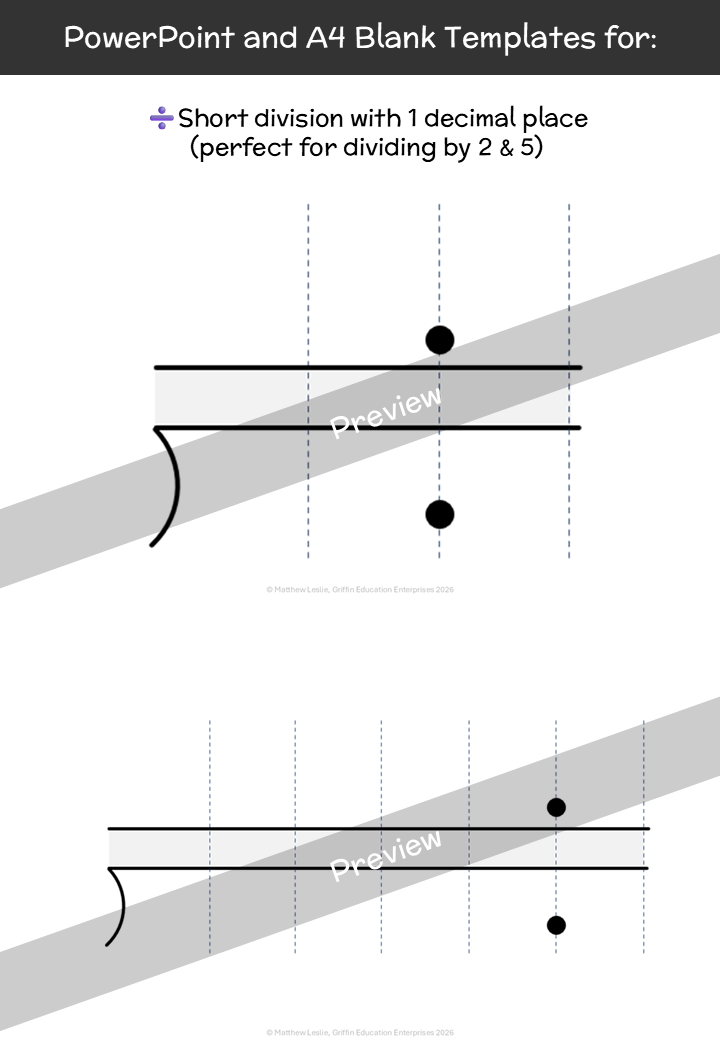 Image 10 of 17
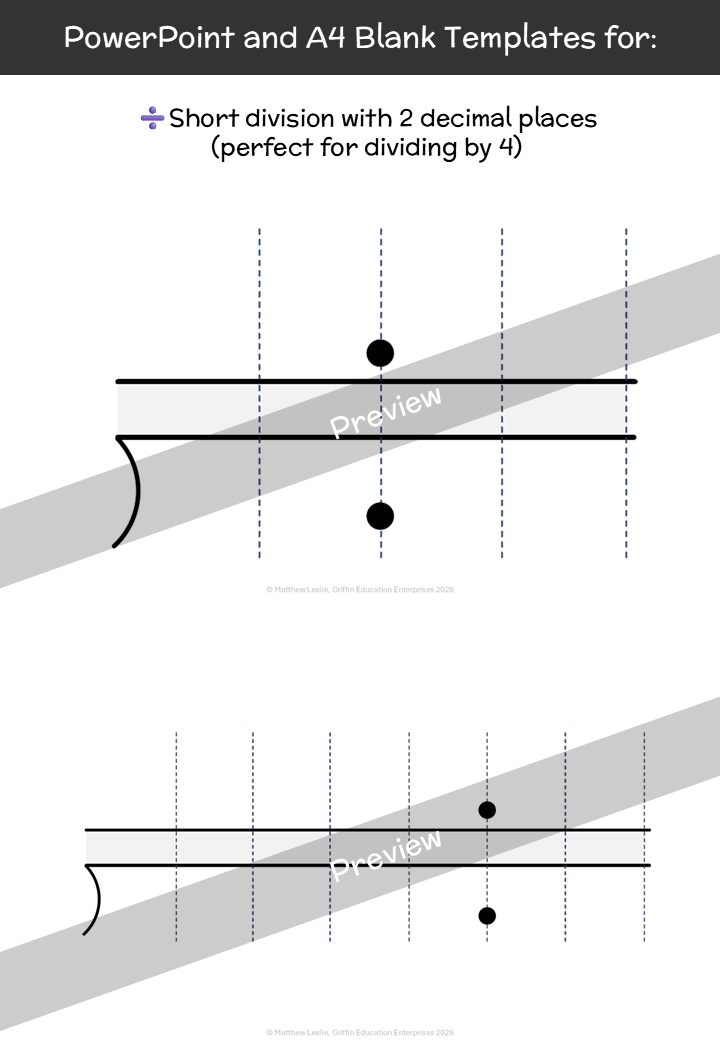 Image 11 of 17
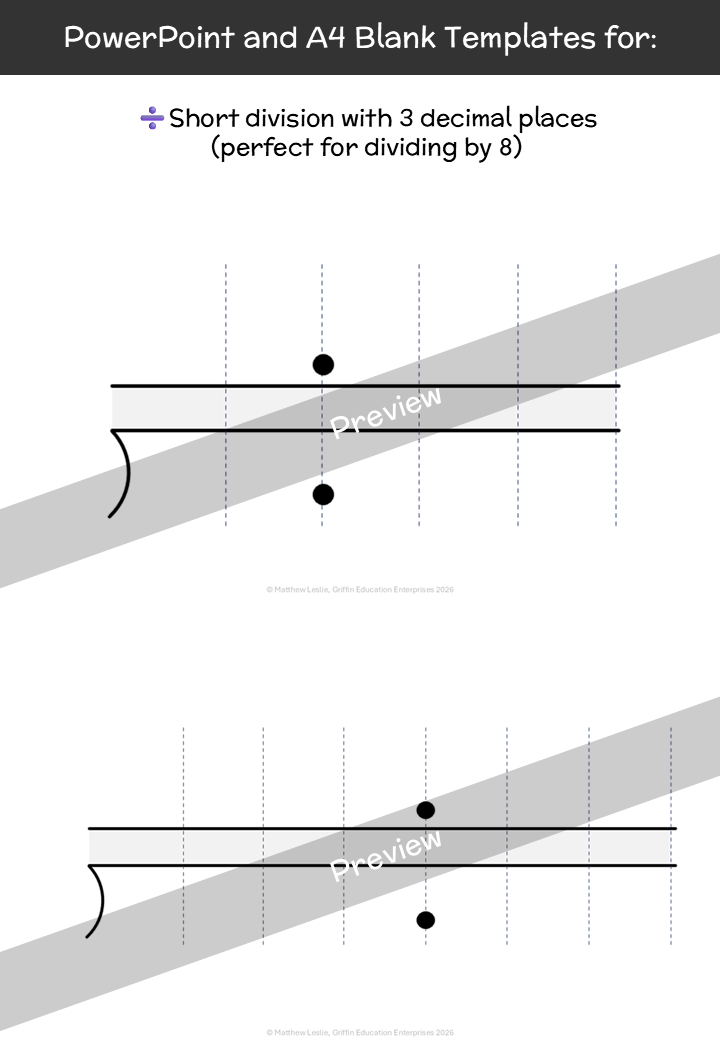 Image 12 of 17
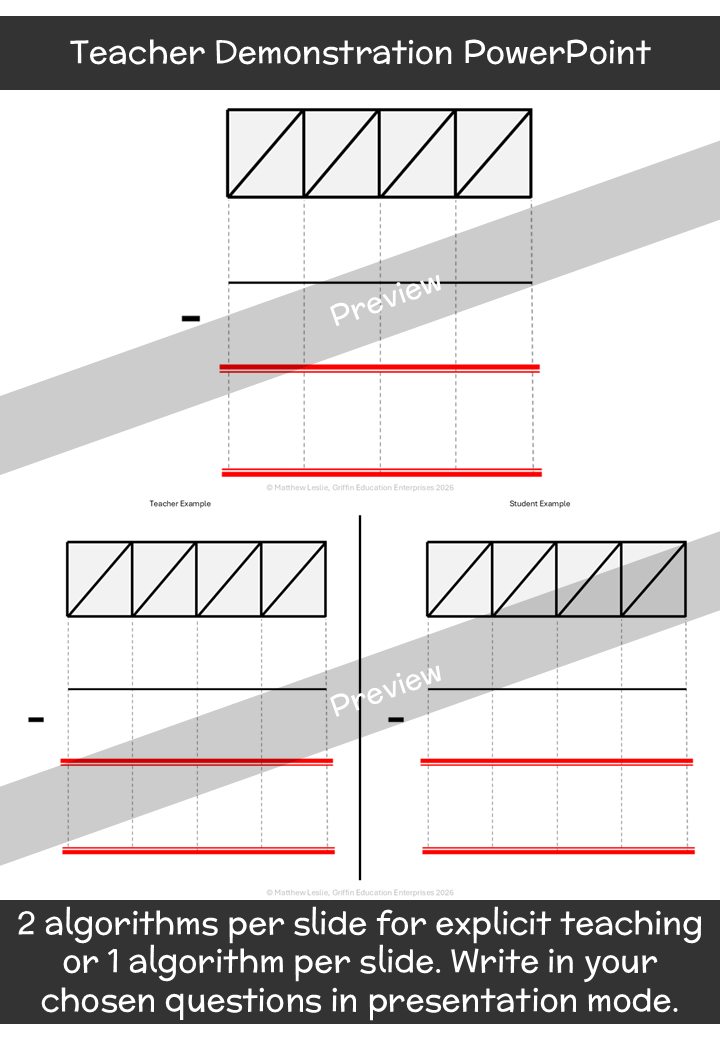 Image 13 of 17
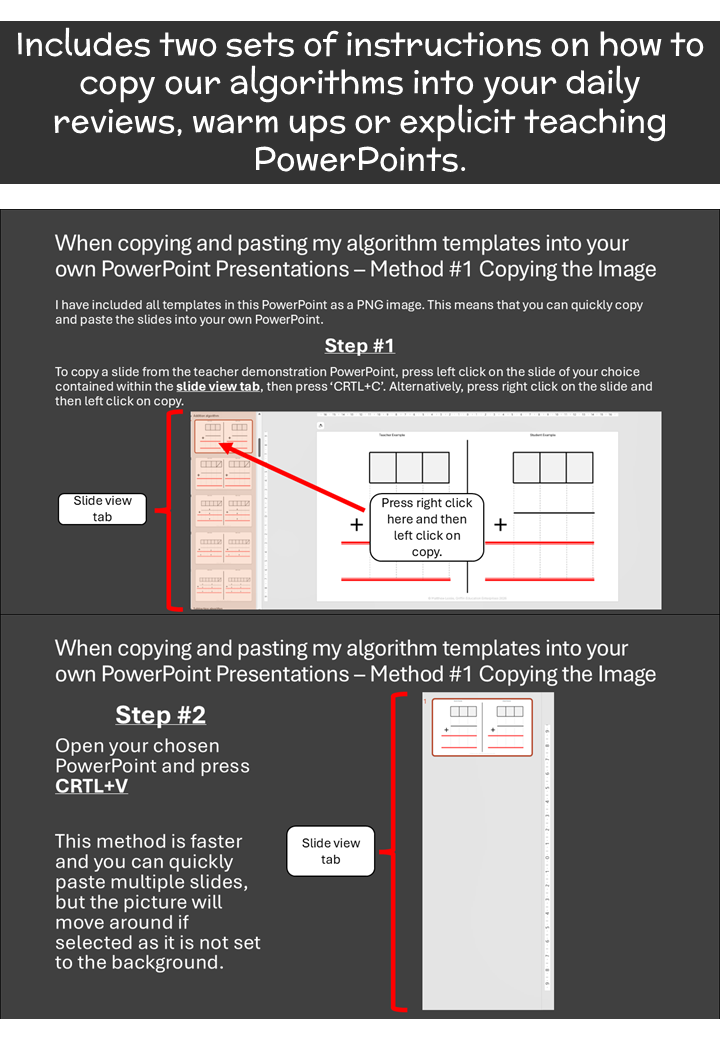 Image 14 of 17
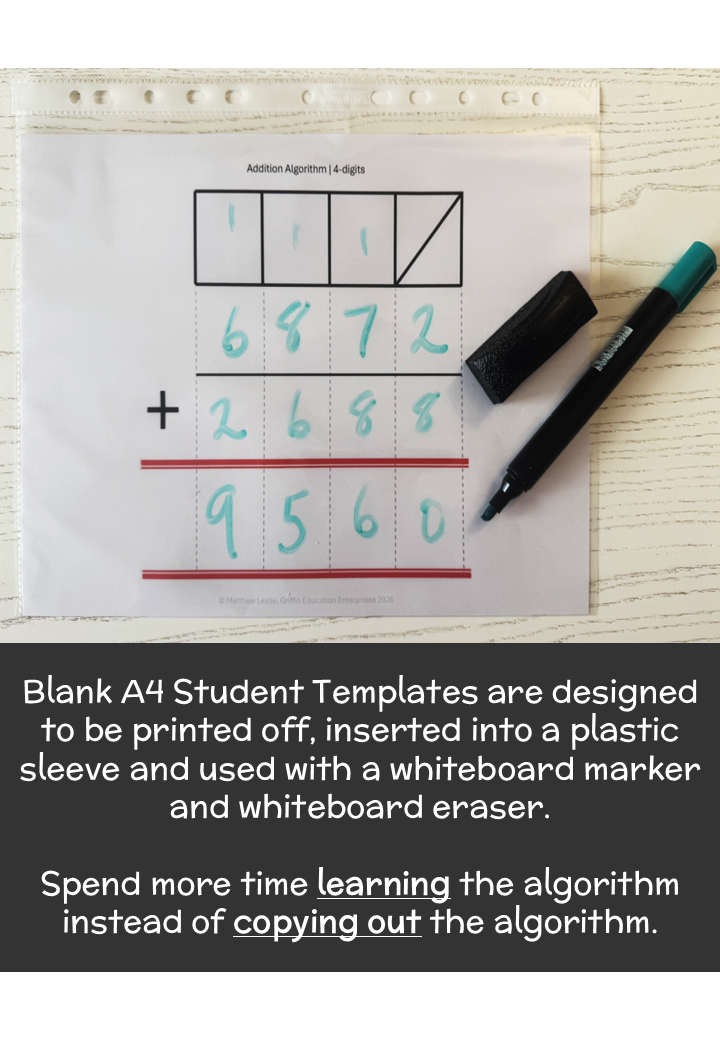 Image 15 of 17
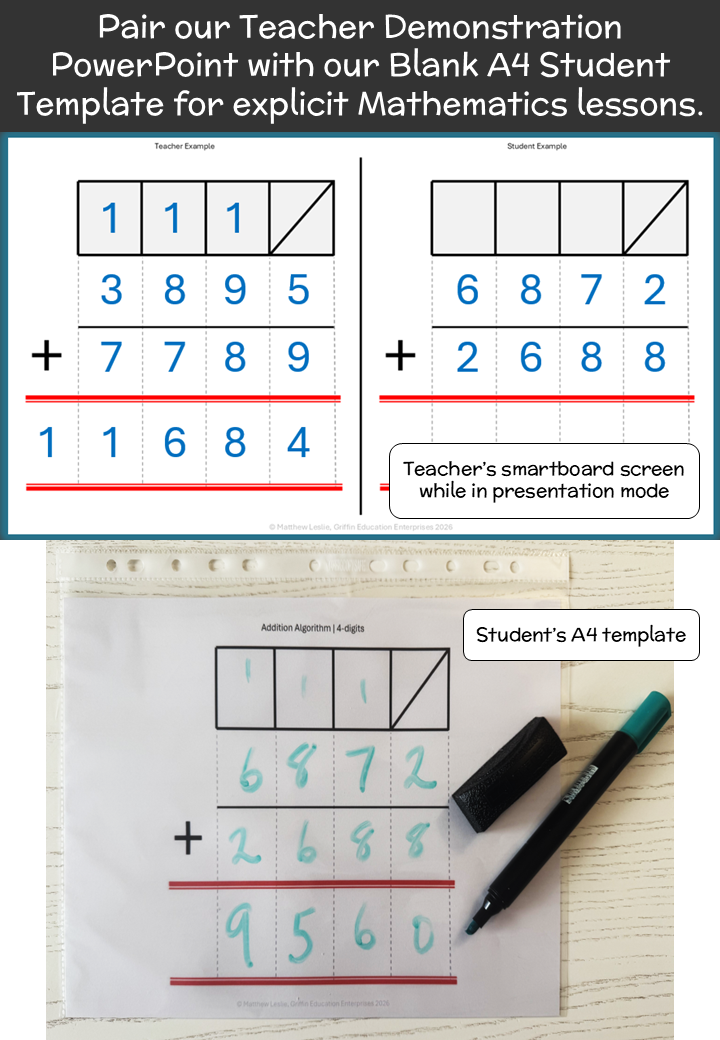 Image 16 of 17
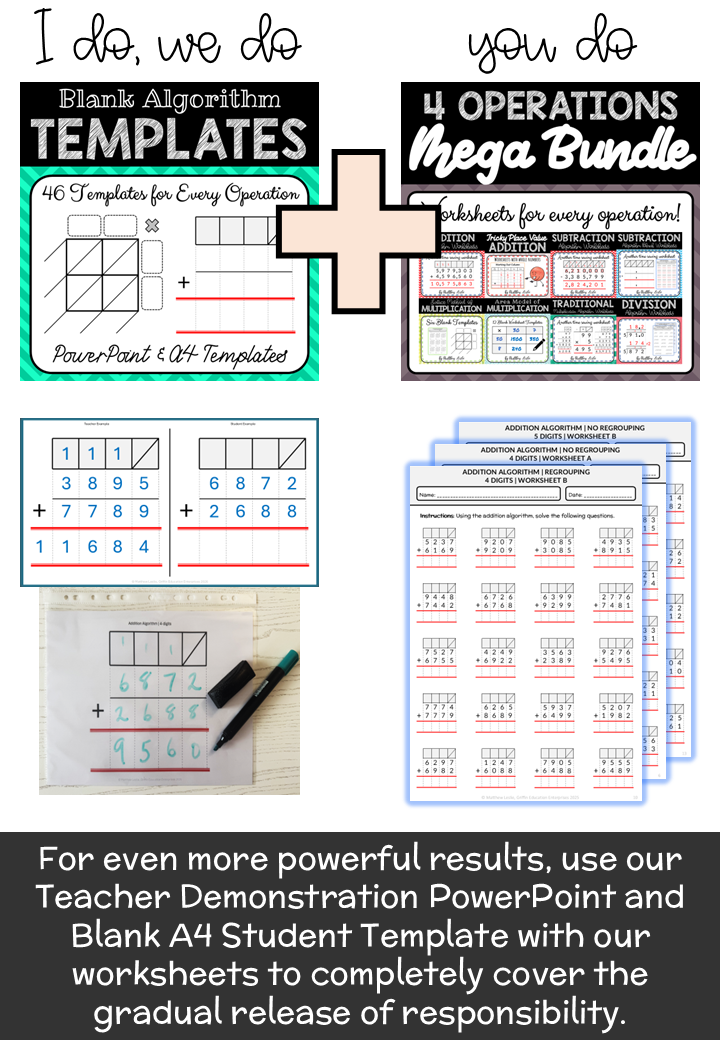 Image 17 of 17